


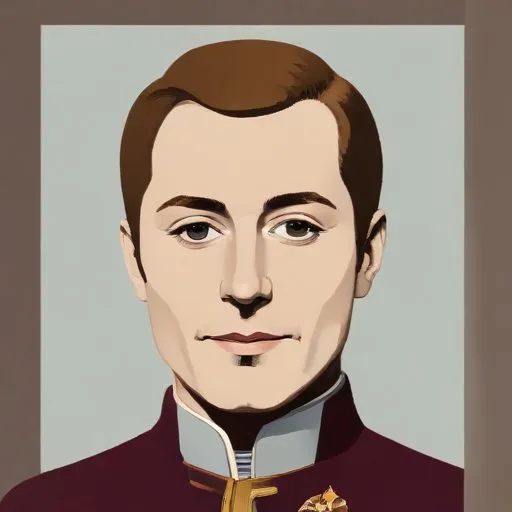
Known for his exquisite taste in art and his impressive collection of illuminated manuscripts, John, Duke of Berry, was a Magnificent figure in the French royal circle. As one of the most prominent art patrons of his time, he commissioned some of the most breathtaking works of art, including the world-renowned Très Riches Heures du Duc de Berry, a masterpiece of Gothic art.
Born on November 30, 1340, at the castle of Vincennes, John was the third son of King John II of France and Bonne of Luxembourg. As a member of the French royal family, he was destined for greatness, and his brothers, King Charles V of France, Duke Louis I of Anjou, and Duke Philip the Bold of Burgundy, would go on to make their mark on history as well.
In 1356, John was made Count of Poitou by his father, and in 1358, he was named king's lieutenant of Auvergne, Languedoc, Prigord, and Poitou to administer those regions in his father's name while the king was a captive of the English. Upon his return to France, his brother, now King Charles V, appointed him lieutenant general for Berry, Auvergne, Bourbonnais, Forez, Sologne, Touraine, Anjou, Maine, and Normandy.
When King Charles V died in 1380, John, along with his brothers and the king's maternal uncle, the Duke of Bourbon, acted as regents for the young Charles VI. During this period, John was also appointed Lieutenant General in Languedoc, where he had to tackle the Harelle, a peasants' revolt sparked by heavy taxation in support of the war effort against the English.
John's love for art and literature led him to commission some of the most remarkable works of his time. His personal motto, Le temps venra ("The time will come"), reflects his commitment to leaving a lasting legacy. The Très Riches Heures du Duc de Berry, a breathtaking illuminated manuscript, is a testament to his refined taste and patronage.
John, Duke of Berry, left an indelible mark on the world of art and literature. His patronage not only supported the creation of some of the most stunning works of the time but also inspired a new generation of artists and writers. His legacy continues to inspire and delight art lovers to this day.
John's personal motto, Le temps venra, reflects his commitment to making the most of his time and leaving a lasting legacy. His love for art, literature, and politics drove him to achieve greatness, and his patronage continues to inspire and delight art lovers around the world.
Born in 1338
The King of France from 1364 to 1380, known for his military victories and rebuilding of Paris, earning him the nickname "Charles the Wise".
Born in 1372
A younger brother of King Charles VI of France, he was a powerful nobleman and a patron of the arts, known for his lavish lifestyle and alleged murder plot against his nephew.
Born in 1371
A powerful and ambitious duke who ruled Burgundy in the 15th century, known for his military conquests and role in the Hundred Years' War.
Born in 1403
King of France from 1422 to 1461, he played a crucial role in ending the Hundred Years' War by expelling the English from French territory. He also established a strong centralized government.
Born in 1404
Queen of France from 1422 to 1461, known for her strong will and political influence during the Hundred Years' War.
Born in 1409
A claimant to the throne of Naples, he was a patron of the arts and a poet, known for his cultural achievements and literary works.
