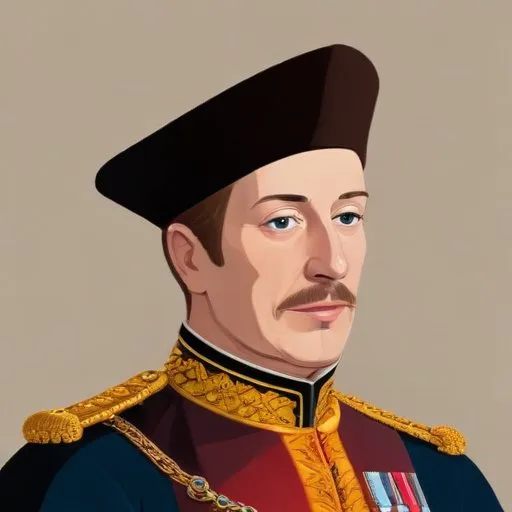
Philip II, the Renaissance Duke of Pomerania
A Patron of the Arts and Sciences
Philip II, Duke of Pomerania-Stettin, is remembered as one of the most artistic and scientifically inclined dukes of his time. From 1606 to 1618, he reigned over Pomerania-Stettin, leaving an indelible mark on the cultural and intellectual landscape of his era.
Early Life and Education
Born on July 29, 1573, in Neuenkamp, Philip was the eldest son of Duke Bogislaw XIII of Pomerania-Barth and his first wife, Clara of Brunswick. He grew up in his father's small residence in Barth, where he received a comprehensive education befitting a German prince of the late Renaissance era.
Artistic and Scientific Pursuits
Philip's interests in art and science went beyond mere royal representation. He was driven by an inner passion, demonstrated by his impressive collection of books, pictures, and ancient coins, which he began accumulating at the tender age of 12. By 17, he was authoring scientific papers, showcasing his intellectual curiosity and rigor.
Grand Tours and Cultural Exchanges
In line with the customs of his time, Philip embarked on numerous grand tours, visiting various European countries and royal courts. His two-year stay in Italy, cut short in 1598 due to his mother's illness, had a profound impact on his artistic and cultural development.
Marriage and Reign
In 1607, Philip married Sophia of Schleswig-Holstein-Sonderburg, a union that, unfortunately, remained childless. Upon the death of Duke Barnim X in 1603, Philip's father, Bogislaw XIII, became the ruling duke, and eventually, Philip succeeded him in 1606.
Legacy and Impact
Philip II's legacy lies in his tireless promotion of art, science, and culture in Pomerania. His patronage of various artists, writers, and scholars helped establish his court as a hub of intellectual and creative activity. His reign also saw the secularization of the Cistercian monastery at Neuenkamp, which became a symbol of his commitment to education and enlightenment.
Personal Milestones and Quotes
At 18, Philip expressed his passion for collecting books, pictures, and ancient coins, stating, "It is my pleasure to collect good, selected books, portraits from a master's hand, and ancient coins of all kinds. From these, I learn how to improve myself and also how I can be beneficial to the general public."
Historical Context and Comparative Analysis
Philip II's reign coincided with a period of cultural and scientific flourishing in Europe, marked by the works of figures like
Galileo Galilei,
William Shakespeare, and
Peter Paul Rubens. While his contemporaries, such as the Duke of Württemberg, were also known for their artistic and scientific pursuits, Philip's unique blend of intellectual curiosity and royal patronage set him apart as a true Renaissance duke.
Trivia and Fun Facts
- Philip II's art collection included works by prominent artists of his time, showcasing his exquisite taste and connoisseurship.
- He was known for his impressive library, which housed a vast collection of manuscripts and rare books.
- Philip's love for ancient coins and numismatics reflected his fascination with history and cultural heritage.
Conclusion
Philip II, Duke of Pomerania-Stettin, was a true embodiment of the Renaissance spirit, whose passion for art, science, and education continues to inspire generations. His legacy serves as a testament to the power of royal patronage in promoting cultural and intellectual excellence.