


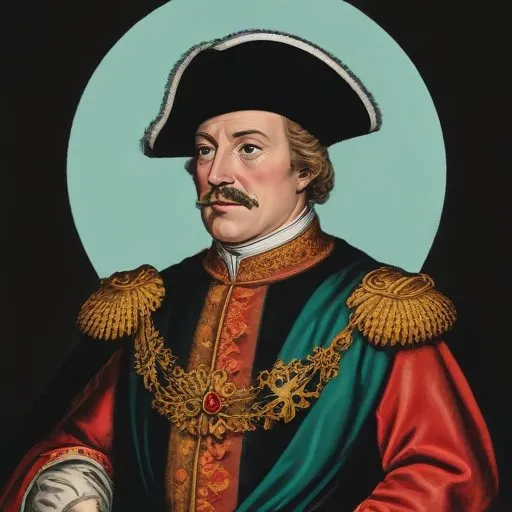
Duke of Saxony who ruled from 1554 to 1566, known for his role in the Protestant Reformation and his involvement in the Council of Trent.
Known for his unwavering ambition to reclaim his family's lost titles and territories, John Frederick II, Duke of Saxony, left an indelible mark on German history. From 1554 to 1566, he ruled over Saxony, tirelessly working to restore his family's honor and prestige.
Born on January 8, 1529, to John Frederick I, Elector of Saxony, and Sibylle of Cleves, John Frederick II received a comprehensive education alongside his younger brother, Johann Wilhelm. Under the guidance of the esteemed legal scholar, Basilius Monner, the brothers developed a strong foundation in diplomacy and statecraft.
Following the Battle of Mühlberg in 1547 and the capture of his father, John Frederick II and his brother succeeded their father as regents of their family's remaining lands. After their father's death in 1554, the brothers amicably divided their inherited territories, with John Frederick II retaining the title of Duke of Saxony and choosing Gotha as his residence.
John Frederick II's political aspirations remained fixed on reinstating his family's right to the title of Elector of Saxony and reclaiming lost territories. In 1563, his trusted general, Wilhelm von Grumbach, attacked Würzburg, seizing and plundering the city, which led to John Frederick II being placed under the imperial ban by Emperor Maximilian II. Undeterred, John Frederick II refused to withdraw his forces, further straining alliances within and outside Germany.
John Frederick II's unwavering ambition and determination to reclaim his family's lost titles and territories continue to inspire generations. His legacy serves as a testament to the importance of perseverance and leadership in the face of adversity.
John Frederick II's aggressive military campaigns and defiance of imperial authority led to widespread criticism and controversy during his reign. Despite this, his commitment to his family's honor and prestige remains a hallmark of his character.
John Frederick II's reign took place during a tumultuous period in German history, marked by the Protestant Reformation and the rise of powerful noble families. In comparison to his contemporaries, John Frederick II's unwavering ambition and military prowess set him apart as a formidable leader.
John Frederick II's close relationship with his brother, Johann Wilhelm, and his trusted general, Wilhelm von Grumbach, played a significant role in shaping his reign and military campaigns. These relationships provide valuable insights into John Frederick II's character and leadership style.
Through his unwavering ambition and determination, John Frederick II left an indelible mark on German history, ensuring his legacy as one of the most fascinating and complex figures of his time.
Born in 1483
A German monk and priest who sparked the Protestant Reformation, challenging Catholic Church authority and shaping Western Christianity. He's famous for nailing 95 theses to a church door, sparking a religious revolution.
Born in 1504
A German nobleman who ruled Hesse from 1509 to 1567, known for being a champion of the Protestant Reformation and a key figure in the Schmalkaldic League.
Born in 1463
A key figure in the early Protestant Reformation, he protected and supported Martin Luther, providing a safe haven for him to translate the Bible into German. He's also known for his role in establishing the University of Wittenberg.
Born in 1526
A 16th-century German ruler who played a key role in the Protestant Reformation and was a strong supporter of the arts, commissioning many notable works of literature and music.
Born in 1585
Ruler of Saxony from 1611 to 1656, known for his role in the Thirty Years' War and his efforts to maintain Saxony's independence. He also supported the arts and architecture, commissioning several notable buildings.
Born in 1585
Ruler of Saxony from 1611 to 1656, known for his role in the Thirty Years' War and his efforts to maintain Saxony's independence. He also supported the arts and architecture, commissioning several notable buildings.
Born in 1441
German ruler of Saxony who introduced the Reformation and played a key role in the early Protestant movement, shaping the course of European history.
