


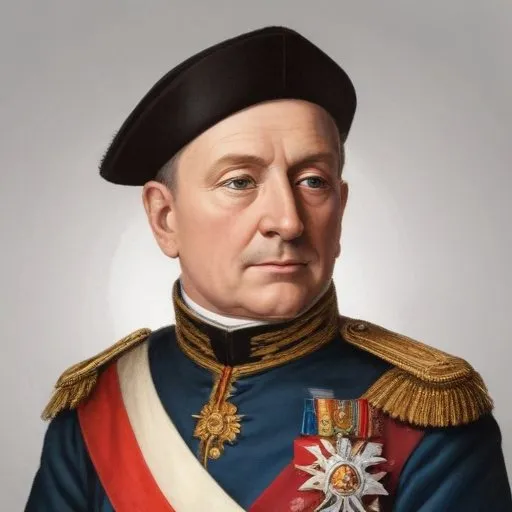
A key figure in the early Protestant Reformation, he protected and supported Martin Luther, providing a safe haven for him to translate the Bible into German. He's also known for his role in establishing the University of Wittenberg.
Frederick III, Elector of Saxony, also known as Frederick the Wise, is renowned for his courage in protecting Martin Luther, the pioneering figure of the Protestant Reformation, from persecution. This bold move not only shielded Luther from the Holy Roman Emperor and the Pope but also enabled the Reformation to gain momentum, forever changing the course of Christian history.
Born on January 17, 1463, in Torgau, Frederick was the son of Ernest, Elector of Saxony, and Elisabeth, daughter of Albert III, Duke of Bavaria. He succeeded his father as elector in 1486, marking the beginning of a remarkable reign that would span nearly four decades.
Few leaders in history have demonstrated such unwavering commitment to justice and fairness as Frederick III. His decision to protect Luther was not driven by religious conviction but by his steadfast belief in the rule of law and the right to a fair trial. This principled stance earned him respect and admiration from his contemporaries and cemented his place as a wise and exemplary ruler.
In 1502, Frederick founded the University of Wittenberg, which would become a hub of intellectual inquiry and a hotbed of Reformation thought. The university provided a platform for theologians like Luther and Philip Melanchthon to teach and share their ideas, further fueling the Reformation movement.
Frederick was a discerning patron of the arts, and his court attracted some of the most talented artists of the Renaissance. Lucas Cranach the Elder, a renowned painter and printmaker, served as his court painter from 1504 onwards, producing works that continue to inspire and delight art lovers to this day.
In recognition of his virtues, Pope Leo X awarded Frederick the Golden Rose in 1518, an honor bestowed upon outstanding leaders and princes. This prestigious award underscored Frederick's reputation as a wise and just ruler, respected by his peers and admired by his people.
Frederick III, Elector of Saxony, left an indelible mark on history, not only by protecting Luther but also by fostering an environment that encouraged intellectual inquiry, artistic expression, and religious reform. His legacy extends beyond his own lifetime, inspiring generations to strive for justice, fairness, and wisdom in leadership.
The American Lutheran Church (Missouri Synod) commemorates Frederick III as an exemplary Christian ruler on May 5, the anniversary of his death in 1525. This tribute serves as a poignant reminder of the enduring impact of his life and reign, a testament to the power of courage, wisdom, and conviction.
Born in 1483
A German monk and priest who sparked the Protestant Reformation, challenging Catholic Church authority and shaping Western Christianity. He's famous for nailing 95 theses to a church door, sparking a religious revolution.
Born in 1529
Duke of Saxony who ruled from 1554 to 1566, known for his role in the Protestant Reformation and his involvement in the Council of Trent.
Born in 1603
The future king of Denmark, married to Princess Mary, and first in line to the throne, known for his royal duties and charitable work.
Born in 1620
Unifier of disparate German states, establishing a powerful kingdom that would eventually become the Kingdom of Prussia, and laying the groundwork for a unified Germany.
