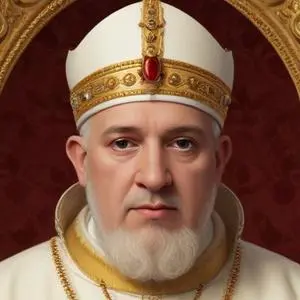
Pope Leo X: The Renaissance Pontiff
A Patron of the Arts and a Champion of Reform
Pope Leo X, born Giovanni di Lorenzo de Medici, is known for his patronage of the arts, his efforts to reform the Catholic Church, and his role in shaping the Renaissance. As the head of the Catholic Church and ruler of the Papal States from 1513 to 1521, Leo X left an indelible mark on the world of art, literature, and politics.
Early Life and Rise to Power
Born on December 11, 1475, in Florence, Italy, Giovanni was the second son of Lorenzo de Medici, the ruler of the Florentine Republic. He was elevated to the cardinalate in 1489 and quickly rose through the ranks of the Church, thanks in part to his family's considerable influence. Following the death of
Pope Julius II, Giovanni was elected pope in 1513, securing the backing of the younger members of the College of Cardinals.
The Fifth Council of the Lateran and the Quest for Reform
Early in his papacy, Leo X oversaw the closing sessions of the Fifth Council of the Lateran, which aimed to reform the Catholic Church and address the growing threat of Protestantism. Although the council ultimately failed to implement significant reforms, Leo X continued to push for change, promoting education and humanist studies.
A Patron of the Arts
Leo X was a passionate patron of the arts, commissioning works from some of the greatest artists of his time, including Raphael and Michelangelo. He encouraged the development of Renaissance humanism, promoting the study of literature, poetry, and Classics. Under his patronage, Marco Girolamo Vida began composing the Virgilian Latin epic poem,
Christiad, and progress was made on the rebuilding of St. Peter's Basilica.
The Controversy of Indulgences and the Protestant Reformation
Leo X is often associated with the practice of granting indulgences, which allowed individuals to purchase forgiveness for their sins. This practice was vehemently opposed by
Martin Luther, whose 95 Theses sparked the Protestant Reformation. In 1520, Leo X issued the Papal bull,
Exsurge Domine, condemning Luther's views and rendering further communication difficult.
Legacy and Impact
Despite his controversies, Pope Leo X left a lasting legacy in the world of art, literature, and politics. He promoted education, humanist studies, and the development of Renaissance culture. His patronage of the arts helped to shape the course of Western art and architecture. Today, he is remembered as a champion of reform and a champion of the Renaissance.
Personal Milestones and Key Life Events
- Born on December 11, 1475, in Florence, Italy
- Elevated to the cardinalate in 1489
- Elected pope in 1513
- Oversaw the closing sessions of the Fifth Council of the Lateran
- Commissioned the rebuilding of St. Peter's Basilica
- Issued the Papal bull, Exsurge Domine, in 1520
- Died on December 1, 1521, in Rome
Trivia and Fun Facts
- Leo X was the last pope not to have been in priestly orders at the time of his election to the papacy.
- He was known for his love of luxury and extravagance, often hosting lavish feasts and celebrations.
- Leo X was a skilled musician and played the lira.
Historical Context and Legacy
Pope Leo X lived during a time of great cultural and artistic transformation. His patronage of the arts and his efforts to reform the Catholic Church helped to shape the course of Western history. Today, he is remembered as a champion of the Renaissance, a patron of the arts, and a complex figure whose legacy continues to inspire and intrigue.
FAQ
Who was Pope Leo X and what was his significance?
Pope Leo X was the Pope of the Catholic Church from 1513 to 1521. He was a powerful figure in the Renaissance and played a significant role in shaping the Churchs response to the Protestant Reformation. Born Giovanni di Lorenzo de Medici, he was a member of the prominent Medici family in Florence.
What was Pope Leo Xs role in the Protestant Reformation?
Pope Leo Xs excommunication of Martin Luther in 1521 helped to spark the Protestant Reformation. He also issued the papal bull Exsurge Domine, which condemned Luthers 95 Theses and labeled him a heretic.
What was Pope Leo Xs contribution to the arts?
Pope Leo X was a patron of the arts and commissioned several works from famous artists, including Raphael and Michelangelo. He also supported the development of music and literature during his papacy.
What was Pope Leo Xs relationship like with his family?
Pope Leo X came from a powerful and wealthy family, the Medici. He was the second son of Lorenzo de Medici and was known for his extravagance and lavish spending, which put a strain on the familys finances.
What was Pope Leo Xs legacy?
Pope Leo Xs legacy is complex and multifaceted. While he played a significant role in shaping the Catholic Churchs response to the Protestant Reformation, he is also remembered for his extravagance and his neglect of the Churchs internal reform movements.