


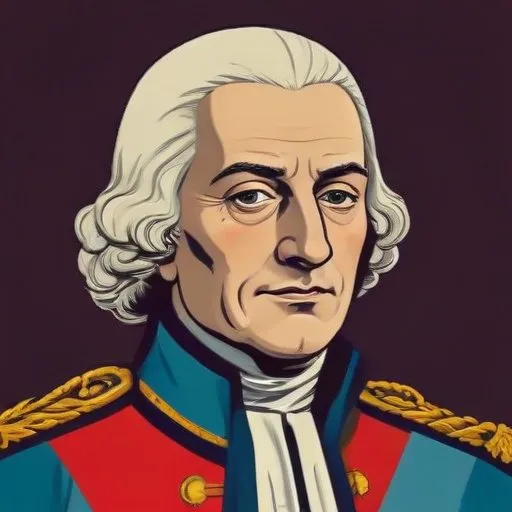
Ruler of Saxony from 1611 to 1656, known for his role in the Thirty Years' War and his efforts to maintain Saxony's independence. He also supported the arts and architecture, commissioning several notable buildings.
John George I, Elector of Saxony, is famously known for leading his electorate through the treacherous Thirty Years War, navigating the intricate web of alliances and rivalries that defined 17th-century Europe. During his 45-year reign, from 1611 to 1656, John George I showcased his exceptional diplomatic skills, ensuring the survival and prosperity of Saxony despite the turmoil surrounding it.
Born on March 5, 1585, in Dresden, John George I was the second son of Christian I, Elector of Saxony, and Sophie of Brandenburg. Belonging to the Albertine line of the House of Wettin, he was destined for greatness. Following the death of his elder brother, Christian II, John George I succeeded to the electorate on June 23, 1611, inheriting the weighty responsibility of guiding Saxony through the tumultuous era of the Thirty Years War.
John George I's reign was marked by a delicate balancing act between the Protestant and Catholic factions. Initially, he maintained a detached stance, wary of the growing strength of Brandenburg-Prussia and the Palatinate. However, his allegiance to Lutheranism remained unwavering. He recognized the importance of forging alliances and forged a relationship with the Habsburgs, securing their support in exchange for his backing of Archduke Ferdinand of Styria's imperial candidacy in August 1619.
As part of his agreement with the Habsburgs, John George I occupied Silesia and Lusatia, displaying remarkable clemency during these military campaigns. His actions contributed to the defeat of Frederick V, Elector Palatine of the Rhine, in Bohemia, where John George I had previously declined the crown. This strategic move allowed him to consolidate his power and expand Saxony's territories, cementing his reputation as a shrewd politician and military strategist.
While John George I's policies often oscillated between Protestant and Catholic allegiances, his ultimate goal remained the preservation of Saxony's interests. As the Thirty Years War drew to a close, he navigated the complexities of the Peace of Westphalia (1648), ensuring that Saxony emerged as a key player in the newly established European balance of power.
John George I's remarkable adaptability, astute diplomacy, and military prowess enabled Saxony to survive and thrive during one of the most tumultuous periods in European history. His legacy serves as a testament to the power of pragmatic leadership, inspiring future generations of European rulers and politicians.
John George I, Elector of Saxony, remains an enigmatic figure, whose remarkable reign continues to captivate historians and scholars alike. His mastery of diplomacy, military strategy, and cultural patronage has left an indelible mark on European history, cementing his status as one of the most intriguing figures of the 17th century.
Born in 1483
A German monk and priest who sparked the Protestant Reformation, challenging Catholic Church authority and shaping Western Christianity. He's famous for nailing 95 theses to a church door, sparking a religious revolution.
Born in 1503
Elector of Saxony who played a key role in the Protestant Reformation and was a prominent leader of the Schmalkaldic League, a defensive alliance of Protestant states. He's also known for being captured and imprisoned by Emperor Charles V.
Born in 1441
German ruler of Saxony who introduced the Reformation and played a key role in the early Protestant movement, shaping the course of European history.
Born in 1749
King of Denmark and Norway from 1766 to 1808, known for his mental health issues and scandals, which led to a regency that ruled in his place.
Born in 1503
The first Habsburg to rule the Holy Roman Empire, he unified Austria and introduced the concept of a hereditary monarchy, shaping European politics for centuries to come.
Born in 1500
Ruling over a vast empire from 1519 to 1556, he was a powerful and influential leader who played a crucial role in shaping European politics and religion. He is most known for his efforts to unify Christian Europe and defend it against the Ottoman Empire.
Born in 1471
A 15th-century German nobleman who ruled Saxony and was a key figure in the early Protestant Reformation, supporting Martin Luther's ideas and protecting him from persecution. He's also known for his cultural achievements, including commissioning artworks and founding the University of Wittenberg.
