


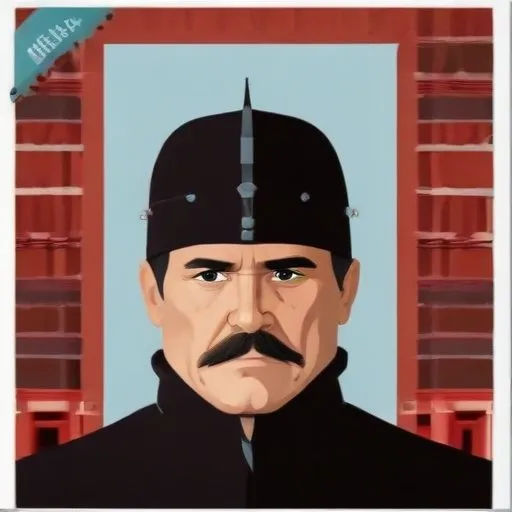
Notorious hangman who carried out over 200 executions in the UK during the early 20th century, earning a reputation for his efficiency and controversial methods.
John Ellis, a British executioner, is infamously known for his 23-year tenure, from 1901 to 1924, where he performed a staggering 203 executions, including some of the most notorious cases in British history. His gruesome profession earned him a place in the annals of British criminal history, and his story is still shrouded in intrigue and controversy.
Ellis's life was a fascinating blend of contrasts. On one hand, he was a gentle soul, a devoted husband, and a loving father, who ran a newsagent shop with his wife and children in Rochdale. On the other hand, he was a man responsible for ending the lives of countless individuals, a profession that would haunt him till the end of his days.
Born in Balderstone, Rochdale on October 4, 1874, Ellis's early life was marked by a series of casual labor jobs in and around Manchester. He later followed in his father's footsteps to become a barber and hairdresser, before venturing into the world of execution.
Ellis's fascination with the gallows began at the tender age of 22, when he applied to the Home Office to become an executioner. He underwent rigorous training at Newgate Prison and soon found himself assisting William Billington in an execution in Newcastle in 1901. His proficiency and poise earned him the role of Chief Executioner in 1907, a position he would hold for over 15 years.
Some of the most high-profile executions he performed include those of Dr. Hawley Harvey Crippen in 1910, Frederick Seddon in 1912, Sir Roger Casement in 1916, Herbert Rowse Armstrong in 1922, and Edith Thompson in 1923. The gruesome execution of Edith Thompson, who collapsed in terror and had to be supported by prison warders, left an indelible mark on Ellis's psyche.
The ordeal of executing Edith Thompson had a profound impact on Ellis. He began to struggle with the weight of his profession, and his life soon spiraled out of control. He took to drinking heavily and attempted suicide in 1924 by shooting himself in the jaw. The incident led to his resignation as Chief Executioner, and he was charged and bound over for 12 months.
John Ellis's life was marred by controversy, and his legacy remains shrouded in debate. While some view him as a dutiful public servant, others see him as a callous executioner who reveled in the power of life and death. Regardless of one's stance, Ellis's story serves as a poignant reminder of the complexities of human nature and the blurred lines between duty and morality.
As we reflect on Ellis's life, we are compelled to ask: what drives a man to pursue a profession that goes against the very fabric of human decency? Is it a quest for power, a desire for control, or simply a means to provide for one's family? The answer, much like Ellis's life, remains a mystery, shrouded in the darkness of his own tormented psyche.
Born in 1905
Britain's last hangman, known for executing over 400 people, including notorious serial killers, during a 25-year career. His unique approach to the role sparked controversy and public fascination.
84 Years Old
Legendary Georgetown University basketball coach, leading the Hoyas to a national championship in 1984, and later becoming a popular NBA analyst.
