


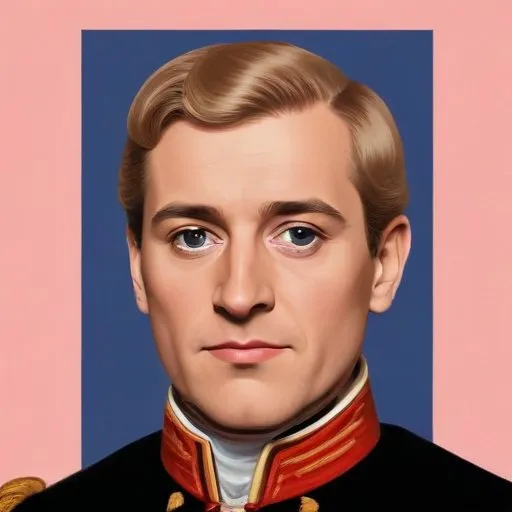
John Frederick, Duke of Wrttemberg, is renowned for his significant contributions to the tumultuous era of the Thirty Years' War, his tumultuous reign as the Duke of Wrttemberg from 1608 until his death in 1628, and his unwavering commitment to the Protestant cause.
Born on May 5, 1582, in Montbliard Castle, John Frederick was the eldest son of Frederick I and Sibylla of Anhalt. At the tender age of four, he left Montbliard and moved to Stuttgart with his family, where he would later ascend to the throne.
On November 16, 1584, John Frederick married Barbara Sophie of Brandenburg, daughter of Joachim Frederick, Elector of Brandenburg. To commemorate their union, he converted Castle Urach's golden room into a resplendent Renaissance-era banqueting hall, one of Germany's finest surviving examples.
John Frederick's reign was marked by a series of significant events and decisions. Despite his well-meaning and peaceful nature, he struggled to cope with the challenges of his era. However, he did restore the constitution suspended by his father, Frederick I, albeit with changes that were never implemented. He also reinstated the power of the councils of Duke Louis, which had been abolished by Frederick I.
A notable achievement of John Frederick's reign was the condemnation of his powerful chancellor, Matthus Enzlin, to life imprisonment for embezzlement and extortion. Enzlin was later tried for high treason and executed on the market square in Urach in 1613.
John Frederick continued his father's negotiations with other evangelical princes, culminating in the Union of Auhausen in 1608. He later led a Unionist army into the Palatinate region in 1621, although the alliance ultimately crumbled.
Despite John Frederick's efforts to navigate the complexities of his era, his reign was marked by financial struggles, family discord, and problems with the mint. Nevertheless, his commitment to the Protestant cause and his role in shaping the course of German history during the Thirty Years' War cement his place as a pivotal figure in the annals of Wrttemberg's history.
John Frederick's legacy serves as a testament to the complexities of his era, marked by conflict, reform, and the struggle for power. As a key figure in the Protestant movement, his reign continues to fascinate historians and scholars alike.
