


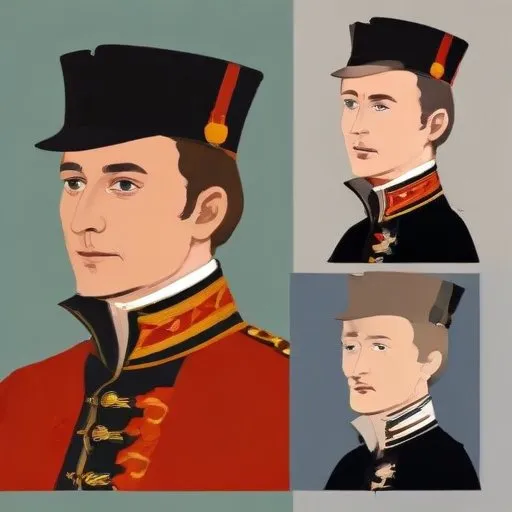
Ulrich, Duke of Wrttemberg, is infamously known as the "Swabian Henry VIII" due to his volatile personality and tumultuous reign from 1498 to 1550. He was a prominent figure in 16th-century Germany, leaving a lasting impact on the region's politics, economy, and society.
Born on February 8, 1487, Ulrich's early life was marked by tragedy and instability. His mother died in childbirth, and his father, Henry, Count of Wrttemberg, was mentally deranged and imprisoned by Duke Charles the Bold of Burgundy. Ulrich's only guardian died when he was just nine years old, leaving him vulnerable and without guidance.
Despite these challenges, Ulrich succeeded his kinsman Eberhard II as Duke of Wrttemberg in 1498 and was declared of age in 1503. His early years in power were marked by military campaigns, including serving the German king, Maximilian I, in the War of the Succession of Landshut in 1504.
However, Ulrich's extravagance and oppressive methods of raising money led to widespread discontent among his subjects. In 1514, an uprising known as the "Poor Conrad" broke out, forcing Ulrich to make concessions to the estates in exchange for financial aid.
Ulrich's personal life was also marred by controversy. In 1511, he married Sabina, a daughter of Albert IV, Duke of Bavaria, and niece of Emperor Maximilian. The marriage was unhappy, and Ulrich's affair with the wife of Hans von Hutten led to the duke killing Hans in 1515 during an altercation.
This event sparked a chain reaction of consequences, including the emperor's ban and the support of Sabina by her brother William IV, Duke of Bavaria.
Despite his tumultuous reign, Ulrich's legacy had a lasting impact on Wrttemberg and the surrounding region. His military campaigns and foreign relations shaped the region's politics, while his domestic policies and controversies influenced the development of Wrttemberg's economy and society.
Ulrich's reign serves as a cautionary tale about the dangers of unchecked power and the importance of effective governance. His story serves as a reminder of the complexities of human nature and the consequences of our actions.
While there are no recorded quotes from Ulrich himself, his contemporaries and historians have described him as a volatile and ruthless leader, earning him the nickname "Swabian Henry VIII."
Ulrich's reign coincided with significant events in European history, including the Italian Wars and the rise of the Ottoman Empire. His actions and decisions must be considered within the context of these larger historical trends.
In comparison to his contemporaries, Ulrich's reign was marked by controversy and instability, setting him apart from other leaders of the time.
Ulrich's relationships with his family members, including his father and wife, were marked by tension and conflict. His affair with the wife of Hans von Hutten led to tragic consequences, highlighting the complexities of his personal life.
Despite his tumultuous reign, Ulrich's story serves as a reminder of the importance of effective leadership, personal relationships, and the consequences of our actions.
Born in 1402
Ruler of Hesse from 1277 to 1308, known for reorganizing the government and economy of his territory, and for his role in the imperial election of 1292.
Born in 1402
Ruler of Hesse from 1277 to 1308, known for reorganizing the government and economy of his territory, and for his role in the imperial election of 1292.
Born in 1504
A German nobleman who ruled Hesse from 1509 to 1567, known for being a champion of the Protestant Reformation and a key figure in the Schmalkaldic League.
