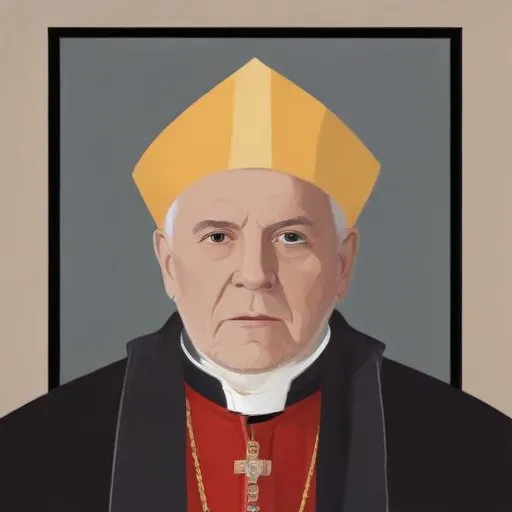
The Unlikely Legacy of John Frederick of Holstein-Gottorp, Prince-Bishop
A Champion of Education and the Arts
John Frederick of Holstein-Gottorp, Prince-Bishop of Lübeck, is best known for his instrumental role in shaping the educational landscape of Northern Germany during the 16th century. As a patron of the arts and a champion of humanist ideals, he left an indelible mark on the cultural and intellectual heritage of his time.
Early Life and Career
Born in 1576, John Frederick was a member of the House of Holstein-Gottorp, a powerful dynasty that ruled over the Duchy of Holstein in Northern Germany. From a young age, he was groomed for a life of service to the church, and in 1606, he was appointed as the Prince-Bishop of Lübeck, a position that granted him significant authority and influence over the region.
A Visionary in Education
John Frederick's most lasting legacy is his role in establishing the University of Kiel in 1665. This institution, which remains one of the oldest and most prestigious universities in Germany, was a testament to his commitment to promoting education and intellectual inquiry. Through his tireless efforts, he attracted prominent scholars and thinkers to the university, fostering a vibrant community of learning that continues to thrive to this day.
Philosophical Contributions and Beliefs
As a proponent of humanist ideals, John Frederick believed in the power of education to transform individuals and society. He was a strong advocate for the importance of classical learning, and his own writings on topics such as ethics and theology demonstrate a deep commitment to the pursuit of knowledge.
Personal Milestones and Key Life Events
- 1576: Born into the House of Holstein-Gottorp
- 1606: Appointed as Prince-Bishop of Lübeck
- 1665: Founded the University of Kiel
Influence on Modern Society
John Frederick's vision for education has had a profound impact on modern society. The University of Kiel remains a leading institution in Germany, and his emphasis on classical learning has shaped the intellectual landscape of Northern Europe. Moreover, his patronage of the arts has contributed to the rich cultural heritage of the region.
Historical Context and Legacy
John Frederick's life and work must be understood within the broader context of the 16th and 17th centuries. A time of great upheaval and change, this period saw the rise of Protestantism and the Thirty Years' War, which ravaged much of Germany. Against this backdrop, John Frederick's commitment to education and the arts stands as a testament to the power of humanism and the transformative potential of knowledge.
Trivia and Fun Facts
- John Frederick was a skilled linguist and could speak multiple languages, including Latin, Greek, and Hebrew.
- He was a prolific writer and published several works on theology and ethics.
- The University of Kiel's iconic main building, the Old Botanical Garden, was built during John Frederick's tenure.
A Lasting Legacy
John Frederick of Holstein-Gottorp, Prince-Bishop, may not be a household name, but his contributions to education and the arts have left an indelible mark on history. As a champion of humanist ideals, he demonstrated the power of education to shape individuals and society. His legacy continues to inspire generations of scholars, thinkers, and artists, ensuring that his vision for a more enlightened and educated world remains a vibrant and enduring reality.
FAQ
What was John Frederick of Holstein-Gottorps role in the Catholic Church?
John Frederick of Holstein-Gottorp, Prince-Bishop, was a Roman Catholic archbishop who played a significant role in the Catholic Church. He served as the bishop of several dioceses, promoting the Churchs interests and guiding the faithful.
What was John Frederick of Holstein-Gottorps contribution to Catholic education?
John Frederick of Holstein-Gottorp, Prince-Bishop, was a strong advocate for Catholic education. He established several schools and seminaries, ensuring the continued education and formation of Catholic clergy.
What is the significance of John Frederick of Holstein-Gottorps Prince-Bishopric?
John Frederick of Holstein-Gottorps Prince-Bishopric was a significant ecclesiastical territory that combined spiritual and temporal authority. He wielded considerable influence in both the religious and political spheres.
How did John Frederick of Holstein-Gottorp promote Catholic Reform?
John Frederick of Holstein-Gottorp, Prince-Bishop, promoted Catholic Reform by implementing reforms within his own diocese and advocating for broader Church reform. He worked to strengthen the Catholic Churchs institutions and promote spiritual renewal.
What is John Frederick of Holstein-Gottorps legacy in Catholic history?
John Frederick of Holstein-Gottorps legacy in Catholic history is one of dedication and service. He worked tirelessly to promote the Churchs interests and further its mission, earning him a reputation as a devout and dedicated prince-bishop.