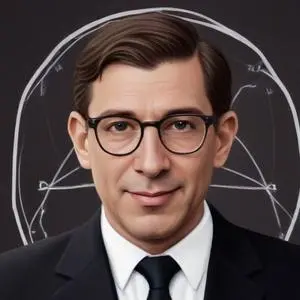
John Hasbrouck Van Vleck: The Father of Modern Magnetism
A Legacy of Magnetic Proportions
John Hasbrouck Van Vleck, a renowned American physicist and mathematician, revolutionized our understanding of magnetism, earning him the Nobel Prize in Physics in 1977. His groundbreaking contributions to the study of electronic magnetism in solids paved the way for significant advancements in the field, cementing his reputation as the Father of Modern Magnetism.
Early Life and Education
Born on March 13, 1899, in Middletown, Connecticut, Van Vleck was surrounded by academic excellence from an early age. His father, Edward Burr Van Vleck, was a mathematician, and his grandfather, John Monroe Van Vleck, was an astronomer and professor at Wesleyan University. Growing up in Madison, Wisconsin, Van Vleck went on to receive his A.B. degree from the University of Wisconsin in 1920 and his Ph.D. from Harvard University in 1922 under the supervision of Edwin C. Kemble.
Academic Career and Research
Van Vleck's academic career spanned across several prestigious institutions, including the University of Minnesota, the University of Wisconsin, and Harvard University. During his tenure, he established the fundamentals of quantum mechanical theory of magnetism, crystal field theory, and ligand field theory of chemical bonding in metal complexes. His work laid the foundation for a deeper understanding of magnetic materials and their applications.
War Efforts and Radar Technology
During World War II, Van Vleck contributed to the development of radar technology at the MIT Radiation Lab. His research revealed that water molecules in the atmosphere would lead to absorption at around 1.25-centimeter wavelength, and oxygen molecules would cause similar absorption at 0.5-centimeter wavelength. These findings had significant implications for military and civil radar systems, as well as the emerging field of radioastronomy.
The Manhattan Project and Beyond
Van Vleck participated in the Manhattan Project, joining a team of theoretical scientists led by
J. Robert Oppenheimer at the University of California, Berkeley. This collaboration confirmed the concept and feasibility of nuclear weapons, marking a pivotal moment in history.
Awards and Honors
In recognition of his outstanding contributions to physics, Van Vleck received numerous awards and honors, including:
- Nobel Prize in Physics (1977)
- Honorary D. Sc. degree from Wesleyan University (1936)
Legacy and Impact
John Hasbrouck Van Vleck's work has had a profound impact on our understanding of magnetism and its applications. His theories and discoveries continue to influence the development of modern technologies, from magnetic storage devices to medical imaging and beyond. As the Father of Modern Magnetism, Van Vleck's legacy serves as a testament to the power of curiosity-driven research and its potential to transform our world.
FAQ
What was John Hasbrouck Van Vlecks role in physics?
John Hasbrouck Van Vleck was an American physicist and mathematician who made significant contributions to the development of quantum mechanics. He was awarded the Nobel Prize in Physics in 1977.
What was John Hasbrouck Van Vlecks work on magnetism?
John Hasbrouck Van Vlecks work on magnetism led to a deeper understanding of the behavior of electrons in materials. He developed the Van Vleck equation, which is still used today to describe magnetic phenomena.
What was John Hasbrouck Van Vlecks role in the development of quantum mechanics?
John Hasbrouck Van Vleck played a key role in the development of quantum mechanics, working alongside prominent physicists such as Niels Bohr and Werner Heisenberg. He was a pioneer in the field of solid-state physics.
What awards did John Hasbrouck Van Vleck receive?
John Hasbrouck Van Vleck received several awards for his work, including the Nobel Prize in Physics in 1977, the National Medal of Science in 1966, and the Lorentz Medal in 1974.
How is John Hasbrouck Van Vleck remembered today?
John Hasbrouck Van Vleck is remembered today as one of the most important physicists of the 20th century, with a lasting impact on our understanding of magnetism and solid-state physics.