


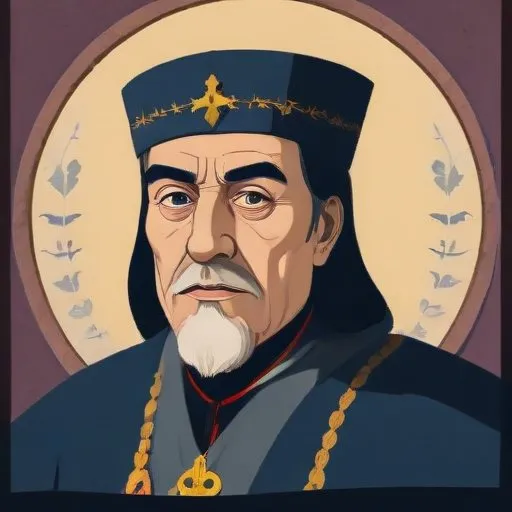
A powerful nobleman and governor who played a significant role in shaping the history of Moravia and Bohemia through his land ownership and political influence. He's known for his strategic alliances and military campaigns.
Renowned for his cultural and intellectual prowess, John III of Pernstein stands as a testament to the patronage and bureaucratic acumen of the Renaissance era. As a prominent nobleman of Bohemia, his extensive influence permeated the realms of politics, education, and the arts, solidifying his position as a luminary of his time.
Born in 1487, John III of Pernstein hailed from a distinguished aristocratic family, whose prominence dated back to the 13th century. His noble lineage and calculated alliances enabled him to wield considerable power, ascending to the position of Lord Chamberlain of Bohemia in 1514. This esteemed appointment thrust him into the inner circle of the Bohemian royal court, allowing him to exert significant influence over the realm's administrative and cultural affairs.
John III's intellectual curiosity and love for the arts led him to foster a culture of humanism, which permeated the intellectual and artistic circles of Prague. He maintained close relationships with prominent figures such as Erasmus of Rotterdam, the renowned Dutch humanist, and Albrecht Dürer, the celebrated German artist. These associations not only enriched the cultural landscape of Bohemia but also facilitated the dissemination of humanist ideals throughout the region.
As a dedicated patron of the arts, John III commissioned numerous architectural projects, including the construction of the Pernstein Castle, which now serves as a testament to his refined taste and vision. His support for artists, writers, and scholars galvanized the Bohemian Renaissance, yielding a plethora of enduring masterpieces that continue to inspire and captivate audiences to this day.
In 1511, John III married Elizabeth of Kunstadt, a union that produced four children and cemented his position as a leading figure in Bohemian society. His diplomatic acumen was instrumental in negotiating the Treaty of Vienna (1515), which forged a crucial alliance between Bohemia and the Habsburg Empire. These accomplishments demonstrate his adaptability, statesmanship, and ability to navigate the treacherous landscape of Renaissance politics.
John III's cultural and intellectual legacy extends far beyond the confines of Bohemia, as his patronage and promotion of humanist ideals continue to influence art, literature, and education in the modern era. His emphasis on individualism, intellectual curiosity, and the pursuit of knowledge resonates with contemporary values, solidifying his position as a pioneering figure of the Renaissance.
| 1487 | Birth of John III of Pernstein |
| 1511 | Marriage to Elizabeth of Kunstadt |
| 1514 | Appointment as Lord Chamberlain of Bohemia |
| 1515 | Negotiation of the Treaty of Vienna |
| 1528 | Death of John III of Pernstein |
In conclusion, John III of Pernstein's remarkable life and achievements serve as a beacon of cultural and intellectual excellence, illuminating the complexities and triumphs of the Renaissance era. His ardent support for the arts, humanism, and education continues to inspire and enrich our understanding of this pivotal period in human history.
Born in 1643
A 17th-century nobleman who ruled Lorraine and played a significant role in the Thirty Years' War, known for his military campaigns and territorial expansions.
Born in 1401
Duke of Bavaria who ruled from 1438 to 1460 and was a key figure in the Wittelsbach family, known for his role in the Bavarian War of Succession.
Born in 1452
The King of Naples who ruled from 1496 to 1501, known for his brief but tumultuous reign marked by conflicts with France and the Pope. He was eventually deposed and exiled.
