


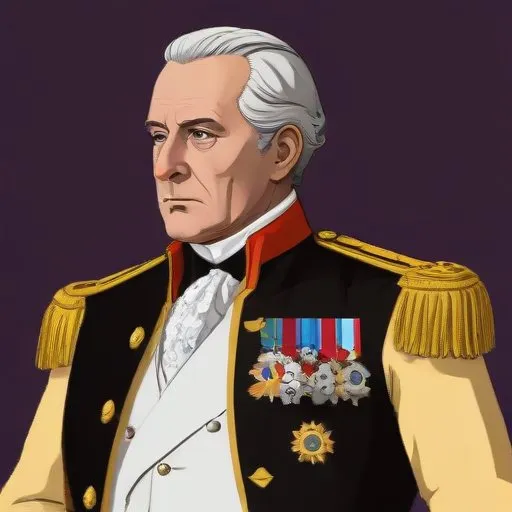
A renowned naval commander who led British fleets to several victories during the French Revolutionary and Napoleonic Wars, earning him great acclaim and a peerage. He also served as First Lord of the Admiralty, implementing significant naval reforms.
John Jervis, 1st Earl of St Vincent, is renowned for his triumph at the 1797 Battle of Cape Saint Vincent, earning him his esteemed titles. As a distinguished admiral in the Royal Navy, he played a pivotal role in shaping the naval forces during the late 18th and early 19th centuries.
John Jervis was born on January 9, 1735, in Meaford Hall, Staffordshire, to Swynfen and Elizabeth Jervis. His father, a barrister and counsellor to the Admiralty Board, instilled in him a strong sense of discipline and duty.
Jervis began his naval career at the tender age of 13, serving as a midshipman on the HMS Gloucester. His dedication and prowess quickly earned him promotion, and by 1759, he had risen to the rank of commander.
Jervis's military prowess was showcased during the Seven Years War and the American War of Independence. He commanded several vessels, including the HMS Foudroyant, and played a crucial role in several key battles.
During the French Revolutionary War and the Napoleonic Wars, Jervis continued to distinguish himself as a skilled commander and strategist. His victory at the Battle of Cape Saint Vincent in 1797 earned him the title of 1st Earl of St Vincent.
As Commander-in-Chief of the Mediterranean, Jervis introduced a series of reforms aimed at improving naval administration and discipline. His strict standing orders, applied equally to seamen and officers, sparked controversy but ultimately contributed to the Navy's increased efficiency.
As First Lord of the Admiralty in 1801, Jervis oversaw further reforms, including the introduction of block making machinery at Portsmouth Royal Dockyard. His commitment to innovation and modernization left a lasting impact on the Royal Navy.
Jervis was known for his generosity towards officers he deemed worthy of reward, as well as his swift and often harsh punishment of those who crossed him. His patronage of Horatio Nelson, a young and talented officer, helped shape Nelson's career.
Despite his tough exterior, Jervis was a devoted husband and father, marrying Martha Eleonora Parker in 1783 and fathering two children with her.
Jervis's disciplinarian approach to command was rooted in his strong sense of duty and discipline. He believed in the importance of a well-trained and efficient naval force, and his reforms reflect this philosophy.
Jervis's legacy extends beyond his military achievements. His reforms and innovations paved the way for future naval leaders and continue to influence naval administration today.
Jervis's impact on British history is undeniable, and his name remains synonymous with naval excellence and leadership.
67 Years Old
A renowned jockey and trainer, he won numerous prestigious races, including the Epsom Derby and St. Leger Stakes, and was known for his exceptional riding skills and innovative training methods.
Born in 1704
An 18th-century naval officer who governed Newfoundland and was court-martialed for failing to engage the enemy, leading to reforms in the British Navy's rules of engagement. He's infamous for being the first British admiral executed for cowardice.
