


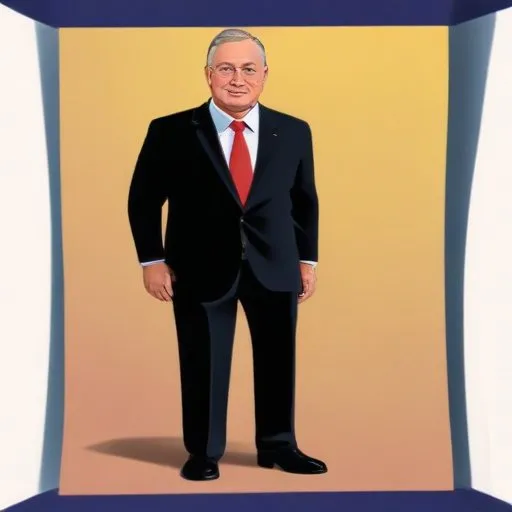
Australian politician who served as Minister for Primary Industry and Minister for Trade and Overseas Development, known for his role in shaping the country's agricultural and trade policies.
John Kerin, a distinguished Australian economist and politician, is renowned for his remarkable tenure as Minister for Primary Industries and Energy, a role he held for an unprecedented eight years. His exceptional expertise in economics and commodities earned him a prominent place in the Hawke and Keating governments, where he played a pivotal role in shaping Australia's economic landscape.
Born on November 21, 1937, in Bowral, New South Wales, Kerin grew up in a rural area, cultivating a deep understanding of the agricultural sector. He pursued his education at Hurlstone Agricultural High School and Bowral High School, later completing a Bachelor of Arts from the University of New England in 1967. Kerin further honed his skills with a Bachelor of Economics from the Australian National University in 1977. His academic pursuits were interspersed with work experience as a poultry farmer and at the Australian Bureau of Agricultural and Resource Economics (ABARE).
Kerin's foray into politics began as a student, when he joined the Labor Party. His dedication and expertise led to his election to the House of Representatives in 1972, representing the seat of Macarthur. Although he lost his seat in 1975, Kerin's return to politics was swift, and he was selected as Labor's candidate for the safe seat of Werriwa in 1978.
Following Labor's landslide victory in 1983, Prime Minister Bob Hawke appointed Kerin as Minister for Primary Industries and Energy, a role that leveraged his extensive experience in economics and commodities. Kerin's remarkable tenure in this position lasted almost the entirety of Hawke's premiership, making him the longest-serving Minister for Primary Industries and Energy in Australian history.
John Kerin's remarkable career has left an indelible mark on Australian politics and economics. His commitment to public service, coupled with his expertise in economics and commodities, has earned him a reputation as a visionary leader. His legacy continues to inspire future generations of politicians and economists, solidifying his place as one of the most respected figures in Australian politics.
96 Years Old
Leader of the Australian Labor Party who served as Prime Minister from 1983 to 1991, known for his charismatic leadership and economic reforms.
82 Years Old
The 24th Prime Minister of Australia, a Labor Party leader who implemented significant economic reforms, including deregulation and privatization, and is known for his bold and charismatic leadership style.
73 Years Old
A British singer-songwriter and pianist known for his emotive, poetic lyrics and soaring melodies, crafting introspective and atmospheric indie-pop soundscapes.
77 Years Old
The 9th Deputy Prime Minister of Australia, serving from 1995 to 1996, is a prominent figure in Australian politics, known for his leadership roles and diplomatic efforts. He later became the Australian Ambassador to the United States from 2010 to 2016.
77 Years Old
A prominent Australian trade union leader and politician who served as the Minister for the Arts, known for his contributions to the country's cultural development and labor movement.
69 Years Old
The 26th Prime Minister of Australia, a diplomat, and leader who apologized to the Indigenous Australians for past injustices and played a key role in shaping the country's climate change policies.
65 Years Old
The first female Prime Minister of Australia, serving from 2010 to 2013, known for her progressive policies and leadership during a period of significant economic reform.
69 Years Old
The 28th Prime Minister of Australia, a conservative leader who served from 2013 to 2015, known for his tough stance on immigration and climate change skepticism. He's also a Rhodes Scholar and athlete.
