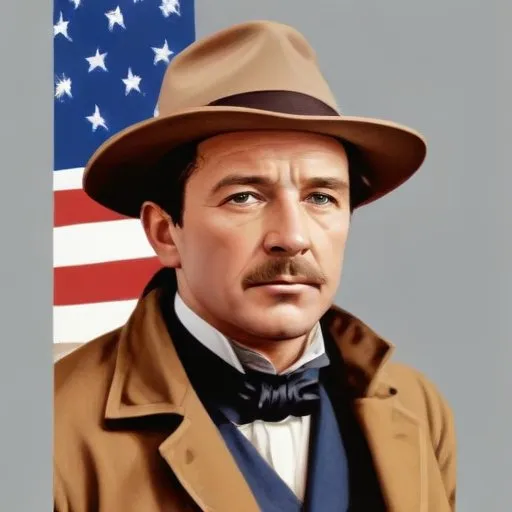
John Kirk Townsend: The Pioneering Naturalist and Ornithologist
A Legacy of Discovery
John Kirk Townsend was a renowned American naturalist and ornithologist, best known for his groundbreaking expeditions across the Rocky Mountains to the Pacific Ocean, during which he discovered numerous animal species new to science. His remarkable collection of bird species, including the mountain plover, Vaux's swift, and Townsend's warbler, has left an indelible mark on the field of ornithology.
Early Life and Education
Born on August 10, 1809, in Philadelphia, Pennsylvania, Townsend was the son of Charles Townsend and Priscilla Kirk. He attended Westtown School in West Chester, Pennsylvania, and was trained as a physician and pharmacist. However, it was his time at Westtown School that sparked his interest in natural history, which would eventually become his life's passion.
The Expedition Across the Rocky Mountains
In 1833, Townsend was invited by the botanist Thomas Nuttall to join Nathaniel Jarvis Wyeth's second expedition across the Rocky Mountains to the Pacific Ocean. This journey proved to be a turning point in Townsend's life, as he collected numerous animal specimens, including many bird species that were previously unknown to science.
Contributions to Science
Townsend's collections were highly valued by the scientific community, and many of his specimens were later described by prominent naturalists such as John Bachman. His contributions to science included the discovery of several mammal species, including the Douglas squirrel.
A Controversial Chapter
However, Townsend's legacy is also marred by a controversial chapter. During his travels, he collected skulls of indigenous people, often by stealing them from graves. This practice, although common during the time, is now widely regarded as unethical and disrespectful.
Family and Personal Life
Townsend came from a family of individuals with strong interests in natural history. His sister Mary, a naturalist and entomologist, wrote a popular book called "Life In the Insect World" in 1844. Another sister, Hannah, co-authored "The Anti-Slavery Alphabet" in 1846, which was sold at the Anti-Slavery Fair in Philadelphia.
Legal Service in Oregon
During his time at Wyeth's Fort William in Oregon, Townsend served as the appointed magistrate to the first public trial by Europeans in Oregon. This trial, which occurred when the post's gunsmith, Thomas J. Hubbard, attacked and killed the fort's tailor in an argument over a young native girl, was a significant event in the region's history.
Legacy and Impact
John Kirk Townsend's contributions to the fields of ornithology and natural history are still felt today. His discoveries have helped shape our understanding of the natural world, and his legacy continues to inspire future generations of naturalists and scientists.
- Notable Species Discovered: Mountain plover, Vaux's swift, Townsend's warbler, Chestnut-collared longspur, Black-throated grey warbler, Sage thrasher
- Publications: Numerous papers and articles on ornithology and natural history
- Awards and Honors: None recorded
John Kirk Townsend's remarkable journey, marked by both groundbreaking discoveries and controversial practices, serves as a testament to the complexity of human endeavor. Despite its flaws, his legacy remains an essential part of the scientific canon, inspiring future generations to explore and understand the natural world.
FAQ
What were John Kirk Townsends contributions to ornithology?
John Kirk Townsend made significant contributions to ornithology by collecting and describing numerous bird species, particularly in the Pacific Northwest. His works, such as Ornithology of the United States and Journey to the Rocky Mountains, are still referenced today.
What was John Kirk Townsends role in the Wilkes Expedition?
John Kirk Townsend was a naturalist and collector on the Wilkes Expedition, a United States exploring and surveying expedition that took place from 1838 to 1842. During this expedition, he collected and described many new species of plants and animals.
What were John Kirk Townsends thoughts on bird migration?
John Kirk Townsend was one of the first ornithologists to study bird migration patterns. He observed and recorded the movements of various bird species, providing valuable insights into their habits and habitats.
How did John Kirk Townsends work impact conservation efforts?
John Kirk Townsends work on ornithology and natural history helped raise awareness about the importance of conservation. His discoveries and descriptions of new species highlighted the need to protect and preserve natural habitats, influencing future conservation efforts.
What was John Kirk Townsends legacy in the field of natural history?
John Kirk Townsends legacy in natural history is significant, with many species of birds, mammals, and plants named in his honor. His contributions to the field have endured, and he is still recognized as a prominent figure in American ornithology and natural history.