


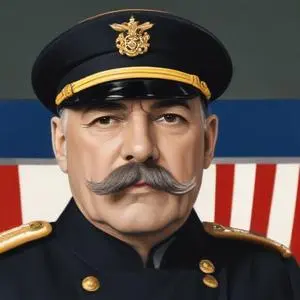
Renowned composer and conductor of patriotic American marches, including "The Stars and Stripes Forever," which evokes feelings of national pride and nostalgia.
John Philip Sousa, affectionately known as the "March King," is an American icon and mastermind behind some of the most recognizable and beloved marching band tunes in the United States. His compositions have been synonymous with American patriotism, evoking feelings of pride and nostalgia in millions of people around the world.
Sousa was born on November 6, 1854, in Washington, D.C. to a Portuguese father, John Anthony Sousa, and a German mother, Maria Elisabeth Trinkhaus. He was the third of ten children, and his early life was steeped in music. Sousa began studying music theory and composition under John Esputa and George Felix Benkert, and later went on to play the violin.
Sousa's career trajectory was nothing short of remarkable. In 1868, his father enlisted him in the United States Marine Band as an apprentice, where he honed his skills and eventually became the band's conductor in 1880. He served in this position for 12 years, during which time he composed some of his most famous marches, including "The Stars and Stripes Forever" and "Semper Fidelis."
In the 1890s, Sousa collaborated with instrument maker C.G. Conn to develop the sousaphone, a large, curved brass instrument similar to the helicon and tuba. This innovation revolutionized the sound of marching bands and helped to cement Sousa's status as a pioneer in the field.
During World War I, Sousa was awarded a wartime commission of lieutenant commander and led the Naval Reserve Band in Illinois. After the war, he returned to conducting his own band, which became known as the Sousa Band.
Sousa's contributions to American music are immeasurable. He composed over 130 marches, numerous operettas, and other works, earning him a permanent place in the country's cultural heritage. His music has been performed at presidential inaugurations, parades, and sporting events, and continues to inspire new generations of musicians and music lovers alike.
Sousa was posthumously awarded the Congressional Gold Medal in 1982, and his music has been recognized with numerous Grammy nominations and inclusions in the National Recording Registry.
In conclusion, John Philip Sousa's life and legacy are a testament to the power of music to inspire and unite people across generations and cultures. His marches continue to evoke feelings of pride, patriotism, and joy, solidifying his place as one of America's most beloved and enduring composers.
Born in 1918
A renowned musician who blended jazz, classical, and Broadway styles, creating iconic works like West Side Story, and inspiring generations with his charismatic performances and innovative compositions.
Born in 1898
A renowned pianist and composer who blended jazz and classical music to create iconic works like "Rhapsody in Blue" and "An American in Paris", leaving a lasting impact on American music.
Born in 1888
A legendary composer and pianist who wrote over 1,500 songs, including iconic American standards like "God Bless America" and "White Christmas", shaping the Great American Songbook.
Born in 1891
A legendary composer and songwriter behind timeless Broadway shows and Hollywood musicals, crafting witty, sophisticated, and romantic songs that have become jazz standards.
Born in 1902
Pioneering creator of iconic American musicals, blending music, dance, and drama to craft timeless classics like Oklahoma! and The Sound of Music.
Born in 1846
A successful cigar manufacturer and opera composer, he founded the Manhattan Opera Company, which rivaled the Metropolitan Opera, and wrote operas like "Nora" and "Dream City".
Born in 1842
Wrote iconic operettas, such as "H.M.S. Pinafore" and "The Pirates of Penzance", that blended humor, satire, and memorable melodies, still widely performed and enjoyed today.
Born in 1836
A renowned creator of comedic operas, known for witty lyrics and absurd storylines that continue to delight audiences today.
