


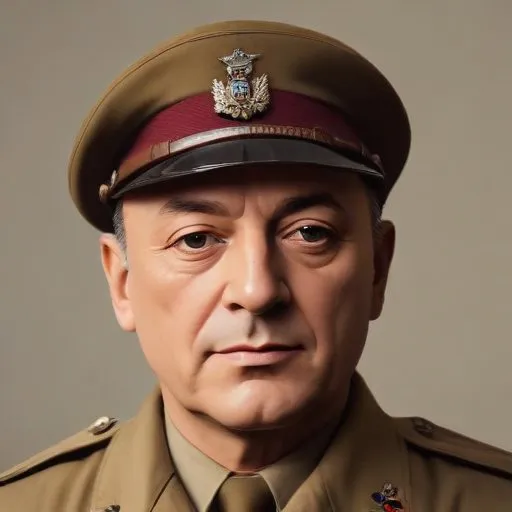
A British politician who served as Secretary of State for War, known for his involvement in a high-profile scandal that led to his resignation. He was embroiled in a notorious affair with a model who was also involved with a Soviet spy, sparking a national security crisis.
John Profumo, a British politician, is notoriously known for his scandalous affair with 19-year-old model Christine Keeler in 1961, which led to his resignation from the Conservative government of Harold Macmillan. This infamous episode, dubbed the Profumo affair, marked the end of his political career, but not the end of his story.
Profumo was born on January 30, 1915, in Kensington, London, to a diplomat and barrister father of Italian ancestry, Albert Profumo. He attended Harrow School and Brasenose College, Oxford, where he was a member of the elite Bullingdon Club. After graduating, he began a long-term relationship with German student Gisela Klein, who later worked for German intelligence in Paris.
In 1939, Profumo commissioned into the Royal Armoured Corps as a second lieutenant. He saw action in North Africa with the Northamptonshire Yeomanry, where he was mentioned in dispatches, and later landed in Normandy on D-Day. His military service earned him an Officer of the Order of the British Empire (OBE) in 1944. After the war, he entered politics, becoming the Conservative MP for Kettering in 1940 and later serving as a junior minister in Macmillan's government.
In 1961, Profumo's affair with Christine Keeler began, coinciding with her simultaneous involvement with Soviet diplomat Yevgeny Ivanov. The scandal broke in 1963, and Profumo initially denied the allegations, but eventually confessed and resigned from government. The affair not only destroyed his political career but also led to the uncovering of other government officials' scandals, contributing to the downfall of the Macmillan government.
In the aftermath of the scandal, Profumo devoted himself to charity work, volunteering at Toynbee Hall in East London. His dedication and hard work led to him becoming the charity's chief fundraiser. This redemption story earned him a Commander of the Order of the British Empire (CBE) in 1975, restoring some of his lost reputation.
John Profumo's story serves as a cautionary tale about the dangers of scandals and the importance of personal accountability in public life. Despite his fall from grace, he demonstrated the power of redemption through his charitable work. His legacy serves as a reminder that even in the darkest of times, there is always an opportunity for personal growth and renewal.
Born in 1894
A British politician who served as Prime Minister from 1957 to 1963, known for leading the country through a period of economic prosperity and decolonization.
Born in 1903
A British aristocrat who served as Prime Minister from 1963 to 1964, known for his brief tenure and aristocratic background.
Born in 1897
A British politician who served as Prime Minister from 1955 to 1957, known for his role in the Suez Crisis and his diplomatic efforts during the Cold War.
Born in 1871
Prolific writer of historical novels and adventure stories, also a talented landscape painter.
Born in 1885
Won the 1952 Olympic Games marathon in Helsinki, Finland, and held the world record in the marathon from 1952 to 1953.
Born in 1912
A British politician who served as Prime Minister from 1976 to 1979, known for his efforts to stabilize the economy and navigate the country through a period of industrial unrest.
Born in 1925
The first female Prime Minister of the United Kingdom, serving from 1979 to 1990, known for her conservative policies and leadership during the Falklands War.
73 Years Old
The former Prime Minister of the United Kingdom who led the country through a transformative period, including the Iraq War, and is known for his charismatic leadership and controversial decisions.
