


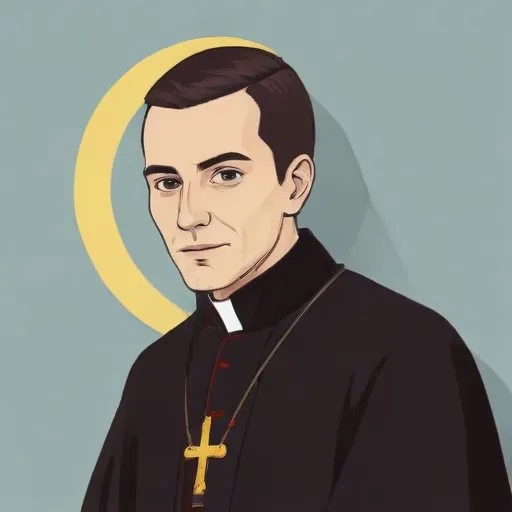
A 17th-century Moravian priest who was martyred for his faith and is revered for his bravery and devotion, especially in the Czech Republic and Slovakia.
John Sarkander, a Czech priest and martyr, is renowned for his unwavering commitment to his faith and his country, Poland, during the tumultuous period of the Thirty Years' War. His steadfast refusal to divulge confidential information, even in the face of brutal torture, has cemented his legacy as a symbol of courage and devotion.
Born on December 20, 1576, in Skoczów, Poland, John Sarkander was raised in a devout Catholic family. He pursued his priestly vocation at the University of Olomouc, where he studied theology and philosophy. Ordained in 1609, Sarkander served as a priest in several parishes in the Olomouc region, earning a reputation for his piety, humility, and dedication to his flock.
In 1620, during the Bohemian Revolt, Sarkander was accused of treason and conspiracy against the Protestant authorities. Despite his protestations of innocence, he was arrested, subjected to gruesome torture, and pressured to reveal confidential information about his Catholic colleagues. Refusing to betray his faith or his fellow believers, Sarkander endured unimaginable suffering, including the severing of his tongue and the crushing of his legs.
On March 17, 1620, after three days of agony, Sarkander succumbed to his injuries, his martyrdom inspiring a wave of devotion and veneration among the Catholic faithful.
In 1859, Pope Pius IX declared John Sarkander blessed, and in 1995, Pope John Paul II canonized him as a saint. Today, Sarkander is revered as the patron saint of Moravia, a region in the eastern part of the Czech Republic, and his feast day is celebrated on March 17.
Sarkander's unwavering commitment to his faith and his country has inspired generations of Catholics, earning him a place alongside other notable martyrs and saints in the annals of Church history.
Sarkander's courageous stance against oppression and persecution has resonated with countless individuals and communities, transcending national and religious boundaries. His example has inspired solidarity with those who suffer persecution, promoting a culture of tolerance, understanding, and respect for human rights.
As a symbol of resistance against tyranny, Sarkander's legacy continues to inspire people to stand up for their beliefs, even in the face of overwhelming adversity.
Sarkander's life and martyrdom embody the principles of faith, hope, and charity, demonstrating the profound impact of a life dedicated to serving others. His unwavering commitment to his beliefs, even in the face of death, serves as a powerful testament to the enduring power of faith.
Through his sacrifice, Sarkander underscored the importance of standing up for one's convictions, even when confronted with overwhelming opposition.
