


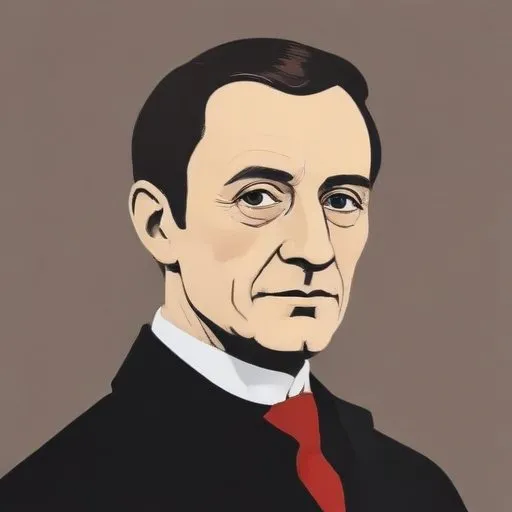
A prominent sociologist and academic who made significant contributions to the field of sociology, particularly in the areas of social stratification, power, and elites. He is known for his work on the British class system and the role of elites in shaping society.
John Scott, a renowned English sociologist, has left an indelible mark on the field of sociology, particularly in the areas of economic and political sociology, social stratification, and social network analysis. His work has been instrumental in shaping our understanding of complex social systems and the intricate relationships within them.
Scott's academic journey began at the University of Strathclyde, Glasgow, where he was appointed as a lecturer in 1972. His early work focused on the ownership and control of Scottish businesses and the involvement of economic elites in political power. This research led to a seminal paper in The Red Paper on Scotland, edited by future Prime Minister Gordon Brown.
Throughout his career, Scott has made significant contributions to the field of social network analysis, publishing numerous books and articles on the subject. His most notable works include Social Network Analysis: A Handbook, Power, and Social Stratification and the Distribution of Power. These works have been widely cited and have had a profound impact on the development of social network analysis as a discipline.
Scott's work is deeply rooted in the traditions of classical sociology, drawing inspiration from the likes of Marx, Weber, and Durkheim. He is particularly interested in the relationship between social structure and individual agency, and has developed a comprehensive framework for understanding the complex interplay between the two.
At the heart of Scott's philosophical contributions is a commitment to understanding the ways in which power operates in society. He has been critical of orthodox approaches to social stratification, arguing that they fail to account for the complexities of power relations and the ways in which individuals and groups are embedded within social networks.
Scott's contributions to the field of sociology have been recognized with numerous awards and honors. He is a Fellow of the British Academy, the Royal Society of Arts, and the Academy of Social Sciences. In 2016, he was awarded an Honorary Doctorate of Essex University, a testament to his enduring influence on the field.
Scott's work has far-reaching implications for our understanding of modern society. His research on social networks and power relations has informed policy debates on issues such as inequality, social justice, and democratic governance. His ideas have also influenced a range of fields, from business and management to politics and public policy.
Born on April 8, 1949, in Battersea, London, Scott spent most of his childhood in Feltham, Middlesex. He attended Cardinal Road Infant school, Hanworth Road Junior school, and Hampton Grammar School, before going on to study sociology at Kingston College of Technology (now Kingston University). He completed his PhD at the London School of Economics under the supervision of John Westergaard and Percy Cohen.
John Scott's work continues to shape the field of sociology, influencing a new generation of researchers and scholars. His contributions to social network analysis have opened up new avenues for research and have had a lasting impact on our understanding of complex social systems.
As a testament to his enduring influence, Scott's work remains a vital part of the sociological canon, continuing to inspire and inform research in the field. His commitment to understanding the intricacies of social power and his contributions to the development of social network analysis have cemented his place as one of the leading sociologists of his generation.
56 Years Old
Former England rugby team captain and coach, leading the team to World Cup victory in 2003, and known for his tough, no-nonsense leadership style.
54 Years Old
A former English rugby union player and captain, known for his impressive career with the national team and his current work as a television commentator.
47 Years Old
A legendary fly-half who led England to Rugby World Cup victory in 2003 with a dramatic last-minute drop goal, earning iconic status in the sport.
52 Years Old
A dual-code rugby legend who excelled as a player and coach in both league and union, earning numerous accolades and inspiring a generation of rugby enthusiasts.
48 Years Old
Former England rugby captain and World Cup winner, known for his rugged playing style and marriage to Zara Phillips, the Queen's granddaughter.
50 Years Old
Former English rugby union player and captain who won the 2003 Rugby World Cup, now a popular TV sports pundit and commentator.
64 Years Old
A former England rugby union player who won 64 caps and was a key figure in the team that won the 2003 Rugby World Cup, known for his tough and physical playing style.
