


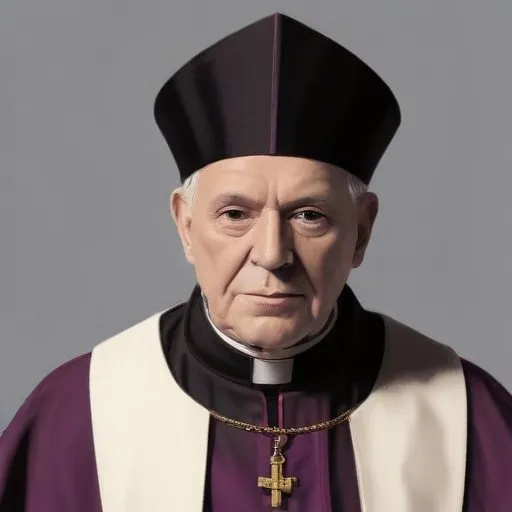
Archbishop of York from 1465 to 1471, known for his diplomatic skills and role in ending the Wars of the Roses.
John Sharp, a prominent figure in the 17th century, is renowned for his prestigious position as the Archbishop of York, a role that earned him great respect and admiration in the Church of England. His zealous preaching against Popery during the reign of King James II led to his suspension, but his unwavering dedication to his faith eventually earned him the favor of King William and Queen Anne, who appointed him as her Lord Almoner.
Born on February 16, 1645, in Bradford, John Sharp was the eldest son of Thomas Sharp, a salter, and Dorothy Weddal. His father, a devout Calvinist, instilled in him the principles of the Low Church, while his mother, a staunch royalist, taught him the liturgy of the Book of Common Prayer. This unique blend of influences shaped Sharp's theological perspective, which would later define his career.
Sharp received his education at Bradford Grammar School and Christ's College, Cambridge. He was ordained as a deacon and priest on August 12, 1667, at St. Mary's, Westminster, by special faculty from Archbishop of Canterbury, Gilbert Sheldon.
Sharp's remarkable career saw him hold various positions, including chaplain and tutor in the family of Heneage Finch, 1st Earl of Nottingham, and archdeacon of Berkshire. In 1675, he became the rector of St. Giles in the Fields, where he preached passionately against Popery, earning him both admiration and criticism.
In 1681, Sharp was appointed as the Dean of Norwich, and in 1685, he drafted the grand jury of London's address of congratulation on the accession of James II. His loyalty to the monarch earned him the position of chaplain in ordinary to the king in 1686.
John Sharp's unwavering commitment to his faith and his remarkable learning earned him the respect of his contemporaries. He was hailed as one of the greatest ornaments of the Church of England, and his piety and erudition inspired generations to come.
Sharp's legacy extends beyond his illustrious career, as he played a significant role in shaping the theological landscape of his time. His sermons, though provocative, reflected his unshakeable dedication to the principles of the Church of England.
Sharp's personal life was not without controversy. His strong stance against Popery led to his suspension by Henry Compton, bishop of London, in 1686. However, his unwavering resolve ultimately earned him the favor of King William and Queen Anne, who recognized his unwavering dedication to the Church of England.
Despite the controversies surrounding him, Sharp remained a steadfast champion of his faith, earning him a revered place in the annals of Church history.
John Sharp's enduring legacy is a testament to his unwavering commitment to his faith and his remarkable learning. His tireless efforts to promote the principles of the Church of England continue to inspire generations of theologians, scholars, and faithful alike.
In conclusion, John Sharp's illustrious career serves as a beacon of inspiration, reminding us of the transformative power of faith, learning, and dedication. His remarkable story continues to captivate and inspire, cementing his place as one of the most revered figures in the Church of England.
Born in 1489
Leader of the English Reformation, instrumental in creating the Church of England and authoring the Book of Common Prayer.
Born in 1504
The Archbishop of Canterbury from 1559 to 1575, known for his role in shaping the Church of England and promoting a moderate Protestantism. He was a key figure in the English Reformation.
Born in 1887
Pioneering director, producer, and screenwriter behind iconic Broadway shows and films, including "Damn Yankees" and "The Pajama Game", known for blending music, comedy, and drama.
86 Years Old
Creator of the iconic underground comix character Freak Brothers, known for his humorous and satirical illustrations that critiqued American culture and politics.
Born in 1636
The Archbishop of Canterbury from 1694 to 1715, known for his strong stance against Catholicism and his role in the Glorious Revolution. He was a prominent figure in the Church of England during a time of great change.
