


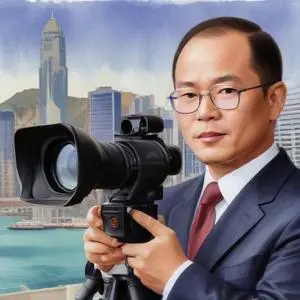
A renowned filmmaker behind iconic action movies with intricate set pieces, slow-motion sequences, and doves, influencing the industry with his unique visual style.
John Woo is a Hong Kong filmmaker renowned for his highly influential and iconic contributions to the action film genre. He is the pioneer of heroic bloodshed films, a subgenre of crime action films that involves Chinese triads, and the gun fu genre in Hong Kong action cinema.
Born as Wu Yuseng (Ng Yusum in Cantonese) on September 22, 1946, in Guangzhou, China, John Woo grew up amidst the chaos of the Chinese Civil War. His family, who were Protestant Christians, faced persecution during Mao Zedong's early antibourgeois purges and fled to Hong Kong when he was just five years old.
Impoverished, the Woo family lived in the slums at Shek Kip Mei, where his father, a teacher, was rendered unable to work due to tuberculosis, and his mother was a manual laborer on construction sites. The family was later rendered homeless by the Shek Kip Mei Fire of 1953, but charitable donations from disaster relief efforts enabled them to get back on their feet.
John Woo's passion for filmmaking began at a young age, and he started working in the film industry as a scriptwriter and editor in the 1960s. He made his directorial debut in 1979 with the film "From Riches to Rags," which received critical acclaim.
John Woo's breakthrough came with the release of "A Better Tomorrow" in 1986, a film that defined the heroic bloodshed genre and earned him widespread recognition. He went on to direct several other notable films, including "The Killer" (1989), "Hard Boiled" (1992), and "Red Cliff" (2008-2009), solidifying his reputation as a master of action filmmaking.
Woo's signature style, known as "bullet ballet," features highly choreographed action sequences, stylized imagery, and a blend of Chinese martial arts and Western cinema influences. His films often explore themes of loyalty, honor, and redemption, set against the backdrop of the Chinese triad underworld.
In the 1990s, John Woo transitioned to Hollywood, directing films such as "Hard Target" (1993), "Broken Arrow" (1996), "Face/Off" (1997), and "Mission: Impossible II" (2000). These films showcased his ability to merge his signature style with mainstream Hollywood action.
In addition to his film work, Woo has also ventured into comic books, creating the series "Seven Brothers," published by Virgin Comics. He is the founder and chairman of the production company Lion Rock Productions.
John Woo has received numerous awards and accolades for his contributions to the film industry, including:
John Woo's influence on modern action cinema is undeniable, and his filmmaking style has inspired a generation of directors and action choreographers. His work has also had a significant impact on popular culture, with his films often referenced and homaged in music videos, video games, and other forms of media.
As a true pioneer of the action film genre, John Woo continues to be celebrated for his innovative storytelling, stylish visuals, and relentless pursuit of cinematic excellence.
71 Years Old
A renowned Hong Kong actor and screenwriter, starring in over 120 films, including critically acclaimed titles like "Crouching Tiger, Hidden Dragon" and "Pirates of the Caribbean: At World's End".
63 Years Old
A renowned martial artist, actor, and producer, known for his impressive fight choreography and starring roles in films like "Rush Hour" and "Fist of Legend".
63 Years Old
A renowned actor, director, and martial artist, known for his iconic roles in Hong Kong action films, particularly in the Ip Man franchise, showcasing his impressive fighting skills.
68 Years Old
A visionary filmmaker celebrated for his visually stunning and emotionally charged movies that explore themes of love, longing, and human connection. His films often feature lush cinematography, complex characters, and a blend of drama, romance, and comedy.
Born in 1736
They founded a Christian sect known for their simple living, celibacy, and ecstatic worship, and are famous for their furniture making and folk music. 18
