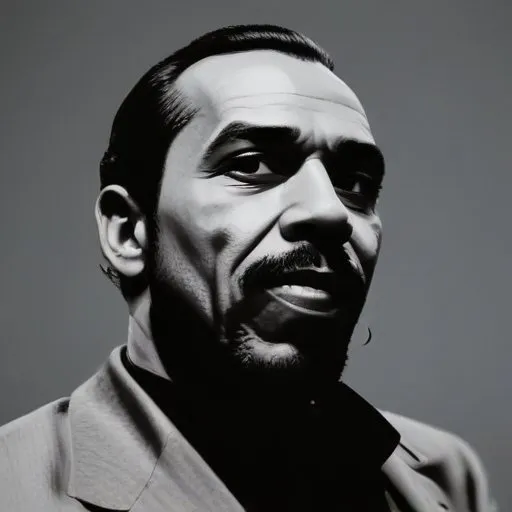
Johnny Otis: The Godfather of Rhythm and Blues
A Seminal Influence on American Music
Johnny Otis, born Ioannis Alexandres Veliotes, was a trailblazing musician, composer, bandleader, record producer, and talent scout who left an indelible mark on American R&B and rock and roll. With a career spanning over six decades, he discovered and nurtured numerous artists who went on to achieve immense success, earning him the revered title of "Godfather of Rhythm and Blues."
Early Life and Cultural Identity
Born on December 28, 1921, in Vallejo, California, to Greek immigrant parents, Otis grew up in a predominantly black neighborhood in Berkeley, where his father owned a grocery store. This unique upbringing allowed him to develop a deep connection with African American culture, which would later shape his artistic vision and personal identity. In his own words, "As a kid, I decided that if our society dictated that one had to be black or white, I would be black."
Musical Career Highlights
Otis's illustrious career began in the 1930s, performing with various bands and eventually forming his own group, the Johnny Otis Orchestra. He went on to produce and record with numerous legendary artists, including:
His groundbreaking work as a talent scout and producer helped launch the careers of many famous musicians, cementing his status as a driving force behind American R&B and rock and roll.
Personal Milestones and Key Life Events
On May 2, 1941, Otis married Phyllis Walker, an 18-year-old woman of African American and Filipino descent, despite his mother's objections. The couple had four children, including musicians
Shuggie Otis and Nicholas Otis, and raised Lucky Otis, Shuggie's son with his first wife, Miss Mercy Fontenot of The GTOs.
Philosophical Contributions and Beliefs
Otis's decision to live his professional and personal life as a member of the African American community was a testament to his commitment to breaking down racial barriers and challenging societal norms. His music and legacy continue to inspire generations, promoting unity, diversity, and artistic expression.
Impact on Modern Society
As a pioneering figure in American music, Johnny Otis's influence extends far beyond his own accomplishments. He played a crucial role in shaping the sound and style of R&B, rock and roll, and soul music, paving the way for future generations of musicians.
Legacy and Historical Context
Otis's groundbreaking work and unwavering dedication to his art have earned him a permanent place in the annals of American music history. His legacy serves as a beacon of inspiration, reminding us of the power of music to bring people together and transcend cultural boundaries.
Quotes and Memorable Sayings
"I'm not a Greek kid from California, I'm a black kid from Berkeley."
"As a kid, I decided that if our society dictated that one had to be black or white, I would be black."
Awards and Honors
Throughout his career, Otis received numerous awards and accolades, including:
- Inducted into the Rock and Roll Hall of Fame (1994)
- Recipient of the Rhythm and Blues Foundation's Pioneer Award (1991)
- Winner of the Blues Foundation's Lifetime Achievement Award (2000)
Trivia and Fun Facts
* Otis's father, Alexander J. Veliotes, was a Mare Island longshoreman and grocery store owner.
* His brother, Nicholas A. Veliotes, became the U.S. Ambassador to Jordan (1978-1981) and Egypt (1984-1986).
* Johnny Otis passed away on January 17, 2012, at the age of 90, leaving behind a rich legacy that continues to inspire and educate new generations of music enthusiasts.
FAQ
What genres of music did Johnny Otis work in?
Johnny Otis was a pioneer in multiple genres, including rhythm and blues, jazz, and rock and roll, and is often referred to as the Godfather of Rhythm and Blues.
What was Johnny Otiss biggest hit?
Johnny Otiss biggest hit was the song Willie and the Hand Jive, which reached the top 10 on the Billboard Hot 100 chart in 1958.
Did Johnny Otis own a nightclub?
Yes, Johnny Otis owned the Barrelhouse Club in Los Angeles, which became a popular spot for R&B and jazz musicians in the 1940s and 1950s.
What instruments did Johnny Otis play?
Johnny Otis was a multi-instrumentalist, playing drums, piano, and vibraphone, and was known for his distinctive drumming style.
Did Johnny Otis work with other notable musicians?
Yes, Johnny Otis worked with many notable musicians, including Etta James, Big Mama Thornton, and Little Richard, and helped to launch the careers of many R&B and rock and roll artists.