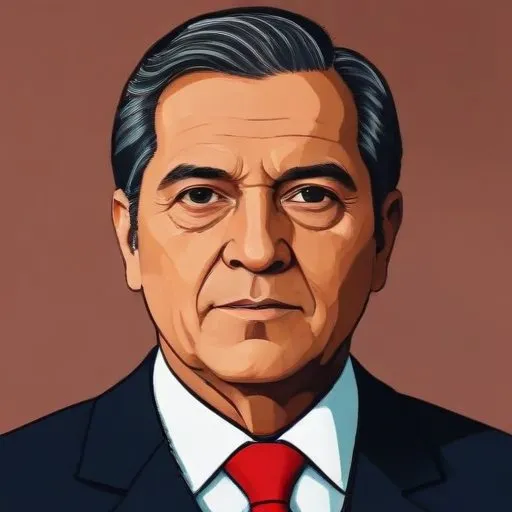
Joo Goulart: The Last Left-Wing President of Brazil
A Leader of the People
Joo Goulart, commonly known as Jango, was a Brazilian politician who served as the 24th president of Brazil until a military coup d'état deposed him on 1 April 1964. He was considered the last left-wing president of Brazil until Luiz Incio Lula da Silva took office in 2003.
Early Life and Family
Goulart was born on 1 March 1919, at Yguaria Farm, in Itacurubi, So Borja, Rio Grande do Sul, Brazil. His parents were Vicentina Marques Goulart, a housewife, and Vicente Rodrigues Goulart, an estancieiro (rancher) who owned large rural properties. His grandfather, Belchior Rodrigues Goulart, descended from Portuguese immigrants from the Azores who arrived in Rio Grande do Sul in the second half of the 18th century.
Rise to Power
Goulart's political career began when he was supported and advised by Getlio Vargas, who later became his friend and mentor. He was first elected as a federal deputy in 1947 and later became the Minister of Labor, Industry, and Trade in 1953. In 1960, he was elected as the Vice President of Brazil, running alongside Jnio Quadros.
Presidency and Reforms
As president, Goulart focused on implementing reforms to improve the lives of the working class and promote economic development. He nationalized oil refineries, established a state-owned oil company, and introduced a land reform program to redistribute land to peasant farmers. He also introduced a program to combat illiteracy and promoted the development of national industries.
Deposition and Exile
Goulart's presidency was cut short when a military coup d'état deposed him on 1 April 1964. He was forced into exile in Uruguay, where he lived until his death on 6 December 1976.
Legacy
Despite his short time in office, Goulart's legacy as a champion of the working class and a promoter of national development has endured. He is remembered as a leader who fought for the rights of the poor and the marginalized, and his policies have inspired generations of Brazilians.
Personal Milestones and Key Life Events
- 1919: Born on 1 March in Itacurubi, So Borja, Rio Grande do Sul, Brazil
- 1947: Elected as a federal deputy
- 1953: Became the Minister of Labor, Industry, and Trade
- 1960: Elected as the Vice President of Brazil
- 1961: Became the President of Brazil
- 1964: Deposed by a military coup d'état
- 1976: Died on 6 December in exile in Uruguay
Influence on Modern Society
Goulart's legacy continues to influence modern Brazilian society. His policies and ideals have inspired generations of politicians, activists, and ordinary citizens who are committed to promoting social justice and economic development.
FAQ
What was João Goularts early life like?
João Goulart was born on March 1, 1918, in São Borja, Brazil. He came from a family of ranchers and was educated at the University of Porto Alegre. He later became involved in politics, serving as a state legislator and governor of Rio Grande do Sul.
What were João Goularts key policies as President of Brazil?
João Goulart served as the 24th President of Brazil from 1961 to 1964. During his presidency, he implemented several key policies, including land reform, nationalization of key industries, and increased government spending on social programs.
What was João Goularts relationship like with the Brazilian military?
João Goularts presidency was marked by tension with the Brazilian military, which saw him as a threat to their power and interests. He was eventually overthrown in a military coup in 1964.
What was João Goularts legacy?
João Goularts legacy is that of a president who attempted to implement significant reforms in Brazil, but was ultimately overthrown by the military. His presidency marked a turning point in Brazilian history, leading to a period of military rule that lasted for decades.
What happened to João Goulart after his overthrow?
After his overthrow, João Goulart went into exile in Uruguay, where he remained until his death in 1976. He continued to speak out against the military regime that had overthrown him, and his legacy as a champion of social justice and democracy continues to be celebrated in Brazil today.