


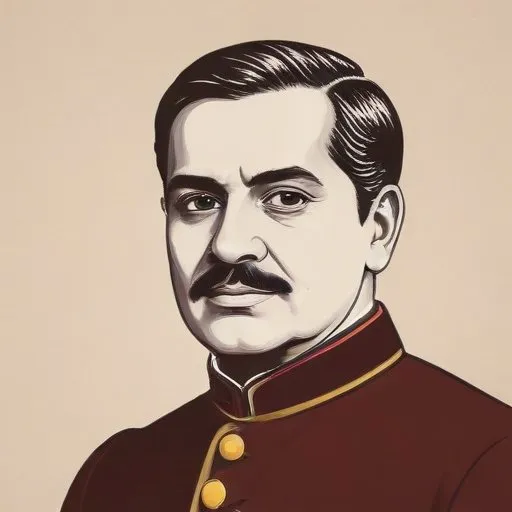
The 16th-century Portuguese nobleman who governed India's colonial territories, implementing reforms and strengthening trade, leaving a lasting legacy in the region's history.
Joo de Castro, a Portuguese nobleman, scientist, writer, and colonial administrator, is renowned for being the fourth Portuguese Viceroy of India from 1545 to 1548. His remarkable journey, marked by bravery, intellect, and strategic thinking, earned him the nickname "Strong Castro" or "Castro Forte" from the poet Lus de Cames.
Born on February 27, 1500, Joo de Castro was the second son of lvaro de Castro, the civil governor of Lisbon. He was destined for the church, but his curiosity and passion for mathematics led him to study under Pedro Nunes, along with Luis, Duke of Beja, son of King Manuel I of Portugal. This lifelong friendship with the Duke would have a significant impact on his future endeavors.
In 1535, de Castro accompanied Dom Lus to the siege of Tunis, where he refused knighthood and rewards from Emperor Charles V. This decision showcased his integrity and independence. Upon his return to Lisbon, the king awarded him the commendation of So Paulo de Salvaterra in the Order of Christ in 1538.
De Castro's travels continued as he left for India with his uncle Garcia de Noronha in 1538. He participated in the relief of Diu upon his arrival at Goa. In 1540, he served on an expedition to Suez under Estvo da Gama, the son of Vasco da Gama and then viceroy of India. Da Gama knighted his son, lvaro de Castro, in recognition of Joo de Castro's exceptional leadership skills.
De Castro kept a meticulous journal of his voyage, which included detailed maps, calculations, pictures, and notes of the coasts of the Arabian Peninsula, Somalia, Eritrea, Ethiopia, Sudan, and Egypt. This remarkable document, known as the Roteiro do Mar Roxo, is a testament to his scientific mind and curiosity.
In 1545, de Castro became the fourth Portuguese Viceroy of India, succeeding Estvo da Gama. During his tenure, he demonstrated exceptional administrative skills, earning him the respect of his peers and the local population.
Joo de Castro's contributions to Portuguese colonial administration, his scientific achievements, and his literary works have left an indelible mark on history. His remarkable life serves as an inspiration to aspiring leaders, scientists, and explorers, demonstrating the importance of courage, intellect, and strategic thinking in achieving greatness.
