


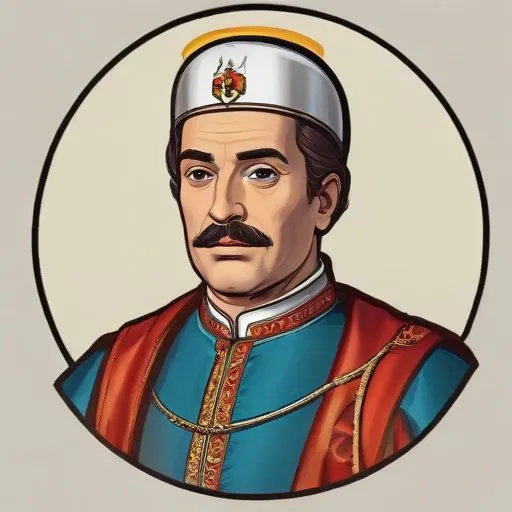
King of Portugal from 1495 to 1521, known for sponsoring Vasco da Gama's voyage to India, establishing trade routes, and promoting the Portuguese Renaissance.
Manuel I, known as the Fortunate, was the King of Portugal from 1495 to 1521, renowned for his role in shaping the course of Portuguese exploration, colonization, and trade. During his reign, Portugal established itself as a dominant force in global trade, and Manuel's patronage of explorers like Vasco da Gama and Pedro Álvares Cabral led to the discovery of the sea route to India and the colonization of Brazil.
Manuel was born on May 31, 1469, in Alcochete, Portugal, as the ninth child of Ferdinand, Duke of Viseu, and Beatriz of Portugal. His royal connections and family ties paved the way for his ascension to the throne, following the death of his cousin, King John II of Portugal, in 1495.
Manuel's reign marked the beginning of an era of unprecedented Portuguese exploration and expansion. He sponsored numerous expeditions, including Vasco da Gama's voyage to India in 1498, which opened up the Spice Route and secured Portugal's monopoly on the spice trade. This period also saw the establishment of the Portuguese India Armadas, which ensured Portugal's dominance in the Indian Ocean.
Afonso de Albuquerque, another explorer patronized by Manuel, established Portuguese hegemony in the Indian Ocean, and Pedro Álvares Cabral's expedition led to the discovery of Brazil in 1500. Manuel's support for these expeditions made Portugal a major player in global trade and colonization.
To manage Portugal's growing trade empire, Manuel established the Casa da Índia, a royal institution that oversaw the country's monopolies and imperial expansion. This institution played a crucial role in regulating Portugal's trade and colonization efforts across Africa, Asia, and the Americas.
Manuel was a generous patron of the arts, and his reign witnessed a flourishing of Portuguese culture, often referred to as the Portuguese Renaissance. He supported prominent intellectuals, including the playwright Gil Vicente, known as the father of Portuguese and Spanish theatre.
The Manueline style, a unique architectural style characterized by ornate decorations and maritime motifs, is named after the king and has become an iconic representation of Portuguese national identity.
Manuel's reign had a profound impact on modern society, shaping the course of global trade, colonization, and cultural exchange. His legacy extends beyond Portugal's borders, with his patronage of explorers and intellectuals contributing to the development of European culture and identity.
In a comparative analysis with his contemporaries, Manuel's vision and leadership set him apart as a true pioneer of the Renaissance era. His far-reaching influence can be seen in the rise of Portuguese as a global language, the spread of Christianity, and the establishment of modern nation-states.
Manuel I of Portugal left an indelible mark on history, shaping the course of exploration, colonization, and cultural exchange. His vision, leadership, and patronage of the arts have cemented his place as one of the most influential monarchs of the Renaissance era.
Born in 1455
King of Portugal from 1481 to 1495, known for his centralizing policies, establishing a strong monarchy, and sponsoring explorers like Bartolomeu Dias and Vasco da Gama.
Born in 1554
The last monarch of the House of Aviz, who disappeared during a crusade in Morocco, leading to a succession crisis that changed the course of Portuguese history. He's a legendary figure, symbolizing a lost golden age.
Born in 1394
A Portuguese prince who sponsored and organized numerous expeditions to explore and map the west coast of Africa, leading to the discovery of new trade routes and territories. He played a crucial role in the Age of Exploration.
Born in 1432
King of Portugal who ruled from 1438 to 1481, known for his military conquests in North Africa and the expansion of Portuguese trade and exploration.
Born in 1209
King of Portugal from 1223 to 1248, known for his military campaigns to reconquer territories from the Moors and his conflicts with the Catholic Church.
Born in 1432
King of Portugal who ruled from 1438 to 1481, known for his military conquests in North Africa and the expansion of Portuguese trade and exploration.
Born in 1320
King of Portugal who ruled from 1357 to 1367 and is remembered for his brutal suppression of the nobility and his role in the Portuguese succession crisis. He's also known for his tumultuous personal life, including the murder of his mistress's lover.
Born in 1455
King of Portugal from 1481 to 1495, known for his centralizing policies, establishing a strong monarchy, and sponsoring explorers like Bartolomeu Dias and Vasco da Gama.
