


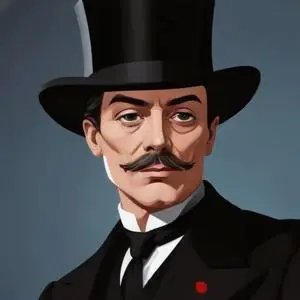
A British businessman and politician who played a key role in shaping the British Empire's colonial policies, particularly in Africa, and is known for his advocacy of imperialism and tariff reform.
Joseph Chamberlain, a British statesman, was a force to be reckoned with in the late 19th and early 20th centuries. Known for his radical politics, imperialist leanings, and role in shaping the Liberal Party, Chamberlain left an indelible mark on British history.
Born on July 8, 1836, in Camberwell, London, Chamberlain rose to prominence through his entrepreneurial spirit and business acumen. He made his fortune in Birmingham, manufacturing screws and eventually becoming the city's mayor. His self-made background and lack of university education instilled in him a strong sense of contempt for the aristocracy.
Chamberlain entered the House of Commons at 39, a relatively late entry into politics compared to his contemporaries. His influence with the Liberal grassroots organisation propelled him to the role of President of the Board of Trade in the Second Gladstone ministry (1880-1885). During this tenure, he became notorious for his scathing attacks on Conservative leader Lord Salisbury.
In the 1885 general election, Chamberlain proposed the Unauthorised Programme, which included benefits for newly enfranchised agricultural labourers, famously promising "three acres and a cow." However, his opposition to Irish Home Rule led to his resignation from the Third Gladstone ministry in 1886, sparking a Liberal Party split.
Chamberlain became a Liberal Unionist, a party that included a bloc of MPs based in and around Birmingham. From the 1895 general election, the Liberal Unionists formed a coalition with the Conservative Party, under Chamberlain's former opponent Lord Salisbury. As Secretary of State for the Colonies (1895-1903), Chamberlain's imperialist leanings drove his policies, including the_Workmens Compensation Act 1897_.
Chamberlain's personal life was marked by two marriages, fathering Nobel Peace Prize winner Austen Chamberlain and Prime Minister Neville Chamberlain. He died on July 2, 1914, leaving behind a legacy of political innovation and controversy.
Chamberlain's impact on British politics and society is undeniable. He played a significant role in shaping the Liberal Party, pushing for workers' rights, and championing imperialist policies. His legacy continues to influence contemporary British politics, with many regarding him as a pioneering figure in modern British history.
Chamberlain's philosophical contributions were rooted in his radical liberalism and belief in social reform. He advocated for workers' rights, education, and healthcare, often at odds with the aristocracy and conservative establishment.
Chamberlain's polarising politics and strong personality often led to controversy. His opposition to Irish Home Rule and support for imperialism generated heated debates and criticism. Despite this, he remains an important figure in British history, recognized for his vision and conviction.
These quotes demonstrate Chamberlain's unwavering commitment to his values and principles, even in the face of adversity.
Chamberlain's life and career were set against the backdrop of rapid industrialisation, social change, and imperial expansion. His legacy continues to shape British politics, with many regarding him as a trailblazer in modern British history.
Chamberlain's contemporaries, such as Gladstone and Salisbury, often found themselves at odds with his radical politics and imperialist leanings. However, he remains an important figure in British history, distinct from his contemporaries due to his unwavering commitment to social reform and workers' rights.
Joseph Chamberlain's extraordinary life and career continue to fascinate historians and scholars. His influence on British politics, society, and culture is undeniable, cementing his place as one of the most important figures in modern British history.
Born in 1871
Prolific writer of historical novels and adventure stories, also a talented landscape painter.
Born in 1863
A Welsh lawyer and politician who served as Prime Minister of the United Kingdom, leading the country through World War I and introducing key social reforms. He's known for his charismatic leadership and progressive policies.
Born in 1858
A Canadian-Scottish banker and politician who served as Prime Minister of the United Kingdom during World War I, known for his leadership during wartime and his role in shaping British politics.
Born in 1836
A Scottish merchant and politician who served as Prime Minister of the United Kingdom, known for his liberal reforms and efforts to improve social welfare. He's remembered for his progressive policies and commitment to social justice.
