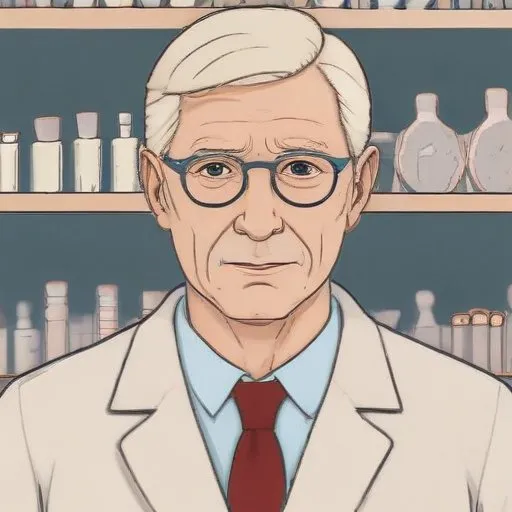
Joseph Charles Arthur: The Pioneering Plant Pathologist and Mycologist
A Legacy of Discovery in the World of Fungi
Joseph Charles Arthur is renowned for his groundbreaking work with parasitic rust fungi, particularly the Pucciniales order. As a pioneering American plant pathologist and mycologist, Arthur dedicated his life to understanding the intricacies of plant diseases, leaving an indelible mark on the scientific community.
Early Life and Education
Born on January 11, 1850, in Lowville, New York, Arthur's family relocated to a farm near Charles City, Iowa, during his childhood. This rural upbringing instilled in him a deep fascination with flowering plants, which would eventually become the foundation of his illustrious career. Arthur was one of the first students to enroll at Iowa State College (now University) in 1869, where he initially intended to study botany. However, due to the absence of botany professors during his first year, Arthur's interests were redirected. It wasn't until his second year, when botanist Charles E. Bessey joined the faculty, that Arthur began his formal study of botany under Bessey's guidance.
The Rust Collection and Early Career
To facilitate Arthur's studies, Bessey purchased a rust collection from the herbarium of Moses A. Curtis. This acquisition proved pivotal, as it sparked Arthur's interest in rust fungi and set the stage for his future research. In 1876, Arthur took a position as an instructor at Iowa State, publishing his first paper, a catalog of the flowering plants of Iowa, the same year. During this period, he met E.W.D. Holway, a fellow botanist and mycologist, with whom he would maintain a lifelong friendship and professional collaboration.
Advancements and Recognition
Arthur's academic pursuits continued, with him earning his Master of Science degree from Iowa State in 1877. He briefly studied at Harvard and
Johns Hopkins University before becoming an instructor at Purdue University in 1881. Throughout his career, Arthur was recognized for his significant contributions to the fields of plant pathology and mycology. He was a charter member of the Botanical Society of America, the Mycological Society of America, and the American Phytopathological Society. Additionally, he was elected to the American Philosophical Society and the American Academy of Arts and Sciences, further solidifying his reputation as a leading authority in his field.
Legacy and Impact
Arthur's work has had a lasting impact on our understanding of plant diseases and the role of fungi in ecosystems. His research on rust fungi has been instrumental in developing strategies for controlling crop diseases, thereby improving agricultural practices and food security. The standard author abbreviation "Arthur" is used to indicate his authorship in botanical names, a testament to his enduring influence in the scientific community.
Personal Achievements and Honors
- Recipient of the first Doctorate in Sciences awarded by Cornell University
- Charter member of the Botanical Society of America, the Mycological Society of America, and the American Phytopathological Society
- Elected member of the American Philosophical Society and the American Academy of Arts and Sciences
A Lasting Legacy
Joseph Charles Arthur's contributions to plant pathology and mycology have left an indelible mark on the scientific community. His pioneering work on rust fungi has paved the way for future generations of researchers, ensuring that his legacy continues to inspire and educate those working to improve our understanding of the natural world.
FAQ
What were Joseph Charles Arthurs key contributions to mycology?
Joseph Charles Arthur was a pioneering mycologist, making significant discoveries about the biology and classification of fungi. His work on rust fungi and their life cycles remains crucial to modern mycological research.
How did Joseph Charles Arthurs research on rust fungi inform agricultural practice?
Joseph Charles Arthurs research on rust fungi had practical applications in agriculture, helping to develop strategies for controlling fungal diseases in crops. His work improved our understanding of the complex interactions between fungi and their plant hosts.
What was Joseph Charles Arthurs role in the development of American mycology?
Joseph Charles Arthur played a crucial role in establishing mycology as a distinct field in the United States, serving as a mentor and inspiration to younger mycologists. His contributions helped to build a vibrant community of researchers dedicated to the study of fungi.
How did Joseph Charles Arthurs work on fungi intersect with his interests in botany and plant pathology?
Joseph Charles Arthurs research on fungi was closely tied to his interests in botany and plant pathology. He recognized the intricate relationships between fungi, plants, and their environments, and his work explored the complex dynamics of these interactions.
What is Joseph Charles Arthurs legacy in modern mycology and plant pathology?
Joseph Charles Arthurs legacy extends across mycology and plant pathology, with his research on rust fungi and fungal-plant interactions remaining foundational to contemporary studies. His work continues to inform strategies for managing fungal diseases in crops and improving our understanding of fungal biology.