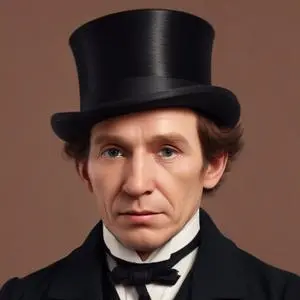
The Elephant Man: The Tragic yet Triumphant Story of Joseph Merrick
A Life of Unparalleled physical Deformities
Joseph Merrick, often referred to as the Elephant Man, was a British artist known for his extraordinary physical deformities that captivated the world. His uncommon appearance, which included a severely enlarged head, deformed arms and legs, and thick, lumpy skin, made him a subject of both fascination and repulsion.
Early Life and Struggles
Born on August 5, 1862, in Leicester, England, Merrick's life was marked by hardship and rejection. His mother died when he was just 11 years old, and his father soon remarried. However, Merrick's stepmother rejected him due to his growing deformities, leading him to live with his uncle, Charles Merrick. At the age of 17, Merrick entered the Leicester Union Workhouse, where he was forced to live among the destitute.
The Freak Show and Rise to Fame
In 1884, Merrick contacted a showman named Sam Torr and proposed that he be exhibited as a freak. Torr arranged for a group of men to manage Merrick, who was then named the Elephant Man. Merrick was displayed in a penny gaff shop in London, where he became a sensation, attracting crowds and sparking both curiosity and revulsion.
A Turning Point: Meeting Sir Frederick Treves
One fateful day, Sir Frederick Treves, a renowned surgeon, visited Merrick's exhibition and was deeply moved by his condition. Treves invited Merrick to be physically examined at the London Hospital, which marked a turning point in his life. After the examination, Treves arranged for Merrick to be transferred to the hospital, where he would live for the remainder of his life.
A New Lease on Life
Under Treves' care, Merrick found a sense of comfort and belonging. He developed a close friendship with Treves, who visited him daily, and even received visits from members of London's high society, including Alexandra, Princess of Wales. Merrick's life was transformed from one of exploitation to one of dignity and respect.
Theories behind Merrick's Deformities
The exact cause of Merrick's deformities remains unclear, but theories have ranged from neurofibromatosis to Proteus syndrome. In 2003, a DNA study suggested that Merrick may have had Proteus syndrome, a rare genetic disorder that affects tissue growth.
Death and Legacy
On April 11, 1890, Merrick died at the age of 27 due to asphyxia, although Treves believed that he had died of a dislocated neck. Despite his short life, Merrick's story has captivated generations, inspiring numerous films, plays, and books. His legacy serves as a testament to the resilience of the human spirit and the importance of compassion and understanding.
Philosophical Contributions and Beliefs
Merrick's life raises important questions about our treatment of those who are different. His story highlights the significance of empathy and the need to look beyond physical appearances. As Treves so eloquently put it, "He was a human being, and a noble one."
Personal Milestones and Key Life Events
- 1862: Born on August 5th in Leicester, England
- 1873: Mother dies
- 1879: Enters Leicester Union Workhouse
- 1884: Begins exhibiting as the Elephant Man
- 1886: Meets Sir Frederick Treves and moves to the London Hospital
- 1890: Dies on April 11th at the age of 27
Influence on Modern Society
Merrick's story continues to resonate with audiences today, inspiring countless adaptations and reinterpretations. His legacy serves as a reminder of the importance of compassion, understanding, and the need to challenge societal norms.
FAQ
What condition did Joseph Merrick suffer from?
Joseph Merrick suffered from Proteus syndrome, a rare genetic disorder that caused severe deformities and abnormalities in his body. His condition made him a celebrity in Victorian-era London, but also made his life extremely challenging.
How did Joseph Merrick become famous?
Joseph Merrick became famous after he was discovered by a showman who exhibited him as the Elephant Man at a freak show in London. Despite his sad circumstances, Merricks gentle nature and intelligence won over many hearts, including that of Dr. Frederick Treves, who befriended him and advocated for his care.
What was Joseph Merricks relationship like with Dr. Frederick Treves?
Joseph Merricks relationship with Dr. Frederick Treves was one of deep trust and affection. Treves, a prominent surgeon, took Merrick under his wing and advocated for his care, eventually securing a place for him at the London Hospital. Merrick came to regard Treves as a close friend and confidant.
How did Joseph Merrick die?
Joseph Merrick died on April 11, 1890, at the age of 27, due to complications from a severe cold. His death was met with widespread mourning, and he was buried in a quiet ceremony in North London.
Is the movie The Elephant Man accurate?
The 1980 film The Elephant Man is generally accurate in its portrayal of Joseph Merricks life, although some liberties were taken for dramatic effect. The films portrayal of Merricks condition and his relationships with those around him is largely based on historical records and accounts from the time.