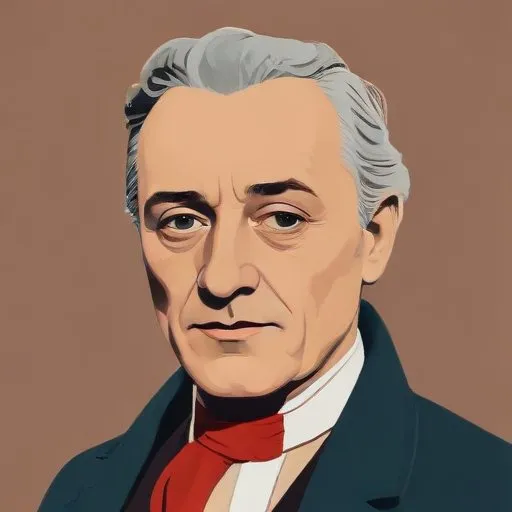
Joseph Quesnel

Joseph Quesnel

Joseph Quesnel was born on November 15th, 1746

Full Name: Joseph Quesnel
Birthplace: Saint-Malo, France
Occupation: Poet, Playwright, and Composer
Nationality: French-Canadian
Born: 1746
Died: 1809
Notable Work: Colas et Colinette
Genre: Opera

A French-Canadian literary and musical talent who wrote plays, poetry, and composed music, leaving a lasting mark on Quebec's cultural heritage.

Written by: Emily Carter Emily Carter

Joseph Quesnel: The Pioneer of Canadian Opera

Joseph Quesnel, a French-Canadian composer, poet, and playwright, is renowned for creating the first Canadian opera, Colas et Colinette, and possibly the first opera in North America. This trailblazing work showcased his mastery of musical theater, earning him a place in the annals of Canadian cultural history.

Early Life and Education

Quesnel was born in Saint-Malo, France, on November 15, 1746, to a prosperous merchant family. He was the third child of Isaac Quesnel de La Rivaudais and Plagie-Jeanne-Marguerite Duguen. Quesnel's early interests in music and literature were nurtured through his education at the Collège Saint-Louis in 1766.

A Life of Adventure and Exploration

Before devoting himself to the arts, Quesnel joined the French merchant marine and sailed to Pondicherry, Madagascar, Africa, and the Caribbean. During this period, he engaged in the Atlantic slave trade, a contentious chapter in his life. In 1768, he sailed to Cabinda (modern-day Angola), where he purchased 514 enslaved Africans, who were later sold in Haiti.

Settling in Canada and Pursuing the Arts

In 1779, Quesnel's ship was captured by the British, and he was taken to Halifax, Nova Scotia. He was eventually allowed to settle in Boucherville, near Montreal, Quebec, where he married Marie-Josephte Deslandes and became partners in business with his mother-in-law's new husband, Maurice-Régis Blondeau. During this time, Quesnel continued to trade in slaves, amassing wealth and influence.

Artistic Achievements

Colas et Colinette (1788) and Lucas et Cécile. He also wrote poetry, with his notable poem, L'Épitre à M. Labadie, showcasing his literary talent. In addition to these accomplishments, Quesnel composed sacred music for the parish church of Montreal and wrote a treatise on the dramatic art in 1805.

Legacy and Impact

Quesnel's pioneering work in opera and music helped shape the cultural landscape of Canada. He founded and was part of the troupe of Montreal's Théâtre de Société, promoting French-language theater in Quebec. Through his art, Quesnel left an indelible mark on Canadian history, ensuring his legacy as a trailblazer in the world of opera and music.

Personal Life and Later Years

In his later years, Quesnel's health began to decline. He passed away on July 2 or 3, 1809, in Montreal, due to complications from pleurisy. Several months prior to his death, Quesnel had bravely dived into the Saint Lawrence River, a testament to his unwavering spirit.

Timeline
1749
Birth in Saint-Malo
Joseph Quesnel was born on November 15, 1749, in Saint-Malo, Brittany, France. He later moved to New France and became a prominent figure in French-Canadian literature.
1770
Moves to New France
Quesnel moved to New France, where he began his career as a poet, playwright, and composer. He became a prominent figure in the French-Canadian cultural scene.
1783
Writes First Opera
Quesnel wrote his first opera, Colas et Colin, which premiered in Montreal. This marked the beginning of his prolific career as a composer.
1809
Death in Montreal
Joseph Quesnel died on July 2, 1809, in Montreal, Quebec, Canada. He left behind a legacy as one of the most important figures in French-Canadian literature and music.
1815
Posthumous Recognition
Quesnels works gained widespread recognition after his death, and he is still celebrated as a pioneer of French-Canadian culture today.
Joseph Quesnel

Joseph Quesnel Quiz

What was Joseph Quesnel's primary contribution to Quebec's cultural heritage?

Score: 0/5
FAQ
What was Joseph Quesnels contribution to French-Canadian literature?
Joseph Quesnel was a French-Canadian poet, playwright, and composer who made significant contributions to French-Canadian literature, including the composition of Canadas first opera, Colas et Colinette (1788).
What was Joseph Quesnels most famous play?
Joseph Quesnels most famous play is Langlomane, ou le doux jeu de lamour (1783), a satirical comedy that pokes fun at anglophilia in Quebec.
How did Joseph Quesnels experiences as a notary influence his writing?
Joseph Quesnels experiences as a notary influenced his writing, as he often used his knowledge of law and society to critique social norms and conventions in his works.
What was Joseph Quesnels role in the development of Quebec theatre?
Joseph Quesnel played a significant role in the development of Quebec theatre, helping to promote French-language theatre and establish Quebec as a centre for dramatic arts.
What was Joseph Quesnels legacy in French-Canadian literature?
Joseph Quesnels legacy in French-Canadian literature is that of a pioneering writer who helped shape the literary and cultural identity of Quebec.

Related People:

François-René de Chateaubriand

Born in 1768

A French historian and politician who served as Minister of Foreign Affairs, known for his influential writings on French history and politics, shaping the country's identity and foreign policy.

Pierre Corneille

Born in 1606

A 17th-century French mastermind behind iconic plays like "Le Cid" and "Horace", known for pioneering the classical French tragedy genre.

Molière

Born in 1622

A 17th-century master of comedy, he penned witty plays that satirized the French aristocracy, leaving a lasting impact on Western theater. His works remain widely performed and adapted today.

Voltaire

Born in 1694

A witty and insightful 18th-century writer and philosopher who used satire to critique societal norms and advocate for reason, tolerance, and human rights.

Jean-Jacques Rousseau

Born in 1712

A pioneering thinker who shaped modern democracy and education with his ideas on social contracts, general will, and the importance of early childhood education. His writings influenced the French Revolution and modern political thought.

Denis Diderot

Born in 1713