


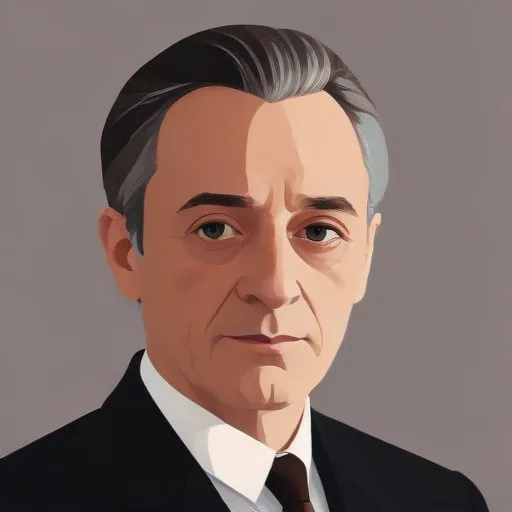
A prominent literary critic and nature writer, known for his essays and books that explored the human relationship with nature and the importance of preserving the natural world.
Joseph Wood Krutch, a renowned American author, critic, and naturalist, is best known for his thought-provoking nature books on the American Southwest and his development of a pantheistic philosophy. His writings challenged conventional notions of scientific progress and optimism, instead advocating for a more holistic understanding of human existence and the natural world.
Krutch was born on November 25, 1893, in Knoxville, Tennessee. He received his education at the University of Tennessee and later earned a Ph.D. in English literature from Columbia University. His academic pursuits were briefly interrupted by his service in the army in 1918, followed by a year of traveling in Europe with his friend, Mark Van Doren.
Krutch's literary career spanned multiple decades and genres. He began as a theater critic for The Nation in 1924, a position he held until 1952. During this period, he published his influential work, The Modern Temper (1929), which questioned the prevailing optimism of the time and argued that science leads to a bleak view of human existence.
In the 1940s, Krutch wrote widely acclaimed biographies of Samuel Johnson and Henry David Thoreau, the latter of which greatly inspired his own nature writing. His first nature book, The Twelve Seasons (1949), was a testament to Thoreau's influence. Krutch's most celebrated work, The Measure of Man (1954), earned him the National Book Award and marked a shift towards a more optimistic perspective, emphasizing the importance of human reason, consciousness, and moral judgment.
In 1952, Krutch relocated to Tucson, Arizona, where he found inspiration in the southwestern desert environment and the natural history of the Grand Canyon. His subsequent works, such as The Voice of the Desert (1954) and The Grand Canyon (1958), solidified his reputation as a prominent naturalist and conservationist.
Krutch's philosophical views were deeply rooted in his naturalist observations. He believed in the importance of moving beyond human-centered conceptions of conservation, echoing the sentiments of his contemporary, Aldo Leopold. Krutch's work not only raised awareness about the need for environmental protection but also inspired a new generation of nature writers and conservationists.
Krutch's academic pursuits included a stint as a professor of English at Columbia University from 1937 to 1952, where he was a popular lecturer. His contributions to literature and natural history earned him numerous awards and honors, including the National Book Award and the John Burroughs Medal.
Joseph Wood Krutch passed away on May 22, 1970, leaving behind a rich legacy of literary and philosophical works that continue to inspire and educate readers today. His writing serves as a testament to the power of interdisciplinary thought, bridging the gap between literature, philosophy, and natural history.
Krutch's pantheistic philosophy emphasized the interconnectedness of all living beings and the natural world. He argued that humanity's existence is inextricably linked to the earth's ecosystem, and that our understanding of the natural world must inform our moral and philosophical perspectives.
Through his writing, Krutch challenged the dominant scientific and philosophical narratives of his time, advocating for a more holistic and environmentally conscious worldview. His ideas continue to resonate with contemporary debates on environmentalism, conservation, and human existence.
Born in 1887
Pioneering ecologist and author who advocated for land ethics and conservation, inspiring a new generation of environmentalists.
99 Years Old
A fierce advocate for wilderness preservation and critic of industrialization, he wrote influential novels and essays that inspired a generation of environmentalists. His iconic book "Desert Solitaire" is a classic of nature writing.
Born in 1907
Pioneering biologist and environmentalist who exposed the dangers of pesticides and inspired the modern environmental movement through her groundbreaking book "Silent Spring".
Born in 1902
A renowned writer of realistic and powerful novels, often focusing on the lives of the working class and the American Dream, with classics like "Of Mice and Men" and "The Grapes of Wrath".
Born in 1899
A legendary writer who crafted sparse, powerful prose, capturing the human experience in novels like "The Old Man and the Sea" and "A Farewell to Arms".
Born in 1896
Author of novels and short stories that capture the essence of the Jazz Age, exploring themes of wealth, class, and the American Dream. Known for timeless classics like "The Great Gatsby" and "Tender Is the Night".
Born in 1897
A Nobel Prize-winning author of complex, psychologically rich novels and short stories that explore the American South's troubled history and human nature. His writing style, blending stream-of-consciousness and non-linear narrative, has influenced generations of writers.
Born in 1903
Wrote gritty, provocative novels and short stories that exposed the harsh realities of rural Southern life, often focusing on themes of poverty, racism, and social injustice.
