


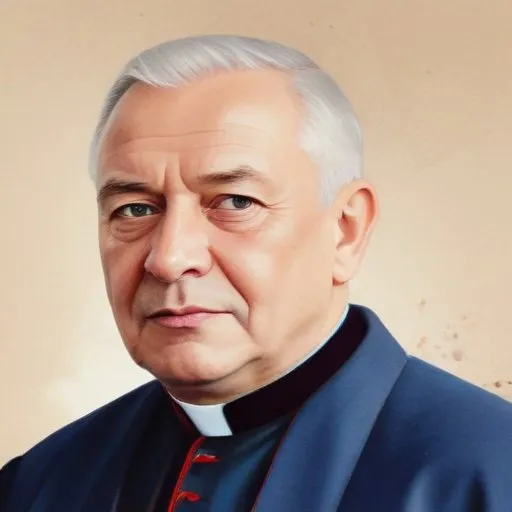
A Slovak priest-turned-politician who led Slovakia during World War II, implementing anti-Semitic laws and collaborating with the Nazis. He's infamous for his role in the Holocaust.
Jozef Tiso, a Slovak politician and Catholic priest, is infamous for serving as the president of the First Slovak Republic, a client state of Nazi Germany during World War II, from 1939 to 1945. His regime was marked by collaboration with the Nazi regime, resulting in the deportation and murder of thousands of Slovak Jews.
Born on October 13, 1887, in Bytča, then part of Hungary, Austria-Hungary, Tiso was introduced to priesthood from an early age. He studied several languages, including Hebrew and German, and helped combat local poverty and alcoholism in what is now Slovakia.
In 1918, Tiso joined the Slovak People's Party (Slovenskú ľudovú stranu) and became its leader in 1938 following the death of Andrej Hlinka. On March 14, 1939, the Slovak Assembly in Bratislava unanimously adopted Law 119/1939, transforming the autonomous Slovak Republic into an independent country. Tiso became the prime minister of the Slovak Republic and, in October 1939, was elected its president.
Tiso's regime collaborated with Germany in deporting Slovak Jews to extermination and concentration camps in Germany and German-occupied Poland. Deportations occurred from March 25, 1942, until October 20, 1942, and were resumed on September 30, 1944, resulting in the murder of thousands of Slovak Jews.
After the war, Tiso was arrested, tried, and convicted of treason and war crimes. He was executed by hanging on April 18, 1947, in Bratislava. His regime's atrocities and collaboration with the Nazi regime remain a dark stain on Slovakia's history.
Tiso's legacy is marred by his regime's collaboration with the Nazi regime and the subsequent murder of thousands of Slovak Jews. His actions have been widely condemned, and he is remembered as a controversial figure in Slovak history.
Tiso's regime must be understood within the broader context of World War II and the rise of fascist regimes in Europe. His collaboration with Nazi Germany was not unique, as several European countries collaborated with the regime during the war. However, Tiso's regime stands out for its brutal suppression of Jewish communities and its role in the Holocaust.
In comparison to other fascist leaders of the time, Tiso's regime was marked by a unique blend of Catholic nationalism and anti-Semitism. While sharing similarities with regimes like Ante Pavelić's Croatia, Tiso's regime was distinct in its zealous pursuit of Jewish persecution.
Tiso's life and regime serve as a stark reminder of the dangers of fascism, anti-Semitism, and collaboration with oppressive regimes. His legacy continues to shape Slovakia's identity and its relationship with the international community.
Born in 1864
A Slovak priest and politician who played a key role in the country's independence movement and later became a leader of the Slovak People's Party, advocating for autonomy and nationalism. He's also known for his anti-Semitic views and collaboration with the Nazi regime.
