


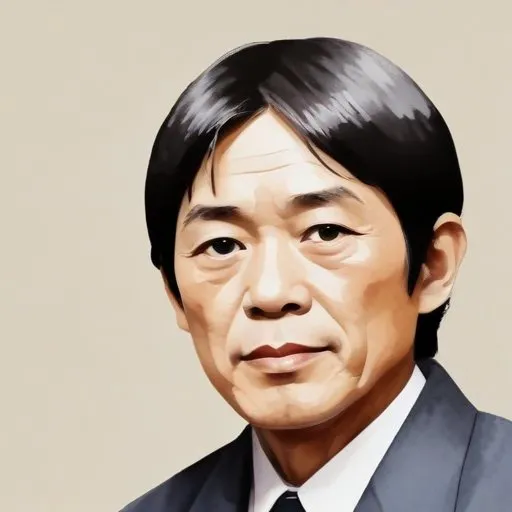
A pioneering educator and peace activist who dedicated his life to promoting global harmony and education, particularly through the Soka Gakkai movement.
Jsei Toda, a Japanese teacher, peace activist, and visionary, is renowned for his instrumental role in rebuilding and leading Soka Gakkai, a Buddhist organization, from 1951 to 1958. He is often referred to as the architect of Soka Gakkai, responsible for its existence today.
Toda was born on February 11, 1900, in Shioya, Ishikawa, Japan, as the eleventh son of a fisherman's family. In 1904, his family moved to Hokkaido, where he grew up and developed a strong passion for education.
At the age of 15, Toda began working his way through school, earning certification as a substitute primary school teacher at 17 and later as a full-time primary school teacher. In 1920, he moved to Tokyo, where he met his mentor, Tsunesaburo Makiguchi, an elementary school principal.
Toda taught under Makiguchi's guidance until 1922 and later opened a private school, tutoring students preparing for middle school entrance exams. His successful publication of an arithmetic tutorial book marked a significant turning point in his financial fortunes.
In 1943, Toda was imprisoned for two years during World War II for violating the Peace Preservation Law and "lèse-majesté" against the war. This period of imprisonment had a profound impact on his life, and upon his release, he dedicated himself to rebuilding Soka Gakkai.
Toda's philosophy revolved around the concept of "human revolution," emphasizing the pursuit of education and happiness as inextricably connected in a lifelong journey toward continual self-development. He believed that individuals had the power to transform their lives and create positive change in the world.
Under Toda's leadership, Soka Gakkai flourished, and his teachings continue to inspire millions worldwide. His mentee, Daisaku Ikeda, would later become the third president of Soka Gakkai and write a 12-volume roman à clef, "The Human Revolution," based on Toda's life and leadership.
Jsei Toda's legacy extends far beyond his leadership of Soka Gakkai. He is revered as a champion of peace, education, and human development. His teachings have inspired a global movement, promoting values of compassion, empathy, and social responsibility.
In conclusion, Jsei Toda's remarkable life and achievements continue to inspire and motivate individuals worldwide. His vision of a peaceful and harmonious world, achieved through human revolution, remains a beacon of hope for generations to come.
Key Life Events:
Born in 1900
A pioneering educator and peace activist who dedicated his life to promoting global harmony and education, particularly through the Soka Gakkai movement.
