


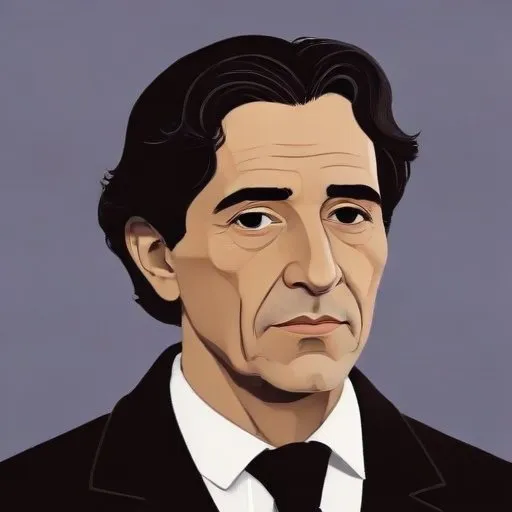
A celebrated poet and author, known for his lyrical and socially conscious works that explored themes of love, politics, and human rights. His writing often reflected his experiences as a political exile and his quest for social justice.
Juan Gelman, the acclaimed Argentine poet, is renowned for his poignant verses that celebrate life while critiquing the socio-political landscape of his country. With over twenty books of poetry to his name, Gelman's work is a testament to his unwavering dedication to the craft, earning him the esteemed Cervantes Prize in 2007.
Born on May 3, 1930, in the vibrant Villa Crespo neighborhood of Buenos Aires, Gelman was the son of Jewish immigrants from Ukraine. His father, Jos Gelman, was a social revolutionary who participated in the 1905 Russian Revolution. Growing up, Juan was exposed to a diverse range of literary works, thanks to his brother Boris, who read to him in Russian. This early exposure sparked a lifelong passion for poetry, with Dostoevsky's The Insulted and Humiliated leaving an indelible mark on his young mind.
Gelman's early involvement with various literary groups and his later work as a journalist set the tone for his life's work. As a translator at the United Nations, he continued to hone his craft, all while remaining an ardent political activist. His affiliation with the Montoneros in 1975, although later distanced, demonstrated his commitment to social change.
The 1976 Argentine coup forced Gelman into exile, a decision that would haunt him for years to come. Tragically, his son Marcelo and pregnant daughter-in-law, Maria Claudia, were kidnapped from their home, becoming two of the 30,000 desaparecidos – individuals forcefully vanished without a trace during Argentina's tumultuous period.
Gelman's poetry is a reflection of his life's experiences, weaving together themes of love, social commentary, and politics. His works, though tempered with pain and loss, celebrate the beauty of life and human connection. As a testament to his legacy, Gelman's poetry has been translated into numerous languages, ensuring his voice continues to resonate with readers worldwide.
Gelman's poetry has inspired generations of writers and thinkers, his work serving as a powerful catalyst for social change. By marrying the personal with the political, Gelman's poetry transcends borders, speaking to the human experience in a way that is both intimate and universal.
Gelman's poetry and life's work are a testament to his unwavering commitment to social justice and human rights. Through his writing, he has consistently emphasized the need for individuals to engage with their surroundings, to challenge the status quo, and to fight for a more equitable society.
Juan Gelman's life and work serve as a powerful reminder of the importance of artistic expression in the face of adversity. Through his poetry, he has left an indelible mark on the literary world, inspiring generations to come.
Born in 1899
A visionary writer who crafted intricate, philosophical tales that blurred reality and fantasy, influencing generations of authors and thinkers. 82
Born in 1914
A pioneering Argentine writer of fantasy and science fiction, known for his innovative and influential works that blend genres and explore philosophical themes.
Born in 1914
A pioneering figure in magical realism, blending fantastical elements with everyday life in his novels and short stories, exploring the human condition and social commentary.
Born in 1914
A Mexican poet and diplomat who won the Nobel Prize in Literature in 1990 for his work that explores the intersection of poetry, philosophy, and politics. He's known for his lyrical and introspective style that explores the human condition.
Born in 1904
A Chilean poet and diplomat who wrote passionate and evocative poetry that explored love, politics, and the human condition, and was awarded the Nobel Prize in Literature in 1971.
99 Years Old
A Colombian journalist and author who crafted magical realism, a literary style that blends fantasy and reality, and won the Nobel Prize in Literature in 1982. His works are known for their vivid storytelling and exploration of human experience.
90 Years Old
A Nobel Prize-winning writer and politician who explored the complexities of Peruvian society through his novels and essays, and later ran for president. His works often blended politics, history, and fiction.
83 Years Old
A Chilean-American writer who weaves magical realism into her novels, exploring themes of love, family, and social justice, captivating readers worldwide with her lyrical prose.
