


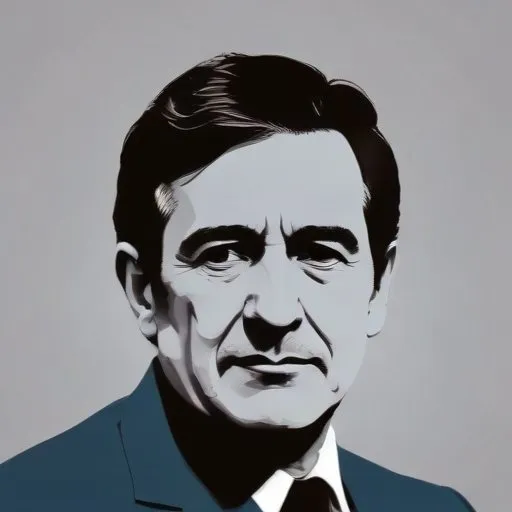
Led Uruguay's government during a tumultuous period, implementing a military-backed authoritarian regime that suppressed civil liberties and led to human rights abuses. He's infamous for his role in the country's 1973 coup.
Juan Mara Bordaberry Arocena, the 34th President of Uruguay, is remembered for his tumultuous reign from 1972 to 1976, marked by the country's descent into a military-backed dictatorship.
Born on June 17, 1928, in Montevideo, Uruguay, Bordaberry came from a prominent family of politicians and cattle ranchers. His father, Domingo Bordaberry, was a senator and rural leader, and Juan Mara inherited one of the largest ranches in the country.
Bordaberry initially belonged to the National Party, also known as the Blancos, and was elected to the Senate in 1964. He later shifted to the Colorado Party in 1969 and became the Minister of Agriculture, a position he held until 1971.
In 1971, Bordaberry won the presidential election, although he didn't receive the most overall votes. He assumed office in 1972, but his presidency was marked by growing unrest and authoritarian tendencies. In 1973, he dissolved the General Assembly and began ruling by decree, backed by the military.
Bordaberry's regime was marred by human rights abuses, censorship, and the suppression of political opponents. Disagreements with the military led to his eventual overthrow in 1976, before the end of his original term.
In 2006, Bordaberry was arrested and charged with four counts of homicide, including the deaths of two members of the General Assembly during the 1970s. He passed away on July 17, 2011, leaving behind a complex and contested legacy.
Bordaberry's presidency and the subsequent dictatorship had a profound impact on Uruguay's political landscape, economy, and society. His regime's human rights abuses and authoritarian tactics have been widely condemned, and his legacy continues to be debated among historians and scholars.
90 Years Old
A Uruguayan journalist, lawyer, and politician who served as the 29th President of Uruguay, known for his efforts to consolidate democracy and promote economic growth in his country.
86 Years Old
A physician-turned-politician who served as Uruguay's president, known for his efforts to strengthen the country's economy and healthcare system. He implemented progressive policies, including marijuana legalization and same-sex marriage.
Born in 1764
Led the Uruguayan struggle for independence from Spain and is considered the father of Uruguayan nationhood, known for his military victories and democratic ideals.
