


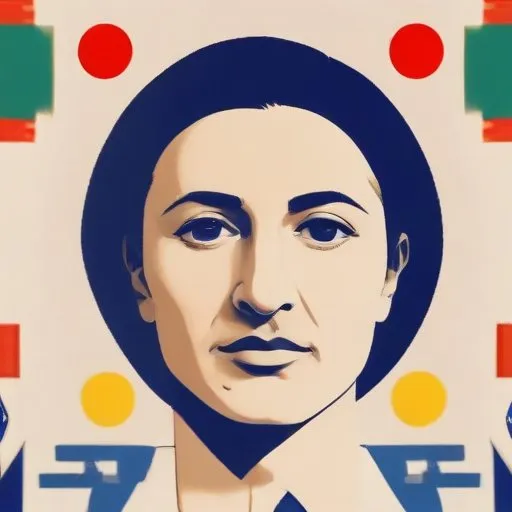
Led the Uruguayan struggle for independence from Spain and is considered the father of Uruguayan nationhood, known for his military victories and democratic ideals.
Jos Gervasio Artigas is revered as a national hero in Uruguay, credited with shaping the country's independence and identity. As a soldier and statesman, he played a pivotal role in the Spanish-American wars of independence, fighting against Spanish and Portuguese forces to secure Uruguay's sovereignty.
Artigas was born on June 19, 1764, in Montevideo, Uruguay, to a family of Spanish and Portuguese descent. He was educated at the Colegio de San Bernardino, but his rebellious nature led him to abandon his studies and pursue a life in the countryside.
In 1797, Artigas enlisted in the Spanish military, where he fought against the British in the Anglo-Spanish War. This experience shaped his military prowess and instilled in him a sense of patriotism, which would later drive his fight for Uruguayan independence.
In 1810, Artigas supported the Primera Junta in Buenos Aires against Spain, marking the beginning of his involvement in the Spanish-American wars of independence. He defeated the Spanish royalists at Las Piedras and laid siege to Montevideo, but was forced to withdraw in the face of Portuguese intervention.
In 1815, Artigas broke with the centralist government of Buenos Aires and took over Montevideo, establishing the Federal League, an alliance of six provinces under a federal style of government. This move marked a significant shift towards Uruguayan autonomy and paved the way for the country's future independence.
In 1816, the United Kingdom of Portugal, Brazil and the Algarves invaded the Banda Oriental, forcing Artigas into exile in Paraguay. He lived in exile until his death on September 23, 1850. In 1855, his remains were reinterred at the Central Cemetery of Montevideo, and in 1977, they were transferred to the Artigas Mausoleum.
Artigas' legacy is profound and far-reaching. He is celebrated as the father of Uruguayan nationhood, and his fight for independence and federalism has inspired generations of Uruguayans. His influence extends beyond Uruguay, with his ideas on federalism and autonomy influencing the development of other South American nations.
Artigas' philosophy was rooted in the principles of federalism, autonomy, and popular sovereignty. He believed in the importance of regional identity and self-governance, and his Federal League was a testament to this ideology.
Artigas was also a strong advocate for social justice and equality, particularly in the context of land ownership and distribution. He believed that land should be distributed fairly among the people, rather than concentrated in the hands of a few wealthy elites.
Artigas' influence can be seen in various aspects of modern Uruguayan society. The country's federal system of government, its emphasis on regional autonomy, and its commitment to social justice are all testament to his legacy.
In addition, Artigas' ideas on federalism and autonomy have influenced the development of other South American nations, shaping the region's political landscape and inspiring movements for independence and self-determination.
"My flag is the federal flag, and I will defend it until my dying breath."
"The people are sovereign, and it is their right to govern themselves."
These quotes capture the essence of Artigas' philosophy and his commitment to the principles of federalism and popular sovereignty.
Artigas' life and legacy must be understood within the context of the Spanish-American wars of independence, a tumultuous period of revolution and upheaval in South America.
His struggle for independence and self-governance was part of a broader movement for regional autonomy and identity, which shaped the course of Uruguayan and South American history.
In conclusion, Jos Gervasio Artigas was a visionary leader, statesman, and military strategist who played a pivotal role in shaping Uruguay's independence and identity. His legacy continues to inspire generations of Uruguayans and beyond, and his philosophy of federalism, autonomy, and social justice remains relevant today.
Born in 1778
Led the successful fight for independence in Argentina, Chile, and Peru, and is revered as a national hero in these countries. He's also credited with creating the Army of the Andes, a crucial force in the Latin American wars of independence.
Born in 1783
Led the Latin American wars of independence against Spanish rule, unifying several countries under the Gran Colombia republic. He's revered as a national hero and symbol of freedom.
Born in 1795
Led the Latin American wars of independence against Spain, and later became the president of Bolivia, playing a key role in the country's early development. He's revered as a national hero in Bolivia and Venezuela.
Born in 1778
Led Chile's struggle for independence from Spain, becoming a national hero and symbol of freedom. He's revered for his bravery, strategic thinking, and vision for a unified Chile.
Born in 1770
A key figure in Argentina's struggle for independence, he created the country's flag and played a crucial role in its early development.
Born in 1753
A Mexican priest who sparked the country's war for independence from Spain with his famous "Grito de Dolores" cry for freedom, leading a rebellion against colonial rule.
Born in 1783
Mexican royalist turned insurgent who led the country to independence and became its first emperor, known for uniting the country and establishing the Mexican Empire. He played a crucial role in shaping Mexico's early history.
Born in 1793
A dominant figure in 19th-century Argentina, he ruled with an iron fist, modernizing the economy and military while suppressing opposition, earning a reputation as a strong but brutal leader.
