


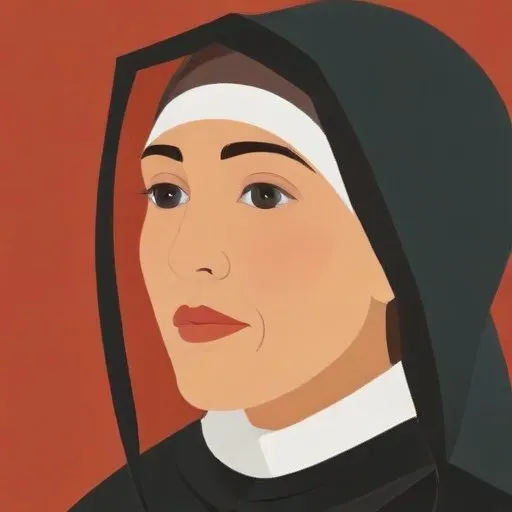
A 17th-century Spanish abbess who led a Franciscan convent and wrote spiritual guides, known for her mystical writings and reforms within the Order. Her works emphasized devotion and spiritual growth.
Juana de la Cruz Vzquez Gutirrez, a renowned Spanish abbess, is celebrated for being one of the few women in the 16th century to receive permission to preach publicly, a privilege normally reserved for men. Her extraordinary gift of preaching and mystical experiences earned her a revered place among the literary mothers of Spanish mysticism, alongside Teresa of Ávila.
Born on May 3, 1481, in Numancia de la Sagra, Spain, Juana Vzquez y Gutirrez was the daughter of Juan Vzquez and Catalina Gutirrez, prosperous farmers. After her mother's passing in 1488, Juana joined the Beaterio convent of Santa María de la Cruz de La Sagra, fulfilling a promise her mother had made while pregnant with her.
In 1496, Juana left the convent to live with an aunt and uncle in Illescas, where her exceptional beauty and virtue captured the attention of a noble knight, Francisco de Laorte. To avoid marriage, Juana disguised herself as a man and fled to the Beaterio convent, seeking refuge from her family's pressure. Her father eventually granted her permission to stay, and in 1497, she took the name Juana de la Cruz upon making her religious profession.
In 1506, Juana lost her ability to speak for six months, an experience her biographers describe as a period of spiritual purification. This silence was followed by the development of her gift of preaching, which she began to exercise in 1508 with the Church's permission. Her eloquent sermons and visionary experiences earned her widespread recognition, with Franciscan preacher Fray Francisco de Torres praising her ability to "teach, move, and delight" her listeners.
Juana de la Cruz Vzquez Gutirrez spent 38 years as a Franciscan sister, dedicating her life to spreading devotion to the rosary and the Guardian Angels. In 2015, the Catholic Church declared her Venerable, recognizing her extraordinary virtues and mystical experiences. Today, she stands as a testament to the power of faith and spiritual conviction, inspiring generations of spiritual seekers and scholars alike.
Born in 1519
The 151st Pope of the Catholic Church, serving for only two months in 1591, he is mostly remembered for his brief and uneventful papacy.
