


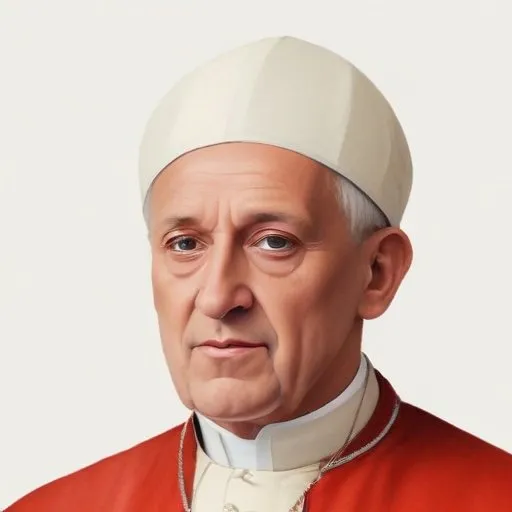
The 151st Pope of the Catholic Church, serving for only two months in 1591, he is mostly remembered for his brief and uneventful papacy.
As the 230th Pope of the Catholic Church, Innocent IX is remembered for his brief yet impactful papacy, marked by his tireless efforts to strengthen the Church's stance against the Ottoman Empire and his dedication to the Council of Trent. Born Giovanni Antonio Facchinetti, this devout leader would leave an indelible mark on the Catholic Church, shaping its course for generations to come.
Innocent IX was born on July 20, 1519, in Bologna, Italy, to Antonio Facchinetti and Francesca Cini. He hailed from a humble family in Crodo, in the diocese of Novara, northern Italy. Facchinetti's intellectual prowess shone bright from an early age, as he pursued higher education at the University of Bologna, where he earned a doctorate in both civil and canon law in 1544. His priestly vocation was formalized on March 11, 1544, and he was appointed a canon of the church of Saints Gervasio and Protasio of Domodossola in 1547.
Facchinetti's talent and dedication caught the attention of influential Cardinal Alessandro Farnese, brother of Ottavio Farnese, Duke of Parma, and grandson of Pope Paul III. The cardinal appointed Facchinetti as his secretary, eventually sending him to Avignon as his ecclesiastical representative. This experience proved instrumental in shaping Facchinetti's diplomatic skills, as he navigated the complexities of Church politics and international relations.
In 1560, Facchinetti was consecrated as the Bishop of Nicastro, in Calabria, a role that allowed him to put his priestly ideals into practice. He was present at the Council of Trent in 1562, where he played a significant role in shaping the Church's response to the Protestant Reformation. His dedicated service earned him the Referendary of the Apostolic Signatura in 1559, a position he held for a year.
On October 29, 1591, Facchinetti was elected as Pope Innocent IX, succeeding Pope Gregory XIV. His papacy, though brief, was marked by a flurry of diplomatic activity. As papal legate to Venice, he successfully negotiated the formation of the Holy League, an alliance of Spanish and Italian maritime powers aimed at challenging the Ottoman Empire's control of the eastern Mediterranean. This historic alliance led to the decisive victory at the Battle of Lepanto.
Pope Innocent IX's papacy, though short-lived, left an enduring legacy. His tireless efforts to strengthen the Church's position against the Ottoman Empire paved the way for future popes to build upon. His commitment to the Council of Trent helped shape the Church's response to the Protestant Reformation, ensuring the Catholic Church's survival and growth in the face of adversity. Through his diplomatic prowess and devotion to the Church, Innocent IX earned his place in the annals of Catholic history.
Born in 1502
Introduced the Gregorian calendar, a solar-based calendar that's widely used today, reforming the Julian calendar's inaccuracies.
Born in 1568
The 17th-century Catholic leader who reigned for 21 years, known for his strong stance against Galileo Galilei and his scientific discoveries, as well as his extensive patronage of the arts.
Born in 1611
Led the Catholic Church during a tumultuous period, reforming the Church's finances and combating corruption, while also opposing the French monarch's attempts to exert control over the Church.
Born in 1431
Ruthless and cunning, this Pope was infamous for his corrupt and immoral ways, using his power to further his family's interests.
Born in 1536
Led the Catholic Church during a tumultuous period, issuing papal bulls and playing a key role in the Counter-Reformation. He's also famous for his coffee habit, being the first Pope to try and approve of it.
Born in 1535
The second shortest-reigning pope in history, serving for just 27 days in 1605, he is most known for his brief but tumultuous papacy marked by power struggles and controversy.
Born in 1476
A fierce defender of Catholic orthodoxy, he implemented strict reforms and established the Roman Inquisition to root out heresy. His papacy was marked by controversy and conflict.
Born in 1568
The 17th-century Catholic leader who reigned for 21 years, known for his strong stance against Galileo Galilei and his scientific discoveries, as well as his extensive patronage of the arts.
