


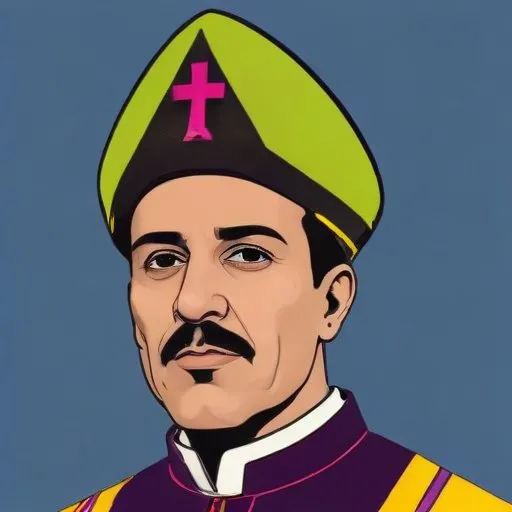
A Spanish-born bishop and viceroy of New Spain who played a crucial role in shaping the country's politics and Catholic Church, while also being a prolific writer and historian. He's most known for his efforts to reform the Church and promote education.
Juan de Palafox y Mendoza, a Spanish politician, administrator, and Catholic clergyman, is best known for his tenure as the Bishop of Puebla and the Viceroy of New Spain in the 17th century. His remarkable career spanned multiple roles, from chaplain to Holy Roman Empress Maria of Austria to navigating the complexities of Spanish colonial politics in Mexico.
Born in Navarre, Spain, on June 26, 1600, Juan de Palafox y Mendoza was the natural son of Jaime de Palafox, the Marquis of Ariaza, and a Carmelite nun. He was raised by a family of millers for ten years before his father recognized him and had him educated at Alcalá and Salamanca.
In 1626, Palafox became a deputy of the nobility in the Cortes de Monzón, and later a prosecutor at the Council of War and a member of the Council of the Indies, the chief administrative body for the administration of the overseas territories of the Spanish Empire.
In 1629, Palafox was ordained, and he became the chaplain of Maria of Austria, Holy Roman Empress. He accompanied her on her various trips around Europe. In 1639, Philip IV nominated him, and Pope Urban VIII appointed him, as Bishop of Puebla de los Ángeles in viceroyal Mexico.
Palafox's time as Bishop of Puebla was marked by a high-profile struggle with the Jesuits in New Spain, which ultimately led to his recall to Spain. Despite this controversy, he was appointed as the interim Archbishop of Mexico in 1640.
During his tenure as Viceroy of New Spain, Palafox played a crucial role in shaping Mexico's history. He supported the education of indigenous peoples, promoted the construction of roads and bridges, and worked to improve the administration of justice in the colony.
A case was opened for Palafox's beatification shortly after his death in 1659, but it wasn't until 2011 that he was officially designated as Blessed. Today, he remains an important figure in Mexican history, remembered for his commitment to education, social justice, and the betterment of the colony.
Juan de Palafox y Mendoza's remarkable career serves as a testament to his dedication to serving others and his commitment to promoting the common good. His legacy continues to inspire and educate people to this day.
Born in 1713
King of Spain from 1746 to 1759, known for his cultural and economic reforms, and for being the first Spanish monarch to visit Catalonia in over a century.
Born in 1716
The Enlightened Despot who reformed Spain, promoting education, arts, and economic growth, and is credited with modernizing Madrid.
