


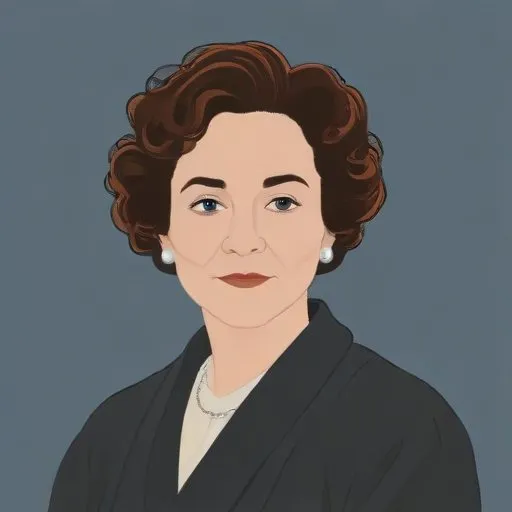
Early American writer who advocated for women's education and equal rights through her poetry and plays, making her a pioneering feminist voice.
Judith Sargent Murray was a trailblazing American advocate for women's rights, celebrated for her groundbreaking essays, plays, poetry, and letters that championed the cause of gender equality in the late 18th century. Her influential writings, particularly her landmark essay On the Equality of the Sexes, paved the way for future feminist writers and thinkers, solidifying her place in history as a pioneering figure in the fight for women's rights.
Judith Sargent was born on May 1, 1751, in Gloucester, Massachusetts, to Winthrop Sargent and Judith Saunders. She was the first of eight children in an established merchant family that valued education and civic engagement. The Sargent family were members of the Congregational First Parish Church, but later converted to Universalism, playing a significant role in the establishment of the first Universalist Church in the nation.
Despite the limited educational opportunities available to women during that era, Judith's parents recognized her intellectual curiosity and encouraged her to pursue her love of learning. She shared a tutor with her brother, Winthrop Sargent, as he prepared for entry into Harvard College, and later, she continued to educate herself through extensive reading and self-study. Her family's library, stocked with a vast collection of books on history, philosophy, geography, and literature, became her gateway to knowledge.
Judith's passion for writing and her commitment to promoting women's rights led her to become a prolific writer, producing essays, plays, poetry, and letters that tackled complex issues like gender equality, education, and economic independence. Her writings not only showcased her intellectual prowess but also inspired future generations of women to strive for equal opportunities.
In 1790, Judith penned her seminal essay, On the Equality of the Sexes, which boldly challenged prevailing patriarchal attitudes and argued that women were capable of intellectual accomplishment and deserved equal opportunities in education, employment, and politics. This powerful and influential work laid the groundwork for future feminist movements, cementing Judith's status as a pioneering figure in the fight for women's rights.
Judith's philosophical contributions extended beyond her writings on gender equality. She was a strong advocate for Universalism, a religion that emphasized the inherent goodness of humanity and the importance of education, social justice, and individual freedom. Her Universalist beliefs underpinned her commitment to promoting women's rights, as she saw education and economic independence as essential for women's empowerment.
Judith Sargent Murray's trailblazing work paved the way for future feminist writers, thinkers, and activists. Her legacy extends beyond her writings, inspiring generations of women to strive for equality, education, and economic independence. Today, she is celebrated as a pioneering advocate for women's rights, a testament to the power of education, determination, and intellectual curiosity.
Born in 1744
The wife of a Founding Father and early President, she was a strong advocate for women's rights and education, leaving behind a legacy of influential letters and diaries.
Born in 1612
Puritan American poet who wrote about family, love, and faith, and is considered one of the first published American poets. Her poetry is known for its simplicity, elegance, and insight into colonial American life.
Born in 1810
A pioneering female journalist and critic who championed women's rights and social reform through her writings, particularly in her book "Woman in the Nineteenth Century".
Born in 1811
Wrote influential abolitionist novels, including "Uncle Tom's Cabin", which humanized the horrors of slavery and fueled the anti-slavery movement.
Born in 1830
A reclusive poet who crafted innovative, enigmatic, and emotionally charged verse that continues to captivate readers with its unique style and profound insights.
Born in 1803
A leading figure in the Transcendentalist movement, he advocated for individualism, self-reliance, and nature-inspired spirituality through his essays and poetry. His ideas continue to influence American thought and culture.
Born in 1817
A 19th-century thinker who advocated for simple living, civil disobedience, and individualism, inspiring generations to reevaluate their relationship with nature and society.
