


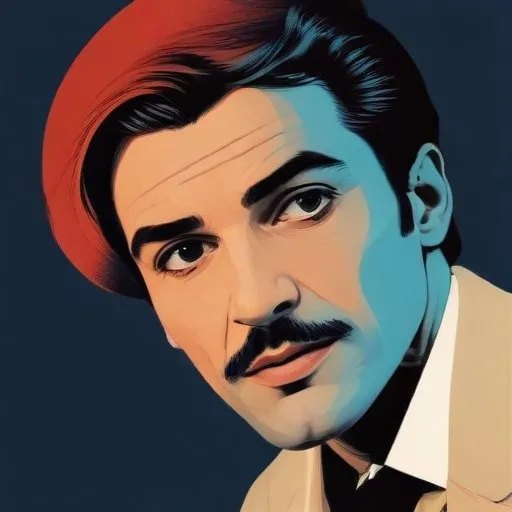
A renowned French actor and director, celebrated for his iconic performances in classic films like "Le Rouge et le Noir" and "Les Enfants du Paradis", showcasing his remarkable range and charisma.
Jules Berry, born Marie Louis Jules Paufichet, was a French actor renowned for his extravagant and whimsical performances on stage and screen. With a career spanning over three decades, Berry left an indelible mark on French cinema, earning himself the title of one of the greatest actors in its history.
Berry was born on February 9, 1883, in Poitou, France, to a family of hardware sellers. His family moved to Paris in 1888, where Berry completed his studies at the Lyce Louis-le-Grand and later graduated from the cole nationale suprieure des Beaux-Arts.
Berry's interest in theater began during his studies, and he eventually landed a role in the play La Mort du duc d'Enghien by Lon Hennique at the Thtre Antoine-Simone Berriau. His talent soon caught the attention of Jean-Franois Ponson, who offered him a 12-year contract at the Thtre royal des Galeries Saint-Hubert in Brussels.
During his time in Brussels, Berry performed in numerous productions, including Le Mariage de mademoiselle Beulemans, earning him a warm welcome from audiences. He went on to work with prominent playwrights like Marcel Achard, Alfred Savoir, Louis Verneuil, and Roger Ferdinand, starring in over 30 successful plays.
Berry's foray into film began with the silent movie Oliver Cromwell (1911), directed by Henri Desfontaines. His first talking picture, Mon coeur et ses millions (1931), marked the beginning of a prolific film career, with Berry going on to act in 89 motion pictures.
Some of his most notable films include The Crime of Monsieur Lange (1936) by Jean Renoir, Les Visiteurs du Soir (1942) by Marcel Carn, Le Jour Se Lve (1939) by Marcel Carn, and Baccara (1945) by Yves Mirande. These films showcased Berry's flamboyant style, solidifying his status as a cinematic icon.
Berry's contributions to French cinema are immeasurable. He brought a level of extravagance and whimsy to his performances, influencing generations of actors to come. His ability to adapt to various roles and genres earned him widespread acclaim and admiration.
In recognition of his immense talent, Berry was celebrated by his peers and audiences alike. He remains one of the most beloved and respected actors in French cinematic history, leaving behind a legacy that continues to inspire and delight audiences today.
Berry's film career spanned over 40 years, with his final film appearance being in 1951. He passed away on April 23, 1951, leaving behind a legacy that continues to captivate audiences and inspire new generations of actors.
In conclusion, Jules Berry was a true master of his craft, known for his flamboyant style and extraordinary talent. His contributions to French cinema remain unparalleled, and his legacy continues to dazzle audiences to this day.
Born in 1920
A French-American actress and singer who starred in films like "Port of Shadows" and "The Fallen Idol", earning her an Academy Award nomination. She was a popular leading lady in the 1940s and 1950s.
Born in 1913
A renowned French actor and director, starring in iconic films like "Beauty and the Beast" and "Orpheus", known for his androgynous looks and poetic on-screen presence.
Born in 1897
A renowned French actor and screenwriter, celebrated for his iconic performances in films like "La Grande Illusion" and "The Seventh Cross", showcasing his remarkable range and emotional depth.
Born in 1893
A renowned French actress of the 1930s-1950s, celebrated for her striking beauty and captivating on-screen presence in romantic dramas and comedies.
Born in 1887
A renowned French actor and producer, known for his unique, expressive acting style and innovative theatrical productions that blended drama and comedy. He founded his own theatre company and produced numerous films and plays.
