


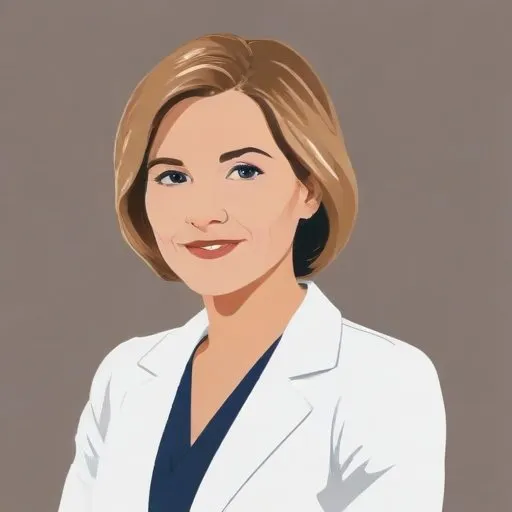
Pioneering embryologist and politician who made significant contributions to the field of embryology, particularly in the study of frog development, and served as the first female mayor of Pacific Grove, California.
Julia Platt was a pioneering American embryologist, politician, and mayor, known for her groundbreaking research on embryogenesis and her tireless efforts to promote education and equality. Her most notable contribution to the field of embryology was her demonstration that neural crest cells formed the jaw cartilage and tooth dentine in Necturus maculosus mudpuppy embryos, a discovery that challenged the prevailing beliefs of her time.
Julia Platt was born on September 14, 1857, in San Francisco, California. She received her undergraduate degree from the University of Vermont and later moved to Cambridge to pursue research at the Harvard Annex in 1887. During her time at Harvard, she challenged the anticoeducational policies in place, paving the way for future generations of female researchers.
Platt's research focused on embryogenesis, particularly the development of the head in sharks and salamanders. Her work took her to various institutions, including Woods Hole, Clark University, the University of Chicago, Bryn Mawr, the University of Freiberg, the Naples Zoological Station, and the University of Munich. In 1898, she obtained her doctorate from the University of Freiburg.
Her most significant publication, "The Anterior Head Cavities of Acanthias: Preliminary Notice" (1890), showcased her extensive research on the development of the anterior head cavities in sharks. Another notable work, "Fibres connecting the Central Nervous System and Chorda in Amphioxus" (1892), demonstrated her expertise in comparative embryology.
Unable to secure a university position due to the prevalent sexism of the time, Platt turned her attention to politics. She became a prominent figure in Pacific Grove, California, and in 1931, at the age of 74, she was elected as the city's mayor. During her tenure, she implemented measures to protect the local marine ecosystem, including the establishment of a marine protected area, which later proved crucial to the recovery of the sea otter population.
Julia Platt's work had a profound impact on the field of embryology, even if it was not fully recognized during her lifetime. Her hypothesis on the neural crest origin of the cranial skeleton was later confirmed by Sven Härstedt and Sven Östman, solidifying her place as a pioneering figure in the field.
Platt's contributions extended beyond science, as she played a key role in promoting education and equality for women. Her determination to challenge the status quo and push boundaries has inspired generations of women in science and politics.
While Julia Platt did not receive many formal awards or honors during her lifetime, her legacy has been recognized and celebrated by scientists and scholars in the years following her passing.
Julia Platt's remarkable story serves as a testament to the power of determination, hard work, and a relentless passion for discovery. Her contributions to embryology, politics, and education continue to inspire and motivate people to this day.
Born in 1920
A British scientist who contributed significantly to the discovery of the structure of DNA, providing high-quality X-ray crystallography images that helped James Watson and Francis Crick develop their famous model.
98 Years Old
Discovered the structure of DNA, revolutionizing our understanding of genetics and earning a Nobel Prize. Pioneering work in molecular biology has far-reaching implications for medicine and beyond.
Born in 1916
Pioneering scientist who discovered the structure of DNA, revolutionizing our understanding of genetics and life itself.
Born in 1916
A Nobel Prize-winning physicist and biologist who contributed significantly to the discovery of the structure of DNA, using X-ray crystallography to produce the first clear images of the molecule.
Born in 1901
Pioneering chemist and peace activist who won two unshared Nobel Prizes, one for chemistry and one for peace, for his groundbreaking work on the nature of the chemical bond and his tireless efforts to promote nuclear disarmament.
Born in 1905
A pioneer in DNA research, this biochemist discovered the base pairing rules of DNA, leading to a fundamental understanding of genetic code.
Born in 1877
Pioneering microbiologist who discovered DNA as the genetic material, revolutionizing our understanding of life and paving the way for major advances in genetics and biotechnology.
Born in 1900
A pioneer in evolutionary biology, he integrated genetics and evolution, revolutionizing our understanding of species adaptation and diversity. His work laid the foundation for modern evolutionary theory.
