


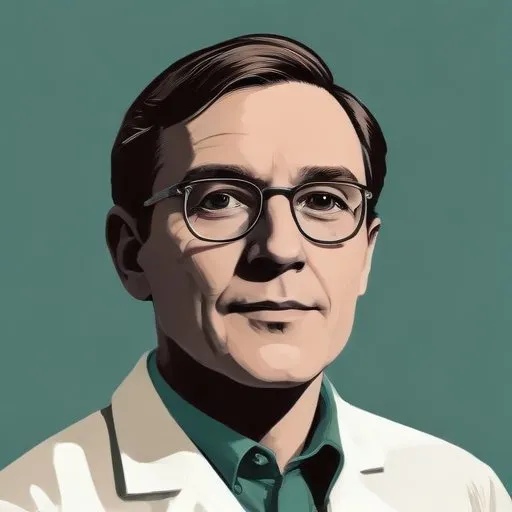
A leading expert in bacterial genomics and pathogenesis, known for sequencing the genomes of numerous bacteria, including those that cause tuberculosis and meningitis.
As a renowned Professor of Bacterial Evolution at the University of Cambridge, Julian Parkhill has dedicated his career to understanding the intricacies of pathogen diversity and variation, shedding light on the evolution of pathogenicity and host-pathogen interaction.
Parkhill's groundbreaking research focuses on applying high-throughput sequencing and phenotyping to study the genetic makeup of pathogens, including those responsible for tuberculosis, plague, and meningitis, among others.
Born in 1964, Parkhill received his early education at Westcliff High School for Boys. He went on to pursue higher education at the University of Birmingham and later at the University of Bristol, where he was awarded a Ph.D. in 1991 for his research on the regulation of transcription of the mercury resistance operon.
As the head of pathogen genomics at the Wellcome Sanger Institute, Parkhill has led numerous research projects, funded by prominent organizations such as the Wellcome Trust, the Biotechnology and Biological Sciences Research Council (BBSRC), and the Medical Research Council (MRC).
His research group has made significant contributions to the field of microbiology, including:
Parkhill's outstanding contributions to the field of microbiology have been recognized through several prestigious awards and honors, including:
Parkhill's work has significantly advanced our understanding of bacterial evolution and its implications for human health. His research has provided valuable insights into the development of new diagnostic tools, treatments, and vaccines for various diseases.
Moreover, his contributions have paved the way for further research into the application of high-throughput sequencing techniques in microbiology, opening up new avenues for the development of personalized medicine and public health strategies.
As a leading figure in the field of microbiology, Parkhill continues to inspire and mentor the next generation of researchers. His work serves as a testament to the power of scientific inquiry and the importance of continued research into the complexities of bacterial evolution.
As the field of microbiology continues to evolve, Parkhill's pioneering work will undoubtedly remain a cornerstone of future research, driving innovation and discovery in the years to come.
"Understanding the evolution of pathogens is key to developing effective treatments and prevention strategies. By unraveling the secrets of bacterial evolution, we can unlock new opportunities for human health and well-being."
- Julian Parkhill
Born in 1916
Pioneering scientist who discovered the structure of DNA, revolutionizing our understanding of genetics and life itself.
98 Years Old
Discovered the structure of DNA, revolutionizing our understanding of genetics and earning a Nobel Prize. Pioneering work in molecular biology has far-reaching implications for medicine and beyond.
Born in 1920
A British scientist who contributed significantly to the discovery of the structure of DNA, providing high-quality X-ray crystallography images that helped James Watson and Francis Crick develop their famous model.
Born in 1916
A Nobel Prize-winning physicist and biologist who contributed significantly to the discovery of the structure of DNA, using X-ray crystallography to produce the first clear images of the molecule.
Born in 1926
A renowned naturalist and broadcaster, sharing the wonders of the natural world through captivating documentaries and series, inspiring generations to care about the planet.
85 Years Old
A renowned evolutionary biologist and science writer, known for popularizing science and advocating for atheism through bestselling books like "The Selfish Gene" and "The God Delusion".
71 Years Old
Lead singer and guitarist of the Sex Pistols, a pioneering punk rock band that sparked a musical revolution in the late 1970s
77 Years Old
A renowned geneticist and biologist who discovered the cyclin-dependent kinases, a crucial component of cell cycle regulation, earning a Nobel Prize in Physiology or Medicine in 2001.
