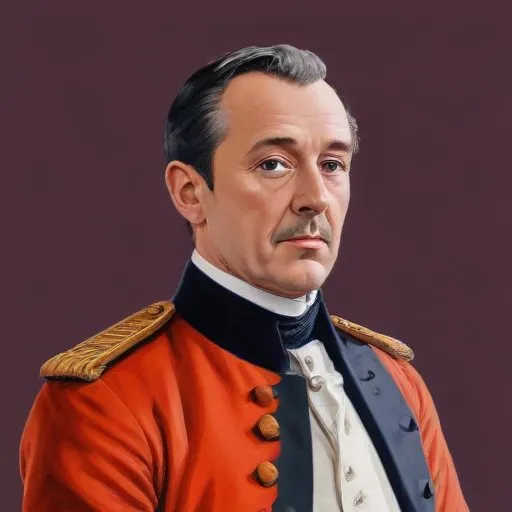
Major General Julian Thompson: The Distinguished Military Commander and Renowned Historian
A Legendary Career in the Royal Marines
Major General Julian Thompson is best known for his exemplary leadership during the Falklands War, where he commanded 3 Commando Brigade, playing a pivotal role in the British military's victory. As a decorated Royal Marines officer, Thompson's illustrious career spans over three decades, marked by his bravery, tactical prowess, and dedication to the armed forces.
Early Life and Education
Born on October 7, 1934, to Major A. J. Thompson and Mary Stearns Thompson (née Krause), Julian Thompson was educated at Sherborne School, an all-boys public school in Dorset. This esteemed institution laid the foundation for his future success, instilling in him the values of discipline, courage, and leadership.
Military Career
Thompson joined the Royal Marines in 1952, embarking on a journey that would take him to the forefront of British military history. Between 1954 and 1969, he served in various commandos, including 40, 42, 43, and 45 Commandos Royal Marines. During the 1960s, he was deployed to Borneo for the Indonesia-Malaysia confrontation, gaining invaluable experience in combat and strategic operations.
Rise Through the Ranks
Thompson's exceptional performance earned him rapid promotions:
- Major (1968)
- Lieutenant Colonel (1975)
- Colonel (1978)
- Brigadier (1981)
- Major General (1982)
Falklands War and Command of 3 Commando Brigade
Thompson's most notable achievement came during the 1982 Falklands War, where he commanded 3 Commando Brigade. His exemplary leadership, tactical acumen, and bravery under fire played a crucial role in the British military's ultimate victory.
Post-Military Career and Historical Contributions
After retiring from the Royal Marines in 1986, Thompson devoted himself to writing and research. His first book,
No Picnic (1985), provided a gripping account of the Falklands War from a military commander's perspective. He went on to become a senior research fellow in logistics and armed conflict at King's College, University of London, and later a visiting professor at the Department of War Studies.
Select Works
Thompson's literary contributions include:
- No Picnic (1985)
- The Royal Marines: From Sea Soldiers to a Special Force (2001)
- The 3 Commando Brigade in the Falklands: No-picnic on Mount Kent (2008)
Awards and Honors
Major General Julian Thompson's distinguished service has been recognized with numerous awards, including:
- OBE (Order of the British Empire)
- Military Cross
Legacy and Impact
Thompson's remarkable military career, coupled with his literary contributions, has cemented his status as a prominent figure in British military history. His leadership, bravery, and tactical expertise continue to inspire future generations of military personnel and historians alike.
FAQ
What was Julian Thompsons role in the Falklands War?
Julian Thompson was a British general who played a key role in the Falklands War, leading the 3 Commando Brigade during the conflict. He was instrumental in the recapture of South Georgia and the Falkland Islands.
What were Julian Thompsons views on military strategy?
Julian Thompson was a proponent of amphibious warfare and believed in the importance of speed and surprise in military operations. He advocated for a more mobile and flexible approach to warfare, which was reflected in his leadership during the Falklands War.
How did Julian Thompsons experience in the Falklands War inform his later work as a historian?
Julian Thompsons experience in the Falklands War informed his later work as a historian, allowing him to provide a unique perspective on military history. He drew on his experiences to analyze and interpret the conflict, providing valuable insights into the conduct of war.
What was Julian Thompsons legacy in the British military?
Julian Thompsons legacy in the British military is one of leadership and tactical genius. He is remembered as a skilled commander who played a crucial role in the Falklands War, and his contributions to military strategy and history are still studied today.
How did Julian Thompsons military service prepare him for his later career as a writer?
Julian Thompsons military service prepared him for his later career as a writer by providing him with a discipline and attention to detail that served him well in his writing. His experiences also gave him a wealth of material to draw upon, informing hislater work as a historian and author.