


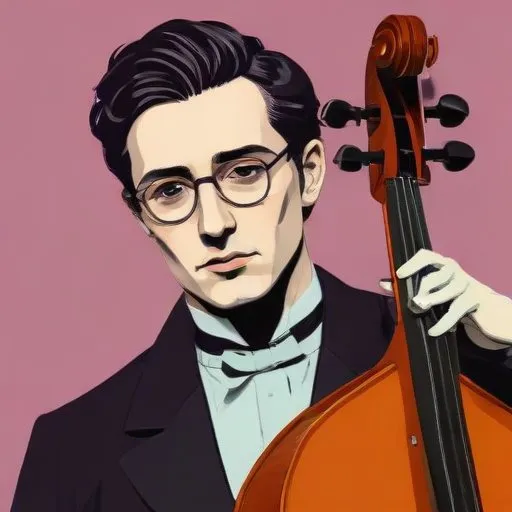
A renowned German cellist and composer, known for his virtuosic cello concertos and chamber music, leaving a lasting impact on the classical music world.
Julius Klengel is renowned for his extraordinary contributions to the world of classical music, particularly in the realm of cello compositions. His masterful etudes and solo pieces continue to inspire and challenge cellists to this day, cementing his legacy as one of the most influential cellists of all time.
Born on September 24, 1859, in Leipzig, Germany, Klengel was immersed in a musical environment from a young age. His father, a lawyer and amateur musician, was a close friend of Felix Mendelssohn, which exposed Klengel to the world of classical music from an early age. He began studying with Emil Hegar, a prominent cellist of the time, and quickly demonstrated exceptional talent.
At just 15 years old, Klengel joined the prestigious Gewandhaus Orchestra of Leipzig, where he played first cello and began touring extensively throughout Europe and Russia. His remarkable talent and dedication earned him the position of principal cellist of the orchestra at the age of 22, a role he would hold for over four decades.
In addition to his performing career, Klengel was a dedicated teacher and composer. He became a professor at the Leipzig Conservatory, where he taught some of the most renowned cellists of the time, including Guilhermina Suggia, Emanuel Feuermann, and Gregor Piatigorsky. His compositions include hundreds of pieces for the cello, including four cello concertos, two double cello concertos, cello quartets, and a cello sonata, as well as numerous caprices, etudes, and technical pieces.
Klengel's contributions to the world of classical music are immeasurable. His compositions and teachings have inspired generations of cellists, and his etudes remain an essential part of the cello repertoire. In 1931, Wilhelm Furtwängler conducted a jubilee concert in honor of Klengel's 50 years of service to the Gewandhaus Orchestra, featuring a double concerto composed by Klengel for the occasion.
Julius Klengel passed away on October 27, 1933, in his hometown of Leipzig, leaving behind a legacy that continues to inspire and influence cellists around the world.
Born in 1833
A renowned pianist and composer, he crafted complex, expressive works that blended traditional and innovative techniques, leaving an indelible mark on classical music.
Born in 1810
A renowned Romantic-era composer and influential music critic, known for his expressive and emotionally charged works, including symphonies, piano music, and art songs.
Born in 1809
A renowned 19th-century musician who masterfully blended classical and romantic styles, creating iconic works like the "Wedding March" and "Elijah" oratorio. His compositions continue to inspire and influence generations of artists.
Born in 1831
A renowned virtuoso violinist, composer, and conductor who revolutionized the classical music scene with his expressive performances and innovative compositions. He's also credited with premiering many iconic works, including Brahms' Violin Concerto.
Born in 1902
A virtuosic cellist renowned for his expressive tone, technical mastery, and iconic recordings of classical music's most beloved works. His playing style continues to inspire generations of cellists.
Born in 1903
A renowned cellist and educator, he was a master of his craft, known for his expressive playing style and dedication to teaching and mentoring future generations of musicians.
Born in 1876
A renowned Catalan musician, he was a master cellist and conductor, celebrated for his expressive performances and interpretations of Bach's cello suites. He's also credited with popularizing classical music globally.
81 Years Old
A renowned English cellist celebrated for her passionate and expressive performances, particularly her iconic recordings of Elgar's Cello Concerto.
