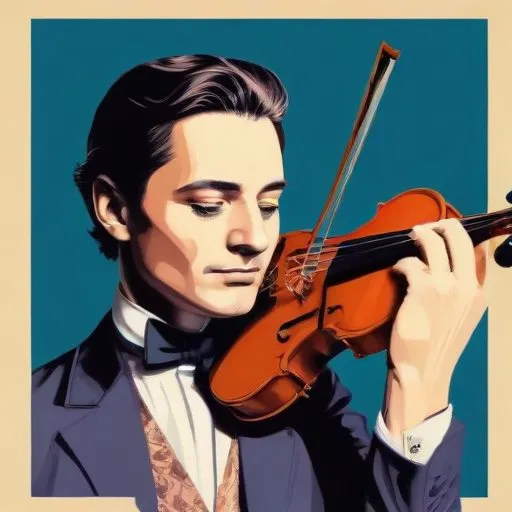
Joseph Joachim: The Violin Virtuoso of the 19th Century
A Life Devoted to Music
Joseph Joachim was a Hungarian violinist, conductor, composer, and teacher who left an indelible mark on the world of classical music. With a career spanning over six decades, he is widely regarded as one of the most significant violinists of the 19th century.
Early Life and Education
Born on June 28, 1831, in Kittsee, Austria, Joachim was the seventh of eight children to Julius and Fanny Joachim, a Hungarian-Jewish family. He began his violin studies at the tender age of five in Buda, later moving to Vienna and Leipzig to further his education.
Rise to Prominence
Joachim made his debut in London in 1844, performing
Ludwig van Beethoven's Violin Concerto with
Felix Mendelssohn conducting. This performance marked the beginning of his international career, with frequent returns to London throughout his life. In 1852, he became the principal violinist of the Gewandhaus Orchestra in Leipzig, a position he held until 1853.
Collaboration with Brahms
It was during the Lower Rhine Music Festival in 1853 that Joachim met
Johannes Brahms, with whom he formed a lifelong friendship and collaboration. Brahms dedicated his Violin Concerto to Joachim, who premiered the work in 1879 with Brahms conducting.
Founding the Berlin Conservatory
In 1865, Joachim quit his service in Hanover and moved to Berlin, where he was entrusted with founding and directing a new department at the Royal Conservatory, dedicated to the performance of music. This institution became a hub for musical excellence, attracting students from all over the world.
Performing Career
Joachim's performing career was marked by numerous concert tours, during which he performed chamber music with his string quartet. His playing was captured on record in 1903, leaving behind a legacy for future generations.
Teaching and Legacy
As a teacher, Joachim was renowned for his meticulous approach, emphasizing the importance of technical mastery and musical expression. His students included some of the most prominent violinists of the time, ensuring the continuation of his legacy.
Personal Life
Joachim married Amalie, an opera singer, in 1863, with whom he had six children. He passed away on August 15, 1907, leaving behind a rich cultural heritage that continues to inspire and influence musicians to this day.
Quotes and Memorabilia
- "The tone of the violin is the voice of the soul." - Joseph Joachim
- Joachim's Guarneri violin, known as the "Joachim Strad," is now on display at the Berlin Musikinstrumenten-Museum.
Awards and Honors
Joachim was awarded the Royal Philharmonic Society's Gold Medal in 1871, a testament to his contributions to the world of music.
Influence on Modern Society
Joachim's impact on classical music is immeasurable, influencing generations of violinists, conductors, and composers. His legacy continues to shape the musical landscape, inspiring new generations of musicians and music lovers alike.
FAQ
What was Joseph Joachims contribution to classical music?
Joseph Joachim was a renowned Austrian violinist, composer, and conductor who made significant contributions to classical music. He was particularly known for his performances of Beethovens violin concerto and his own compositions for the violin.
What is Joseph Joachims relationship with Johannes Brahms?
Joseph Joachim and Johannes Brahms were close friends and collaborators. Joachim premiered many of Brahms works, including his violin concerto, and Brahms dedicated several compositions to Joachim.
When did Joseph Joachim establish the Joachim Quartet?
Joseph Joachim established the Joachim Quartet in 1869, a string quartet that became one of the most renowned ensembles of its time.
What is Joseph Joachims legacy in music education?
Joseph Joachim was a influential music educator who taught at the Königliche Hochschule für Musik in Berlin and was known for his emphasis on technical perfection and musical expression.
What are some of Joseph Joachims notable compositions?
Joseph Joachim composed several notable works, including his Hebrew Melodies for violin and piano, and his variations on a theme by Brahms for violin and orchestra.