


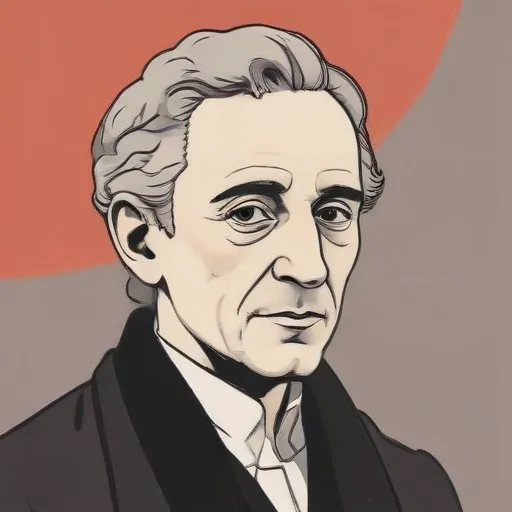
A leading figure of the Polish Romantic movement, known for his poetic and theatrical works that explored themes of love, freedom, and national identity. His plays and poems are still widely performed and studied in Poland today.
Juliusz Sowacki, a Polish Romantic poet, is renowned for his significant contributions to Polish literature, earning him the title of one of the Three Bards of Polish literature. He is particularly celebrated for his innovative style, which fused elements of Slavic pagan traditions, Polish history, mysticism, and orientalism, thereby shaping the course of modern Polish drama.
Sowacki was born on September 4, 1809, in Kremenets, Volhynia (now in Ukraine), to Euzebiusz Sowacki, a Polish nobleman, and Salomea Sowacka (née Januszewska). His father, a professor of rhetoric, poetry, and Polish language, instilled in him a deep love for literature and the arts. After his father's death in 1814, Sowacki was raised by his mother in Vilnius (then in the Russian Empire, now in Lithuania).
Sowacki's literary career spanned multiple genres, including drama, poetry, and lyric poetry. His most notable works include:
Sowacki's contributions to Polish literature have been immense. He is credited with shaping the modern Polish drama, introducing new themes, and experimenting with language. His works have inspired generations of Polish writers, poets, and playwrights. Today, he is recognized as one of the most important figures in Polish literary history.
Sowacki's life was marked by travel and exile. During the November 1830 Uprising, he served as a courier for the Polish revolutionary government. After the uprising's defeat, he lived in Paris, Geneva, and other parts of Europe, eventually returning to Poland during the Spring of Nations in 1848.
Sowacki's works often explored the intersection of mysticism, patriotism, and Slavic mythology. He believed in the power of art to shape national identity and inspire social change. His philosophical contributions lie in his ability to synthesize diverse influences and create a unique literary voice that continues to resonate with readers today.
Juliusz Sowacki's remarkable life and literary achievements have left an indelible mark on Polish literature. His innovative style, philosophical contributions, and personal story continue to captivate readers and inspire writers around the world.
Born in 1798
A national hero in Poland, celebrated for his romantic poetry and plays that ignited a sense of patriotism and freedom during a time of foreign rule. His works are still widely read and performed today.
Born in 1810
A Polish pianist and composer renowned for his delicate, expressive, and technically demanding piano music that evokes deep emotions and continues to inspire generations of musicians and music lovers. His nocturnes, waltzes, and preludes are staples of classical music.
