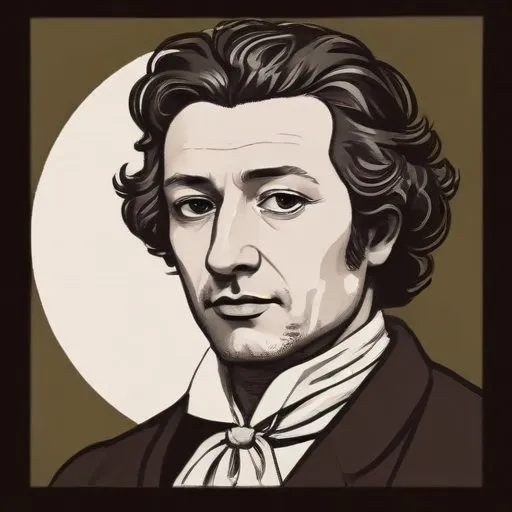
Adam Mickiewicz: The Slavic Bard and National Poet of Poland
A Literary Giant and Champion of Independence
Adam Mickiewicz is renowned as the national poet of Poland, Lithuania, and Belarus, and is widely regarded as one of the greatest Slavic and European poets of all time. He is best known for his poetic drama
Dziady (Forefathers' Eve) and the national epic poem
Pan Tadeusz, which served as inspiration for uprisings against the imperial powers that had partitioned the Polish-Lithuanian Commonwealth.
Early Life and Education
Mickiewicz was born on December 24, 1798, in Zaosie, a small village in the Russian-partitioned territories of the former Grand Duchy of Lithuania. He studied at the University of Vilnius, where he became involved in a secret organization called the Philomaths, which aimed to promote Polish culture and independence.
Literary Career and Major Works
Mickiewicz's literary career was marked by several influential works, including:
- Dziady (Forefathers' Eve), a poetic drama that explores Polish folklore and the struggle for independence.
- Pan Tadeusz, a national epic poem that tells the story of Poland's history and struggle for freedom.
- Konrad Wallenrod, a poem that explores the theme of national identity and resistance to foreign occupation.
- Grayna, a romantic epic poem that tells the story of a Polish-Lithuanian noblewoman.
Activism and Exile
Mickiewicz's involvement in the Philomaths led to his arrest and exile to central Russia in 1824. He spent five years in exile, during which time he continued to write and promote Polish culture. In 1829, he managed to escape and settled in Rome, and later in Paris, where he lectured on Slavic literature at the Collège de France.
Influence on Modern Society
Mickiewicz's works had a profound influence on Polish and Slavic literature, and his legacy continues to inspire writers, artists, and activists to this day. His poetry and plays are considered classics of Polish literature, and his advocacy for independence and democratic values continues to resonate with people around the world.
Personal Life and Legacy
Mickiewicz died on November 26, 1855, in Istanbul, where he had gone to help organize Polish forces to fight Russia in the Crimean War. His remains were repatriated to Wawel Cathedral in Krakow, Poland in 1890. Today, he is remembered as a national hero and a symbol of Polish cultural identity.
Philosophical Contributions and Beliefs
Mickiewicz's philosophy was rooted in his commitment to democracy, independence, and social justice. He believed in the power of literature to inspire and mobilize people to action, and his works reflect his passion for freedom and human rights.
Quotes and Memorable Sayings
- "A nation without independence is only half a nation."
- "Poetry is the voice of the people, and the people's voice is the voice of God."
Historical Context and Legacy
Mickiewicz's life and works are a testament to the power of literature to shape national identity and inspire social change. His legacy continues to inspire writers, artists, and activists around the world, and his works remain a vital part of Polish and Slavic cultural heritage.
FAQ
What is Adam Mickiewiczs significance in Polish literature?
Adam Mickiewicz is considered one of the greatest poets in Polish literature, known for his romantic and patriotic works that inspired the fight for Polish independence. His poetry is characterized by its lyricism, symbolism, and emphasis on national identity.
What are Adam Mickiewiczs most famous works?
Adam Mickiewiczs most famous works include his epic poem Pan Tadeusz, which is considered Polands national epic, as well as Dziady, a cycle of poems that explore themes of love, death, and national identity.
What role did Adam Mickiewicz play in the November Uprising?
Adam Mickiewicz played a significant role in the November Uprising against Russian rule in Poland by inspiring the fighters with his patriotic poetry and propaganda. He was also involved in organizing the uprising and served as a messenger between the Polish government and the Russian authorities.
Where did Adam Mickiewicz study and teach?
Adam Mickiewicz studied at the University of Vilnius and later taught at the University of Lausanne in Switzerland. He was also a professor of literature at the Collège de France in Paris.
What is Adam Mickiewiczs legacy in Europe?
Adam Mickiewiczs legacy extends beyond Poland to Europe, where he is recognized as a key figure in the Romantic movement. His poetry has been translated into many languages, and he is celebrated as a champion of freedom and independence.