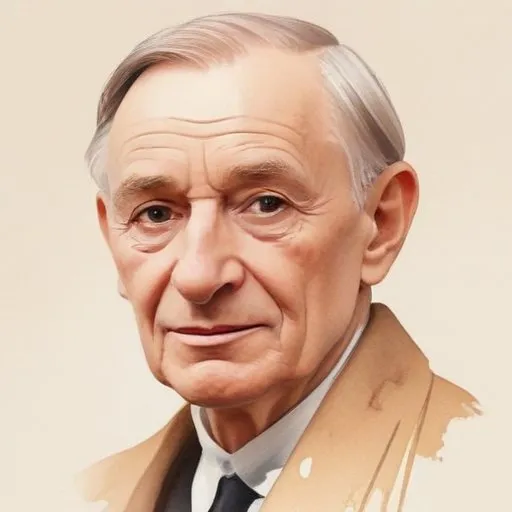
Wadyslaw Reymont: The Chronicler of Rural Poland
A Nobel Laureate's journey to literary fame
Wadyslaw Reymont, a Polish novelist, is best known for his monumental work, "Chłopi" (The Peasants), a four-volume novel that earned him the Nobel Prize in Literature in 1924. This sweeping tale of rural Poland, with its vivid descriptions of the countryside and its people, has been hailed as a masterpiece of literary realism.
Early Life and Influences
Born on May 7, 1867, into an impoverished noble family, Reymont was destined for a life of modest means. Originally named Stanisław Władysław Rejment, he would later change his surname to Reymont to avoid trouble with the Russian authorities, who were wary of his literary pursuits. Despite being educated as a master tailor, Reymont's true passion lay in storytelling, and he began his writing career by publishing short stories inspired by his travels and experiences as a gateman at a railway station and an actor in a theatrical troupe.
Literary Breakthrough
Reymont's first successful novel, "The Promised Land" (1899), brought him widespread recognition and acclaim. This powerful work of literary realism exposed the social inequalities, poverty, and labor exploitation that plagued the industrial city of Łódź. The novel's success marked a turning point in Reymont's career, and he would go on to write some of his most iconic works, including "Chłopi".
Awards and Accolades
Reymont's contributions to literature did not go unnoticed. In 1924, he was awarded the Nobel Prize in Literature for "his national epic, Chłopi", which was hailed as a masterpiece of literary realism. This recognition cemented Reymont's position as a leading figure in Polish literature, and his work continues to be celebrated to this day.
Style and Themes
Reymont's writing is characterized by its vivid descriptions of rural Poland, its people, and their struggles. His work often explores the themes of social inequality, poverty, and the exploitation of the working class. His writing is infused with a deep sense of empathy and understanding for the common man, and his novels are often described as sweeping epics that capture the essence of rural Polish life.
Legacy and Impact
Reymont's work has had a profound impact on Polish literature and culture. His novels have been translated into numerous languages and continue to be widely read and studied today. His legacy extends beyond literature, too – his work has inspired generations of Polish artists, writers, and thinkers.
Personal Life and Milestones
Reymont's life was marked by tragedy and hardship. In 1900, he was severely injured in a railway accident, which forced him to pause his writing career until 1904. Despite these challenges, Reymont continued to write, producing some of his most iconic works. He passed away on December 5, 1925, leaving behind a legacy that continues to inspire and captivate readers around the world.
Quotes and Memorable Sayings
- "Art is a way of expressing the ineffable, of expressing what cannot be expressed." – Wadysław Reymont
- "The novel is a reflection of life, and life is a reflection of the novel." – Wadysław Reymont
Trivia and Fun Facts
- Reymont's baptism certificate lists his birth name as Stanisław Władysław Rejment.
- He was an avid traveler and drew inspiration from his extensive travels throughout Poland and Europe.
- Reymont's work was widely popular in communist Poland, where his socialist ideals and romantic portrayal of rural life resonated with the regime.
Reymont's life and work continue to fascinate readers and scholars alike. As we delve into his world of stories, we are transported to a rural Poland of yesteryear, where the struggles and triumphs of the common man are brought vividly to life. His legacy serves as a testament to the power of literature to capture the essence of human experience.
FAQ
What was Władysław Reymonts contribution to Polish literature?
Władysław Reymont was a prominent figure in Polish literature, making significant contributions to the novel and short story genres. His works are known for their realistic portrayals of rural life and social change.
How did Władysław Reymonts Nobel Prize impact Polish literature?
Władysław Reymonts Nobel Prize in Literature in 1924 brought international recognition to Polish literature, highlighting its richness and diversity. It also inspired a new generation of Polish writers and intellectuals.
What were Władysław Reymonts views on social change in Poland?
Władysław Reymonts works reflected his concerns about social change in Poland, particularly the struggles of rural communities and the impact of industrialization. He advocated for social reform and greater equality.
How did Władysław Reymonts writing style influence Polish fiction?
Władysław Reymonts writing style, characterized by realism and attention to detail, influenced a generation of Polish fiction writers. He is credited with shaping the countrys literary landscape and inspiring new trends in fiction.
What was Władysław Reymonts legacy in Polish culture?
Władysław Reymonts legacy in Polish culture is that of a master storyteller who captured the essence of rural life and social change. He is remembered for his contributions to literature, his commitment to social reform, and his influence on Polish intellectual life.