


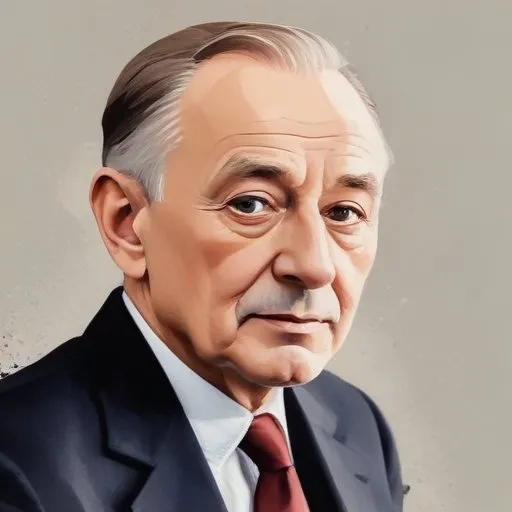
A Polish journalist and author who wrote epic historical novels, including "Quo Vadis", which won him the Nobel Prize in Literature in 1905. His works are known for their vivid storytelling and historical accuracy.
Henryk Sienkiewicz is renowned for penning one of the most iconic historical novels of all time, Quo Vadis, which has captivated readers worldwide since its publication in 1896. This epic tale of ancient Rome, set against the backdrop of Emperor Nero's reign, catapulted Sienkiewicz to international acclaim, earning him the Nobel Prize in Literature in 1905.
Born on May 5, 1846, in Wola Okrzejska, Congress Poland (then part of the Russian Empire), Sienkiewicz came from a impoverished Polish noble family with Tatar ancestry. His parents, Józef Sienkiewicz and Stefania Cieciszowska, instilled in him a love for literature, which would become his lifelong passion.
In the late 1860s, Sienkiewicz began publishing journalistic and literary pieces, slowly building a reputation as a rising star in Polish literature. His travels to the United States in the late 1870s inspired a series of travel essays that won him widespread popularity with Polish readers.
The 1880s marked a turning point in Sienkiewicz's career, as he began serializing novels that further solidified his position as one of Poland's most beloved writers. His trilogy of historical novels, consisting of With Fire and Sword, The Deluge, and Sir Michael, set in 17th-century Polish-Lithuanian Commonwealth, cemented his status as a master of the genre.
However, it was Quo Vadis that catapulted Sienkiewicz to international fame, with numerous translations and adaptations, including the iconic 1951 Hollywood film starring Peter Ustinov and Deborah Kerr. This sweeping tale of love, sacrifice, and martyrdom in ancient Rome has become an cultural touchstone, synonymous with epic storytelling.
Sienkiewicz's writing is characterized by meticulous historical research, vivid descriptions of landscapes and characters, and a deep understanding of human nature. His novels often explore themes of patriotism, morality, and the struggle for freedom, reflecting his own experiences living under Russian rule in Poland.
His unique blend of historical accuracy, action, and romance has inspired generations of writers, filmmakers, and artists, solidifying his place as one of the most influential writers of the late 19th and early 20th centuries.
Today, Sienkiewicz's works remain widely popular, with numerous translations and adaptations continuing to captivate audiences worldwide. His contributions to Polish literature and culture are immeasurable, and his influence can be seen in countless aspects of modern storytelling.
In recognition of his outstanding literary merit, Sienkiewicz was awarded the Nobel Prize in Literature in 1905, a testament to his enduring impact on the literary world.
Sienkiewicz married Maria Szetkiewicz in 1881, and the couple had three children together. He passed away on November 15, 1916, leaving behind a legacy that continues to inspire and captivate readers to this day.
In conclusion, Henryk Sienkiewicz's remarkable life and literary achievements have left an indelible mark on the world of literature, cementing his place as one of the most celebrated writers of all time.
Born in 1847
A pioneering journalist and author who explored social issues and championed realism in Polish literature, leaving a lasting impact on the country's literary scene.
Born in 1809
A leading figure of the Polish Romantic movement, known for his poetic and theatrical works that explored themes of love, freedom, and national identity. His plays and poems are still widely performed and studied in Poland today.
Born in 1798
A national hero in Poland, celebrated for his romantic poetry and plays that ignited a sense of patriotism and freedom during a time of foreign rule. His works are still widely read and performed today.
Born in 1869
A Polish Renaissance man who excelled in poetry, playwriting, and painting, creating iconic works that merged folk motifs with modernist styles. His innovative art and literature continue to inspire Polish culture.
Born in 1867
A Polish novelist who won the Nobel Prize in Literature in 1924 for his novel "Ch?opi" (The Peasants), a realistic depiction of rural life in Poland. He's known for his detailed and nuanced portrayals of Polish society and culture.
Born in 1841
A pioneering female writer and publisher who championed women's rights and social justice through her works, leaving a lasting impact on Polish literature.
