


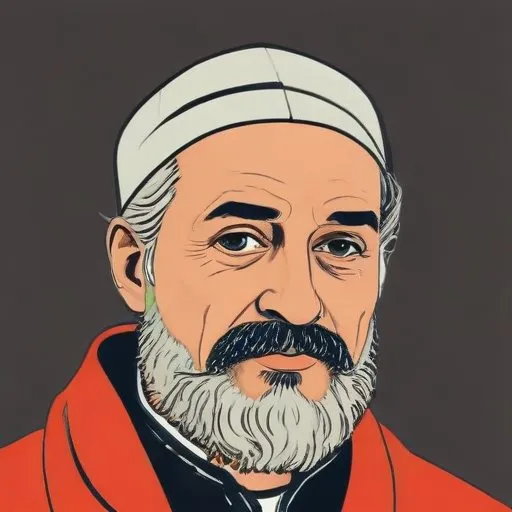
A Polish Renaissance man who excelled in poetry, playwriting, and painting, creating iconic works that merged folk motifs with modernist styles. His innovative art and literature continue to inspire Polish culture.
Stanisaw Wyspiaski was a Polish playwright, painter, poet, and interior and furniture designer, renowned for his symbolic, national dramas that embodied the artistic philosophy of the Young Poland Movement. His works seamlessly merged modernist trends with themes of Polish folk tradition and Romantic history, earning him the unofficial title of the Fourth Polish Bard.
Born on January 15, 1869, in Krakow, Poland, Wyspiaski's early life was marked by tragedy when his mother, Maria Rogowska, passed away due to tuberculosis in 1876. His father, Franciszek Wyspiaski, a sculptor, struggled with alcoholism, and Stanisaw was subsequently adopted by his aunt Joanna Stankiewiczowa and her husband Kazimierz.
The Stankiewicz family's bourgeois intellectual background and their associations with prominent artists, including painter Jan Matejko, played a significant role in nurturing Wyspiaski's artistic talent. Matejko, who recognized the boy's potential, provided him with his first artistic guidance.
Wyspiaski attended Saint Anne's secondary school, an institution unique for its emphasis on Polish language, history, and literature, despite being under foreign rule. This education laid the foundation for his future contributions to Polish cultural life.
After completing his studies, Wyspiaski began his career as a painter and poet, heavily influenced by the Young Poland Movement. His early works, such as the drama "Mei" (1898), showcased his ability to merge modernist ideas with national themes.
Wyspiaski's works not only reflected the aspirations of the Polish people during the foreign partitions but also played a significant role in shaping Poland's cultural identity. His emphasis on national themes and folklore helped to preserve and promote Polish heritage.
His influence extends beyond literature and art, as he inspired a generation of Polish artists, writers, and intellectuals to explore and celebrate their national identity.
Stanisaw Wyspiaski passed away on November 28, 1907, but his legacy continues to be celebrated in Poland and beyond. He is remembered as a true patriot, whose multifaceted talents and contributions continue to inspire and enrich Polish cultural life.
In recognition of his achievements, Wyspiaski's works have been translated into numerous languages, and his plays and poetry continue to be performed and studied around the world.
Today, Wyspiaski's legacy serves as a testament to the power of art and literature to shape national identity and inspire future generations.
Born in 1809
A leading figure of the Polish Romantic movement, known for his poetic and theatrical works that explored themes of love, freedom, and national identity. His plays and poems are still widely performed and studied in Poland today.
Born in 1798
A national hero in Poland, celebrated for his romantic poetry and plays that ignited a sense of patriotism and freedom during a time of foreign rule. His works are still widely read and performed today.
Born in 1846
A Polish journalist and author who wrote epic historical novels, including "Quo Vadis", which won him the Nobel Prize in Literature in 1905. His works are known for their vivid storytelling and historical accuracy.
Born in 1867
A Polish novelist who won the Nobel Prize in Literature in 1924 for his novel "Ch?opi" (The Peasants), a realistic depiction of rural life in Poland. He's known for his detailed and nuanced portrayals of Polish society and culture.
